The inaugural Conference on Land Policy in Africa got off to an energetic start on Tuesday 11 November 2014 at the African Union headquarters in Addis Ababa, with a panel of eminent speakers issuing a clarion call for action to secure the land rights of rural residents across the continent. Dr Abebe Haile Mariam, Director of Rural Economy and Agriculture in the African Union Commission, chaired this first plenary session and opening ceremony.
Land and agriculture are central to our future
Her Excellency Rhoda Peace Tumusiime, AU Commissioner for Rural Economy and Agriculture, officially opened the conference, declaring: ‘We are proud that Africa is the only continent that has defined its own agenda for land policy.’
‘This conference is timely and allows us to track progress in the implementation of the AU declaration on land,’ she said.
Her Excellency further observed that, in Africa, about 60% of the population derives its livelihood and incomes from farming, yet Africa’s agriculture is yet to match the needs of its growing population. The Comprehensive African Agricultural Development Programme (CAADP) is the collective approach to addressing this limitation, and to promote sustainable land management. As Her Excellency insisted, agriculture will remain key to our continent’s transformation, and will need to provide employment opportunities and livelihoods to our growing population.
His Excellency Ato Tefera Derbew, Ethiopia’s Minister of Agriculture, endorsed such sentiments. He welcomed participants and issued a challenge to all national governments: with Africa’s substantial land resource, he said, the situation of low productivity and food security is ‘not acceptable’. He called on AU member states to ‘diligently implement our continental guidelines’.
A strong foundation has been laid
A core message from the inaugural ceremony was that Africa has already laid a solid basis to secure land rights. Speakers reflected on the progress made over the past five since the African Union heads of state Declaration on Land Issues and Challenges in Africa. There is now widespread agreement that ensuring secure and equitable access to land and natural resources is essential, especially in face of increasing economic and population pressures.
European Union ambassador to the African Union, Gary Quince, emphasized the partnership and collaboration that has been forged between the EU and AU, with the EU now supporting land tenure programmes currently in ten countries. Quince pointed out that, since the AU Declaration was adopted five years ago, a lot has happened: Africa has enjoyed good economic growth, and the importance of agriculture has been recognized, while at the same time the continent’s population has increased by over 100 million. Many challenges remain: there has been an upsurge of conflict across Africa, displacing many thousands of people from their land and livelihoods, and large acquisitions are increasing.
Women’s land rights must be at the centre
If African states are to secure land rights for their citizens, then women must be at the centre of policymakers’ concerns. Speakers concurred that women are the main users of rural land for both production and reproduction.
‘We will work to ensure that marginalized groups and women’s voices are brought to the fore’, promised Kafui Afiwa Kuwonu of Women in Law and Development in Africa (WILDAf).
She referred to the rural women’s initiative in 2012 under the slogan ‘Our Land, Our Life’ and indicated that civil society groups had met in the past two days to plan how to support rural women to advance their cause. Their initiative would culminate at a gathering of rural women from across the continent in Kilimanjaro in 2016. She issued an appeal to participants to join this initiative to ensure that rural women are at the centre of all discussions about land and other natural resource rights.
Josephine Ngure of the African Development Bank supported these sentiments, arguing that patriarchal systems have discriminated against women, reinforced by land laws that have tended to cement the discriminatory inheritance rights. If law and policy are to redress gender imbalances, she reasoned, then both customary and statutory laws need to be transformed to strengthen women’s access and control of land. This must be done in recognition of human rights, but also in recognition that women are the primary users of agricultural land in Africa.
Civil society is on board to partner in implementation
Kuwonu of WILDAf also spelt out how civil society organisations intend to use the platform provided by this conference: to share experiences and to challenge policymakers, but also to inspire participants to forge ahead with implementation and to be part of the solution.
‘We commit to disseminate information on land policy and collaborate in efforts and to share best practices’, she promised.
It’s about politics
While land rights and land tenure are longstanding challenges, these issues are receiving more attention from governments, especially in the wake of the food price hikes from 2007/8 and other global factors that have contributed, together with domestic demand, to growing large-scale commercial pressures on land. While all speakers agreed on the need to secure existing customary and informal rights to land, there was an evident tension in where they placed their emphasis. Is the priority to secure existing property rights for those who already occupy, use and claim land – or to facilitate the commodification of land rights so that they can be more readily transacted? How can these competing priorities be squared in practice? These questions will no doubt animate debates among conference participants over the coming three days.
How to secure rights in a context of rising demand for land?
At the centre of the politics is the rising demand for arable land. Kuwonu of WILDAf declared: ‘The issue of land in Africa is at the heart of our concerns… Land is coveted by all, including farmers and fishers, but it is also subject to new demand from outsiders.’
Josephine Ngure of the AfDB argued that ‘land grabs’ which have been described as the ‘new imperialism’ are giving rise to problems of governance. Global changes are bringing new impacts on Africa’s land, with growing demand for food, energy and water supplies, and growth in foreign direct investment in land. A key challenge is for Africa to have policies that can manage the risk of loss of land rights by the poor. In this context, how can we provide security while attracting investment, and how can we do this while ensuring our people have access to land?
As Susan Minae of FAO astutely observed, while there is a need for technical expertise and governance solutions: ‘Securing land rights is not just about governance, it’s about politics!’
Leadership
To confront such competing imperatives, in the real world of politics, Africa needs strong leadership. Aisa Kirabo Kacyira of UN-Habitat declared, to nods of agreement from the audience: ‘Leadership is needed where the common good is in conflict with the private good – and land is such an area that calls for leadership.’
Without leadership, she observed, things can go wrong. The engagements at this conference, then, between policy makers, practitioners, civil society and academics, are crucial for strengthening such leadership.
Land is about industrialization as well as agriculture
Several speakers emphasized the importance of land tenure and land use management in facilitating wider economic and social change. Stephen Karingi of the UNECA pointed to the role of land in supporting national development priorities. He observed that this event builds on the Malabo Declaration, which called on African states to leverage natural resources to drive national economic growth and industrialization. In this context, land is a strategic resource and Africa needs a new sense of determination to take strategic control over its resources and maximize its value from this capital. Land has been used as the foundation of economic development elsewhere in the world, and promoted food production. In light of this, he argued, where large-scale land-based investments happen, these must be in support of national development priorities and in line with land policy guidelines.
Land is an urban issue too
Africa is the least urbanized continent, but is urbanizing faster than anywhere else, at double the global rate, making sustainable urbanization an urgent priority for policy and planning. As Kacyira of UN-Habitat insisted, we need to use this resource that has been a source of conflict and make it a driver of security and prosperity.
A new phase of operationalizing policy principles
We’re into a new phase – indigenizing these, operationalizing them in the national context in each member state, and learning from practice. The principles are well established, but how are these to be interpreted and to operationalized in the very diverse national contexts? Now is the time to focus on practice, and learning from practice. How do we bring evidence into policy?
How to secure land rights, to improve agriculture, and how to ensure that land rights of smallholders are protected against speculation and large acquisitions?
This moment is auspicious, coming in the AU Year of Agriculture and Food Security.
Complementing the AU Framework and Guidelines on Land Policy are the FAO Voluntary Guidelines on the Responsible Governance of Land, Fisheries and Forests in the Context of National Food Security. Several speakers agreed that, together with the new AU Guiding Principles, these constitute a formidable basis for inclusive and sustainable investment in land while securing land rights.
A flagship sharing and learning event for Africa
Speakers reiterated their appreciation for the Land Policy Initiative, jointly convened by the AU, AfDB and UNECA, and the valuable work it does. In convening this event, they observed, the LPI is helping to promote evidence-based policy making. This ‘flagship’ sharing and learning event for Africa will enable knowledge to be shared which can support evidence-based policy and implementation.
Inclusive growth in agriculture?
In the inaugural ceremony, relatively little was said about what form inclusive growth in agriculture means, and how it can be achieved. Yet most speakers alluded to the tensions between the rights agenda and the need to increase investment, re-investment and productivity. Kacyira of UN-Habitat commented: ‘Even though land symbolizes life, it only supports life when it is translated into viable incomes that can help people to meet their needs.’
Securing land rights is not, by itself, enough, as the existing rural population needs investment in their own production. How this can be achieved, and what lessons have already been learnt, will be addressed in detail in the conference sessions over the coming three days.
by Ruth Hall, Future Agricultures Consortium Southern Africa Hub convenor and Associate Professor at the Institute of Poverty Land and Agrarian Studies (PLAAS)
Note: The Guiding Principles on Large Scale Land Based Investment, endorsed by Heads of State in April 2014, are to be officially launched on the second day of the conference, on the morning of Wednesday 12 November 2014.
This post first appeared on the PLAAS blog.

Showing posts with label gender. Show all posts
Showing posts with label gender. Show all posts
Wednesday, 12 November 2014
Wednesday, 5 November 2014
The problem is political. Is the solution technical?
The world is becoming increasingly urban, with over half of the world’s total population now residing in cities. While urban areas offer many economic and livelihood opportunities, they are increasingly characterised by growing inequality. In South Africa, both former homelands and peri-urban areas have been severely neglected in terms of health care and services, resulting in very poor-quality care and extreme discrepancies between rural and urban health statistics. Yet, there is recognition of the need to address peri-urban sexual and reproductive health (SRH) in South Africa.
South African adolescents experience very high levels of pregnancy, due to uneven gender relations, limited comprehensive sexuality education, and poor access to sexual and reproductive health and rights (SRHR) services, including quality contraception options. Poverty and place of residence strongly affect outcomes of adolescent sexual health in South Africa. While it is recognised that women and girls living in low-income residential areas are negatively affected in relation to many aspects of health, including SRHR, very little information is available on health within peri-urban cities and on the interconnections between poverty, place and health. Given this, we set out to understand how ICTs in general, and mHealth in particular, might provide new ways of addressing adolescent sexuality, reproductive health and place in South Africa.
Mobile phones are ubiquitous in South Africa, including in rural, peri-urban and slum contexts. However, investment in infrastructure tends to be in middle class areas where those inhabiting the spaces pay for use, and South Africa is renowned for its high data costs. By contrast, peri-urban and township areas suffer from inadequate access to services, including poor network coverage, weak satellite signals, insufficient bandwidth and limited voice capacity due to congestion and demand. As high unemployment causes a lack of security, women do not carry mobile phones for fear of being attacked and robbed. In some instances women share mobile phones. Rural areas are plagued by uneven conditions of access: female-headed households have poor access to mobile phones, poor satellite reception, no broadband, high data costs, lack of infrastructure as well as health, education and transport inequalities. In general, women and adolescent girls also have less time to access ICTs due to the gendered division of labour and additional domestic burdens. It is also difficult, and often unsafe, to access internet cafes and other public places where ICTs might be freely available. Inequality in ICT access thus maps the pattern of apartheid inequality.
There are also constraints in terms of electricity, language, cost and design - as one responded said, ‘Space is not an issue, rather it is cost’. Patterns of inequality cannot be addressed simply through access. Special policy measures are needed to support infrastructural and other developments in rural areas, inner-city slums and peri-urban areas, but if left to market forces, these areas will remain under-resourced. Yet, as no such policy prescriptions exist, most technical interventions make no attempt to deal with this. For example, although the National Department of Health (NDOH) is aware of the challenges of rural and peri-urban health for women and adolescent girls, MomConnect – its new national Maternal and Child Health programme – does not address high-risk HIV-pregnancies in peri-urban areas, or offer ways of ensuring transport and places for safe delivery in rural areas. It was, as one member of the task force informed us, ‘too complicated to add any nuance at this stage’. Thus MomConnect deals with questions of space only in terms of connectivity. Implementers working with the NDOH argue that ‘technically on paper, there is no area [in South Africa] without connectivity’. While recognising that connectivity may sometimes mean climbing a hill to receive a signal – and putting aside the mental image of pregnant women climbing hills to read their pregnancy-related SMS messages – ‘MomConnect will deal with it by hoping that there is a facility to receive a signal and that women may have to try different sim cards and perhaps change their service providers’.
As technology improves and programmes expand, the challenges of addressing place-related health issues change. Increasingly, content is being dispersed to mobile phones throughout Africa, so it is not always possible to link subscribers to particular countries or places. As many SRHR topics – abortion, diverse sexual orientations and gender identity, sex work, adolescent sexuality, condoms – are highly politicised and possibly banned, implementers focus on neutral, uncontentious topics and health-related facts. As one implementer, running an Africa-wide, sexual health social networking forum for young people, commented: ‘What I did as a better-than-nothing solution is I hired an international sexual health advisor to produce information as neutrally as possible’. Yet, implementers still come up against place-related challenges: ‘I wrote a manual about being tested for sexual diseases, but found that the tests were not offered… Place is the biggest missing puzzle piece in our service’.
The problem is political – rural, peri-urban, and inner-city areas are underserviced because of past historical injustice, because the poor live in these areas, because there are no policy prescriptions forcing cell phone operators to provide technology and services to these areas, and because the poor have no purchasing power. Poor women’s and adolescents’ health as experienced in these areas is not eye-catching – gender-based violence, abortion, adolescent rape – and their rights to challenge these experiences are difficult, politically-sensitive topics which do not buy votes. Nor are they easily addressed through the sale of m-health products. The challenge of adolescents’ and women’s SRHRs in rural, peri-urban, and inner-city areas is political. Yet, for many, the solution proposed is often technical.
South African adolescents experience very high levels of pregnancy, due to uneven gender relations, limited comprehensive sexuality education, and poor access to sexual and reproductive health and rights (SRHR) services, including quality contraception options. Poverty and place of residence strongly affect outcomes of adolescent sexual health in South Africa. While it is recognised that women and girls living in low-income residential areas are negatively affected in relation to many aspects of health, including SRHR, very little information is available on health within peri-urban cities and on the interconnections between poverty, place and health. Given this, we set out to understand how ICTs in general, and mHealth in particular, might provide new ways of addressing adolescent sexuality, reproductive health and place in South Africa.
Mobile phones are ubiquitous in South Africa, including in rural, peri-urban and slum contexts. However, investment in infrastructure tends to be in middle class areas where those inhabiting the spaces pay for use, and South Africa is renowned for its high data costs. By contrast, peri-urban and township areas suffer from inadequate access to services, including poor network coverage, weak satellite signals, insufficient bandwidth and limited voice capacity due to congestion and demand. As high unemployment causes a lack of security, women do not carry mobile phones for fear of being attacked and robbed. In some instances women share mobile phones. Rural areas are plagued by uneven conditions of access: female-headed households have poor access to mobile phones, poor satellite reception, no broadband, high data costs, lack of infrastructure as well as health, education and transport inequalities. In general, women and adolescent girls also have less time to access ICTs due to the gendered division of labour and additional domestic burdens. It is also difficult, and often unsafe, to access internet cafes and other public places where ICTs might be freely available. Inequality in ICT access thus maps the pattern of apartheid inequality.
There are also constraints in terms of electricity, language, cost and design - as one responded said, ‘Space is not an issue, rather it is cost’. Patterns of inequality cannot be addressed simply through access. Special policy measures are needed to support infrastructural and other developments in rural areas, inner-city slums and peri-urban areas, but if left to market forces, these areas will remain under-resourced. Yet, as no such policy prescriptions exist, most technical interventions make no attempt to deal with this. For example, although the National Department of Health (NDOH) is aware of the challenges of rural and peri-urban health for women and adolescent girls, MomConnect – its new national Maternal and Child Health programme – does not address high-risk HIV-pregnancies in peri-urban areas, or offer ways of ensuring transport and places for safe delivery in rural areas. It was, as one member of the task force informed us, ‘too complicated to add any nuance at this stage’. Thus MomConnect deals with questions of space only in terms of connectivity. Implementers working with the NDOH argue that ‘technically on paper, there is no area [in South Africa] without connectivity’. While recognising that connectivity may sometimes mean climbing a hill to receive a signal – and putting aside the mental image of pregnant women climbing hills to read their pregnancy-related SMS messages – ‘MomConnect will deal with it by hoping that there is a facility to receive a signal and that women may have to try different sim cards and perhaps change their service providers’.
As technology improves and programmes expand, the challenges of addressing place-related health issues change. Increasingly, content is being dispersed to mobile phones throughout Africa, so it is not always possible to link subscribers to particular countries or places. As many SRHR topics – abortion, diverse sexual orientations and gender identity, sex work, adolescent sexuality, condoms – are highly politicised and possibly banned, implementers focus on neutral, uncontentious topics and health-related facts. As one implementer, running an Africa-wide, sexual health social networking forum for young people, commented: ‘What I did as a better-than-nothing solution is I hired an international sexual health advisor to produce information as neutrally as possible’. Yet, implementers still come up against place-related challenges: ‘I wrote a manual about being tested for sexual diseases, but found that the tests were not offered… Place is the biggest missing puzzle piece in our service’.
The problem is political – rural, peri-urban, and inner-city areas are underserviced because of past historical injustice, because the poor live in these areas, because there are no policy prescriptions forcing cell phone operators to provide technology and services to these areas, and because the poor have no purchasing power. Poor women’s and adolescents’ health as experienced in these areas is not eye-catching – gender-based violence, abortion, adolescent rape – and their rights to challenge these experiences are difficult, politically-sensitive topics which do not buy votes. Nor are they easily addressed through the sale of m-health products. The challenge of adolescents’ and women’s SRHRs in rural, peri-urban, and inner-city areas is political. Yet, for many, the solution proposed is often technical.

Monday, 20 October 2014
Gender equality and Sustainability: STEPS members contribute to new UN Women report
STEPS Centre members have contributed to a major United Nations report that highlights the deep connections between gender equality and sustainable development, as the world moves towards a post-2015 framework.
The World Survey on the role of women in development 2014: Gender equality and sustainable development is the latest in UN Women's flagship series, published every five years. Its conceptualisation was led by Melissa Leach, former STEPS director and now Institute of Development Studies Director; Lyla Mehta, STEPS Centre Water & Sanitation theme convenor; with assistance from Preetha Prabhakaran.
 This year’s report highlights the fundamental links between gender equality and pathways to sustainability, and recommends concrete policy actions to move towards an economically, socially and environmentally sustainable future, in which all women and girls, men and boys enjoy their human rights.
Pathways and gender
The framing of the report draws centrally on the STEPS Centre's Pathways Approach, outlining a 'gendered pathways approach' which unites the challenges of working for environmental sustainability and gender equality. Melissa Leach has written a STEPS blog explaining the background to this thinking.
The report criticises dominant development models that support particular types of underregulated market-led growth, which rely on unequal power relations between women and men, at the same time as promoting the overexploitation of natural resources and the pollution of climates, land and oceans. Alternative pathways and trajectories, responding to these problems, are suggested in a number of areas such as the green economy, care, food security and investment.
The report also warns against stereotypes of women as ‘sustainability saviours’ and instead calls for approaches which recognise women’s rights, knowledge and values, and ensure their proper role in decision-making.
The report will be presented to the Second Committee of the General Assembly on Monday 20 October, followed by a panel discussion (pdf) about the key issues raised. Panellists will include, among others, Melissa Leach and Hilal Elver (UN Special Rapporteur on the Right to Food).
Find out more
The World Survey on the role of women in development 2014: Gender equality and sustainable development is the latest in UN Women's flagship series, published every five years. Its conceptualisation was led by Melissa Leach, former STEPS director and now Institute of Development Studies Director; Lyla Mehta, STEPS Centre Water & Sanitation theme convenor; with assistance from Preetha Prabhakaran.
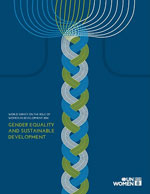 This year’s report highlights the fundamental links between gender equality and pathways to sustainability, and recommends concrete policy actions to move towards an economically, socially and environmentally sustainable future, in which all women and girls, men and boys enjoy their human rights.
Pathways and gender
The framing of the report draws centrally on the STEPS Centre's Pathways Approach, outlining a 'gendered pathways approach' which unites the challenges of working for environmental sustainability and gender equality. Melissa Leach has written a STEPS blog explaining the background to this thinking.
The report criticises dominant development models that support particular types of underregulated market-led growth, which rely on unequal power relations between women and men, at the same time as promoting the overexploitation of natural resources and the pollution of climates, land and oceans. Alternative pathways and trajectories, responding to these problems, are suggested in a number of areas such as the green economy, care, food security and investment.
The report also warns against stereotypes of women as ‘sustainability saviours’ and instead calls for approaches which recognise women’s rights, knowledge and values, and ensure their proper role in decision-making.
The report will be presented to the Second Committee of the General Assembly on Monday 20 October, followed by a panel discussion (pdf) about the key issues raised. Panellists will include, among others, Melissa Leach and Hilal Elver (UN Special Rapporteur on the Right to Food).
Find out more
- Blog: Why gender equality and sustainable development are inextricably linked by Melissa Leach
- Read the report: World Survey on the Role of Women in Development 2014: Gender Equality and Sustainable Development
- The STEPS Pathways Approach: video and publications
- Post-2015: resources from the STEPS Centre
Why gender equality and sustainable development are inextricably linked
 As the world moves towards Sustainable Development Goals for the post-2015 era, there is emerging debate about how target-setting and implementation might integrate across the 17 goals proposed by the Open Working Group (OWG) so that the inextricable links between, say, climate change, water and food are properly addressed. Meanwhile, feminists and others rightly celebrate that goal 5 ('Achieve gender equality and empower all women and girls') survived the fraught, politicised OWG process.
But while retaining this as a 'standalone' goal is a victory that may guard against the perils of gender mainstreaming and marginalisation, arguably the integration of this with the implementation of the other SDGs is the most important task of all.
As a major United Nations report launched on 20th October argues, gender equality must be integral to sustainable development. This is the latest in the flagship series of five-yearly World Survey on the Role of Women in Economic Development reports, prepared by UN Women. I had the privilege, together with IDS and STEPS Centre colleagues Lyla Mehta and Preetha Prabhakaran, of leading its conceptualisation. This included authoring the background conceptual framing chapter laying out a 'gendered pathways approach', and working with international feminist scholars to shape contributions in areas where gender-sustainability intersections are biting hard.
Interlocked pathways
The report shows how the effects of unsustainable patterns of development often intensify gender inequalities, as women and girls are disproportionately affected by economic, social and environmental shocks and stresses.
It argues that around many issues – whether work and industrial production, population and reproduction, food and agriculture, or water, sanitation and energy – dominant development pathways have often contributed to both unsustainability and gender inequality. Both are produced by development models that support particular types of under-regulated market-led growth and the persistence of unequal power relations between women and men.
Such pathways rely on and reproduce gender inequalities, for instance by exploiting women's labour and unpaid care work. They also produce environmental problems, as market actors seek and secure profit in ways that rely on the overexploitation of natural resources and the pollution of climates, land and oceans. As troubling intersections of unsustainability and gender inequality threaten or exceed planetary boundaries around climate change, biodiversity and pollution, so shocks, stresses and feedbacks may undermine gendered rights and capabilities even further.
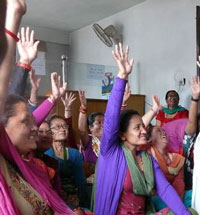 But the reverse is also possible: gender equality and sustainability can powerfully reinforce each other in alternative pathways. Women's knowledge, agency and collective action are often central to these, whether in managing local landscapes, adapting to climate change, producing and accessing food, or securing sustainable water, sanitation and energy services. We see this in examples where women are fully involved in forms of local forest governance that deliver both livelihood and conservation benefits, as Bina Agarwal has traced, and where networks of grass-roots women leaders are working to scale up capacity to reduce vulnerabilities to climate change in their communities.
For pathways to be truly sustainable and advance gender equality and the rights and capabilities of women and girls, those whose lives and well-being are at stake must be involved in leading the way, through community groups, women's organizations and other forms of collective action and engagement – supported by appropriate forms of investment and public services.
Women as 'sustainability saviours'? Beyond stereotypes to a relational view
However, a simple ‘win-win’ relationship between gender equality and sustainability cannot be assumed. Indeed, a policy focus on women can risk casting them as 'sustainability' saviours' in ways that stereotype their roles in relation to the family, the community and the environment. Such responses often add 'environment' to women's already heavy unpaid care and work burdens, without conferring rights, resources and benefits. Power imbalances in gender relations shape whether women's actions and work translate into the realization of their capabilities. And gender is always and everywhere cross-cut by other, intersecting power relations and inequalities, whether around class or ethnicity, age or place.
Hence analysis of interactions, tensions and trade-offs between different dimensions of gender relations and of sustainability is needed, along with attention to the structural foundations of gender discrimination and struggles against this. Recent policy attention to women and girls, from campaigning around the 'girl effect' to debates around the UK's Girl Summit earlier this year, while laudable in many respects, often lacks this relational perspective. Instead, women and girls are treated as individual victims, saviours or development beneficiaries in ways that may entrench stereotypes, while ultimately failing to empower. If goal 5 is to do its vital integrative work for the SDGs and the post-2015 agenda, then attention to gendered power relations, in all their rich, intersecting variety, must remain centre stage.
by Melissa Leach, Director, Institute of Development Studies
Find out more
UN Women: World Survey on the Role of Women in Economic Development 2014
The STEPS Centre's Pathways Approach: video, briefings and book
Pictures:
- Portraits of a woman, Lukolela, Democratic Republic of Congo, by Ollivier Girard (Flickr, cc-by-nc-nd)
- Women from Lumanti (Thankot, Nepal) participate in awareness raising session. Photo: OpenIdeo
Monday, 13 October 2014
Gender relations and land reform in Zimbabwe
What have been the consequences of Zimbabwe's land reform for agrarian gender relations? This is a crucial question. If land reform was aimed at addressing historical racial imbalances in land ownership, has it also challenged gender inequalities?
Surveys have shown how many women gained land in their own right (and were granted 'offer letters'). Between 15 and 20 percent of new A1 plots are recorded as controlled by women. With inheritance of land, this may have increased marginally over time. The pattern in A2 areas was even more skewed to male control, with only around 10 percent being controlled by women; although transfers have been higher through inheritance in these farms.
Based simply on these figures, the record of land reform in addressing gender inequalities is poor. However, such assessments say nothing about the effects of land reform on gender relations, and the power, influence and control of assets of men and women in rural society. New work suggests contrasting interpretations, and interesting dynamics.
Some researchers have argued that land reform has opened up spaces of opportunity for women, whereby new livelihoods can be pursued, and a greater economic independence realised. This view has been emphasised by Patience Mutopo in her excellent study of women in a new resettlement area in Mwenezi district, in the dry south of the country. Access to land – often portions of husbands' fields – provided the route to building new trading enterprises. Mutopo traced the economic and social linkages that resettlement women created. It is a fascinating story, now written up in a book. It shows that economic and social empowerment does not have to come through the formal allocation of land to women, but many women are able to negotiate access to resources within existing marriage and other institutions, and make very good use of these opportunities. She argues that women 'can have remarkable bargaining power in certain domains'. She shows how new livelihood activities, notably trading involving travel away from the rural home, have meant changed gender relations. When women travel, husbands must take on domestic caring roles, including cooking and childcare. And with increased incomes, women may be the ones offering cash to their home-bound husbands when they return.
In a paper in Agrarian South by Mutopo, together with Jeanette Manjengwa and Manase Chiweshe, a series of cases are offered that show women accumulating in their own right. In the higher potential zones, agricultural production on the new resettlements was providing income that was being invested in school fees, home development as well as farming inputs. In the drier parts of the country, the cases showed women adopting more diversified livelihoods, including the use of natural resources for craft making and trading. Such patterns of accumulation are assisted through forms of collective organisation by women, facilitating trading, gaining access to markets or providing mutual aid to help out with domestic activities. Such new relations among women provide a basis for solidarity, assistance and economic organisation maximising the opportunities of the land reform, they argue.
In our work in Masvingo province we found a diversity of patterns across sites. New gender relations were being negotiated within households, as women gained economic independence and control over resources, separate from men. Simply having larger farms, and a greater level of production and income means that divisions of labour have shifted, with separate enterprises created, with different responsibilities. While in communal area homes, women have often managed to create some form of independence – growing their own vegetables, buying their own goats – the room for manoeuvre is limited, and with less income to hire labour from outside, women are often restricted to social reproductive activities, and providing labour for efforts controlled by men.
Those women who highlighted the benefits of land reform most enthusiastically in our study areas were those who had been marginalised and ostracised in their previous homes. These included single women, divorcees, and those who – for a range of reasons – had become outcasts in their communities, often targeted as 'witches'. The land reform areas offered a space outside restrictive, discriminatory, sometimes dangerous settings from where they came. For such women, these were genuinely liberated spaces.
However, others have highlighted that there are severe limits to such liberation. In a recent paper Manase Chiweshe, Loveness Chanoka and Kirk Helliker ask, based on data from Mazowe and Goromonzi, whether radical socio-spatial reorganisations such as fast-track land reform can destabilise forms of domination such as patriarchy. They conclude that patriarchy is so entrenched and the fast-track programme is 'highly masculinized', very often limiting opportunities. Bargaining with patriarchy, they argue, has limits. They quote one woman in Goromonzi who comments:
When so-called 'customary law' becomes extended into new resettlement areas women can become especially disadvantaged. In the early days of land occupation and the beginning of the fast-track programme, the new resettlements – as the old resettlements – were outside customary control, organised through Committees of Seven, linked to political and administrative structures. However over time, as Chiefs and headmen have exerted authority over the new resettlements, hybrid institutional arrangements have emerged.
In areas of land and inheritance in particular an increasing influence of patriarchal customary systems are observed. As Prosper Matondi comments in his 2012 book, the land reform 'has perpetuated the customary property rights in favour of men'. The implementation of new A1 permits may have helped to reverse some of this trend, as the more detailed permits now replacing 'offer letters' require both men and women to be named, and thus specify inheritance rights for women. This provides some protection of the imposition of 'customary' rules that frequently result of land and assets being taken by male relatives on the death of a husband.
As Chiweshe and colleagues point out, the burdens of social reproduction continue to fall substantially on women in the new resettlements. But in these new settings, the challenges may well have increased, with the lack of basic infrastructure. The distance to clinics for example can be substantial, and similarly water collection distances may be longer than in their former homes. While investments have occurred, these have been slow and limited, and most resettlement areas have few facilities.
There are thus highly contradictory effects resulting from land reform on gender relations. As Chiweshe and colleagues conclude "[al]though in large part insensitive to the land needs and rights of women, in some ways fast track nevertheless improved – albeit inadvertently – the lives of A1 women… Despite the prevalence of patriarchy as an intertwined system of structures and practices, women have sought to identify and open up gaps and pursue new activities as they manoeuvre their way..".
It is this active agency, involving negotiation, bargaining and generating creative solutions, that comes across strongly in these studies. While the power imbalances are clear, and gender discrimination widespread, this does not mean that women always lose out.
This post was written by Ian Scoones and originally appeared on Zimbabweland
Surveys have shown how many women gained land in their own right (and were granted 'offer letters'). Between 15 and 20 percent of new A1 plots are recorded as controlled by women. With inheritance of land, this may have increased marginally over time. The pattern in A2 areas was even more skewed to male control, with only around 10 percent being controlled by women; although transfers have been higher through inheritance in these farms.
Based simply on these figures, the record of land reform in addressing gender inequalities is poor. However, such assessments say nothing about the effects of land reform on gender relations, and the power, influence and control of assets of men and women in rural society. New work suggests contrasting interpretations, and interesting dynamics.
Some researchers have argued that land reform has opened up spaces of opportunity for women, whereby new livelihoods can be pursued, and a greater economic independence realised. This view has been emphasised by Patience Mutopo in her excellent study of women in a new resettlement area in Mwenezi district, in the dry south of the country. Access to land – often portions of husbands' fields – provided the route to building new trading enterprises. Mutopo traced the economic and social linkages that resettlement women created. It is a fascinating story, now written up in a book. It shows that economic and social empowerment does not have to come through the formal allocation of land to women, but many women are able to negotiate access to resources within existing marriage and other institutions, and make very good use of these opportunities. She argues that women 'can have remarkable bargaining power in certain domains'. She shows how new livelihood activities, notably trading involving travel away from the rural home, have meant changed gender relations. When women travel, husbands must take on domestic caring roles, including cooking and childcare. And with increased incomes, women may be the ones offering cash to their home-bound husbands when they return.
In a paper in Agrarian South by Mutopo, together with Jeanette Manjengwa and Manase Chiweshe, a series of cases are offered that show women accumulating in their own right. In the higher potential zones, agricultural production on the new resettlements was providing income that was being invested in school fees, home development as well as farming inputs. In the drier parts of the country, the cases showed women adopting more diversified livelihoods, including the use of natural resources for craft making and trading. Such patterns of accumulation are assisted through forms of collective organisation by women, facilitating trading, gaining access to markets or providing mutual aid to help out with domestic activities. Such new relations among women provide a basis for solidarity, assistance and economic organisation maximising the opportunities of the land reform, they argue.
In our work in Masvingo province we found a diversity of patterns across sites. New gender relations were being negotiated within households, as women gained economic independence and control over resources, separate from men. Simply having larger farms, and a greater level of production and income means that divisions of labour have shifted, with separate enterprises created, with different responsibilities. While in communal area homes, women have often managed to create some form of independence – growing their own vegetables, buying their own goats – the room for manoeuvre is limited, and with less income to hire labour from outside, women are often restricted to social reproductive activities, and providing labour for efforts controlled by men.
Those women who highlighted the benefits of land reform most enthusiastically in our study areas were those who had been marginalised and ostracised in their previous homes. These included single women, divorcees, and those who – for a range of reasons – had become outcasts in their communities, often targeted as 'witches'. The land reform areas offered a space outside restrictive, discriminatory, sometimes dangerous settings from where they came. For such women, these were genuinely liberated spaces.
However, others have highlighted that there are severe limits to such liberation. In a recent paper Manase Chiweshe, Loveness Chanoka and Kirk Helliker ask, based on data from Mazowe and Goromonzi, whether radical socio-spatial reorganisations such as fast-track land reform can destabilise forms of domination such as patriarchy. They conclude that patriarchy is so entrenched and the fast-track programme is 'highly masculinized', very often limiting opportunities. Bargaining with patriarchy, they argue, has limits. They quote one woman in Goromonzi who comments:
"The household setup is not fair, as men have full control of cash crops and as we women … are responsible for crops that are mainly for family consumption for example round nuts. The unfair part of it is, even if as women we sell surplus 'women crops', men's hands will be seen when monies get on the table. That is the reason why we also engage ourselves in other non-agricultural income-generating activities in a bid to widen our income base".
In areas of land and inheritance in particular an increasing influence of patriarchal customary systems are observed. As Prosper Matondi comments in his 2012 book, the land reform 'has perpetuated the customary property rights in favour of men'. The implementation of new A1 permits may have helped to reverse some of this trend, as the more detailed permits now replacing 'offer letters' require both men and women to be named, and thus specify inheritance rights for women. This provides some protection of the imposition of 'customary' rules that frequently result of land and assets being taken by male relatives on the death of a husband.
As Chiweshe and colleagues point out, the burdens of social reproduction continue to fall substantially on women in the new resettlements. But in these new settings, the challenges may well have increased, with the lack of basic infrastructure. The distance to clinics for example can be substantial, and similarly water collection distances may be longer than in their former homes. While investments have occurred, these have been slow and limited, and most resettlement areas have few facilities.
There are thus highly contradictory effects resulting from land reform on gender relations. As Chiweshe and colleagues conclude "[al]though in large part insensitive to the land needs and rights of women, in some ways fast track nevertheless improved – albeit inadvertently – the lives of A1 women… Despite the prevalence of patriarchy as an intertwined system of structures and practices, women have sought to identify and open up gaps and pursue new activities as they manoeuvre their way..".
It is this active agency, involving negotiation, bargaining and generating creative solutions, that comes across strongly in these studies. While the power imbalances are clear, and gender discrimination widespread, this does not mean that women always lose out.
This post was written by Ian Scoones and originally appeared on Zimbabweland
Tuesday, 23 September 2014
Connecting development actors in Ethiopia: linking climate change, nutrition and gender
Over the past few days, ordinary people from around the globe have taken to the streets to show their concern at the lack of political will to deal with climate change. At today’s special UN summit in New York, the world will be watching how our leaders respond.
One of the issues likely to be on the agenda is food security. As demonstrated in the latest IPCC report, climate change is having an impact on already worrying levels of hunger and undernutrition in the world. This evidence has reinforced the importance of agriculture becoming more climate smart in order to: increase food security, adapt to build resilience, and reduce agriculture’s greenhouse gas emissions (mitigation).
This blog post examines IDS’ recent work in Ethiopia, touching upon how nutritionists, agriculturalists, gender, environmental and climate change professionals are starting to talk to one another and respond to the need for climate smart agriculture.
What the numbers tell us
Agriculture accounts for over 46 percent of Ethiopian GDP (2006), and is highly sensitive to seasonal variations in temperature and moisture. Worryingly, the World Bank has calculated that climate change may reduce Ethiopia’s GDP by up to 10 percent by 2045. In addition, the country has one of the highest rates of malnutrition globally. In 2011, 44 percent of children under five years old were stunted (meaning their height was far lower than the average for their age), which is 14 percent higher than the average for developing countries.
The Ethiopian government has exciting ambitions: to achieve middle-income status by 2025 in a carbon neutral way. The National Nutrition Plan and the Climate Resilient Green Economy Strategy have outlined ways to meet this aspiration. However, when we discussed these plans with various actors in Ethiopia, it seemed that the ongoing work is still in siloes- people are working hard to support their national development but not linking up or learning from other sectors.
What has IDS been trying to do?
The Irish Aid funded project has given the Institute of Development Studies (IDS) team the opportunity to build a partnership with the Ethiopian Public Health Institution (EPHI), to bring together and connect some of the key actors; support them in building their capacity to share knowledge ;and examine the thematic links that can further build on their research. In
2012, we brought together people working across these three themes and asked: Who plays a role in sharing nutrition and climate change [adaptation] information in Ethiopia?
We were able to explore what knowledge sharing techniques and tools could be used to enhance intersectoral sharing; and developed commitment statements of how participants were going to take a small action to integrate their implement their learning.
Taking individual action
 It has been exciting (and challenging) to see these commitments grow over the year. Not all have become a reality; lack of time, institutional and collegial support, and changes in staff have all played a role, but some inspiring activities have also emerged. In August, participants were invited to share their success and highlight challenges, and exchange advice and learning.
For example, Nuriya Yusuf, Gender Directorate at EPHI, committed to conduct an institutional training programme on Gender, Nutrition and Climate Change for EPHI employees. She brought together over 50 employees, both men and women for free, face-to-face training on the impacts of nutritional issues on their family lives. With backing from senior management she plans to continue the project and has been invited to share her learning with other institutions.
Another participant, DFID Ethiopia Nutrition Advisor Berhanu Hailegiorgis, was keen to strengthen internal sharing of relevant cross-cutting knowledge between teams and advisors. Berhanu has now been invited to present on the interdisciplinary links at the next internal retreat to further drive understanding and momentum on this agenda for DFID in Ethiopia.
Lessons learned for the future
There was a general consensus that issues need to be better linked, but there are also a lot of research gaps. Some of these include:
By Fatema Rajabali
One of the issues likely to be on the agenda is food security. As demonstrated in the latest IPCC report, climate change is having an impact on already worrying levels of hunger and undernutrition in the world. This evidence has reinforced the importance of agriculture becoming more climate smart in order to: increase food security, adapt to build resilience, and reduce agriculture’s greenhouse gas emissions (mitigation).
This blog post examines IDS’ recent work in Ethiopia, touching upon how nutritionists, agriculturalists, gender, environmental and climate change professionals are starting to talk to one another and respond to the need for climate smart agriculture.
What the numbers tell us
Agriculture accounts for over 46 percent of Ethiopian GDP (2006), and is highly sensitive to seasonal variations in temperature and moisture. Worryingly, the World Bank has calculated that climate change may reduce Ethiopia’s GDP by up to 10 percent by 2045. In addition, the country has one of the highest rates of malnutrition globally. In 2011, 44 percent of children under five years old were stunted (meaning their height was far lower than the average for their age), which is 14 percent higher than the average for developing countries.
The Ethiopian government has exciting ambitions: to achieve middle-income status by 2025 in a carbon neutral way. The National Nutrition Plan and the Climate Resilient Green Economy Strategy have outlined ways to meet this aspiration. However, when we discussed these plans with various actors in Ethiopia, it seemed that the ongoing work is still in siloes- people are working hard to support their national development but not linking up or learning from other sectors.
What has IDS been trying to do?
The Irish Aid funded project has given the Institute of Development Studies (IDS) team the opportunity to build a partnership with the Ethiopian Public Health Institution (EPHI), to bring together and connect some of the key actors; support them in building their capacity to share knowledge ;and examine the thematic links that can further build on their research. In
2012, we brought together people working across these three themes and asked: Who plays a role in sharing nutrition and climate change [adaptation] information in Ethiopia?
 |
| Figure 1: Ethiopian Map: A complex network in Ethiopia |
Taking individual action
It has been exciting (and challenging) to see these commitments grow over the year. Not all have become a reality; lack of time, institutional and collegial support, and changes in staff have all played a role, but some inspiring activities have also emerged. In August, participants were invited to share their success and highlight challenges, and exchange advice and learning.
For example, Nuriya Yusuf, Gender Directorate at EPHI, committed to conduct an institutional training programme on Gender, Nutrition and Climate Change for EPHI employees. She brought together over 50 employees, both men and women for free, face-to-face training on the impacts of nutritional issues on their family lives. With backing from senior management she plans to continue the project and has been invited to share her learning with other institutions.
Another participant, DFID Ethiopia Nutrition Advisor Berhanu Hailegiorgis, was keen to strengthen internal sharing of relevant cross-cutting knowledge between teams and advisors. Berhanu has now been invited to present on the interdisciplinary links at the next internal retreat to further drive understanding and momentum on this agenda for DFID in Ethiopia.
Lessons learned for the future
There was a general consensus that issues need to be better linked, but there are also a lot of research gaps. Some of these include:
- What kind of adaptive capacities are needed for better nutrition for women and children?
- Links between climate change, nutrition and gender across different institutions in Ethiopia and ideas on how can these areas be better integrated
- Drought resistant mechanisms and nutrition
By Fatema Rajabali
Monday, 18 August 2014
The challenges of agriculture: attitudes of Senegalese young people from the Afrobarometer Round 5 Survey
 |
| Photo: Kaymor, Senegalese schoolgirl by angela7 on Flickr (cc-by-nc-sa) |
In February and March 2013, the Senegalese Afrobarometer team conducted a nationwide Survey on a sample of 1200 young Senegalese people aged 18 and above. The sample is representative of the 18+ population and takes into account the distribution by district, sex and place of residence.
As in previous surveys, the Senegalese team inserted some country-specific questions into the standard questionnaire of the African network. These included a question on the extent to which respondents agreed with the following statements:
- Q80A_SEN. Promote economic growth by: support to farmers/rural areas versus prioritize industry/urban areas
- Q80B_SEN. Promote economic growth by: technology and agricultural inputs versus access to markets
- Q80C_SEN. Promote economic growth by: focus on producing cash crops versus food crops
- Q80D_SEN. No foreigners to buy land versus foreigners can purchase land
- Q80E_SEN. Work in agriculture; produce for consumption or sale.
- -1 Missing
- 1 Agree very strongly with 1
- 2 Agree with 1
- 3 Agree with 2
- 4 Agree very strongly with 2
- 5 Agree with neither
- 9 Don’t know.
For purposes of analysis, the age variable that was continuous was re-coded as a categorical variable. The latter was assigned two modalities: youth (under 36 years old) and adults/old people (more than 36 years old).
Variables Q80A_SEN, Q80B_SEN Q80C_SEN and Q80D_SEN (see above) were re-coded again and each of them were assigned 3 modalities: Agree with 1, Agree with 2 et Agree with neither.
When we crossed the 4 variables with age, only one relationship was statistically significant: it is the relationship between Q80B_SEN (promote economic growth by "technology and agricultural inputs versus access to markets") and the "age group" variable.
Modernize agriculture first, then open markets
Depending on their age, people give priority either to new technologies and improved inputs such as machinery, fertilizer, and seed quality or to improve access to markets with better infrastructure and communication pathways.
As we examined the conditional distributions, it appears that:
- 79% of young people argue that economic growth should be pursued through modernization of agriculture (new technologies, inputs, improved seeds and machines), while 20% argue that the investment must be focused on improving market access with better infrastructure and communication channels and one person is indecisive;
- Among adults and the elderly, 83% favour economic growth through modernization of agriculture (new technologies, inputs, improved seeds and machinery); 13% argue that the investment must be focused on improving access to markets, with better infrastructure and communication channels; and 4 people remain undecided.
In sum, it appears that the perception of young people in agriculture is holistic as it incorporates all the modernization of the sector, from production to conditions surrounding the sale of products.
Young people perceptions about land grabbing, agriculture modernization and support to rural farmers: do gender and residence area matter?
There is a dependent relationship between gender and attitude as far as the land grabbing is concerned (p-value <5%). Girls and young women are less favorable than young men to the granting of land to foreigners: 75% of women (3 out of 4 women) would be hostile to the fact of granting of land to foreigners. Among young men, the proportion is 64%.
The difference in attitude is explained by several factors. Women are at the heart of household economies that would be more weakened by a decline in agricultural production resulting from land grabbing. In addition, given their lower level of qualifications, they are at a disadvantage compared to men in terms of employment offered by the new operators. Another reason is related to the fact that men are more likely to benefit financially from land transactions with foreigners. Finally, women are less affected by migration than young men, but they are more affected by the alienation of local resources.
Similarly, there is a dependent relationship between place of residence and attitude to land grabbing (p-value <5%). Rural residents are more likely than urban residents to be opposed to the sale of land to foreigners: 76% of rural respondents do not want land to be sold to foreigners, compared to 68% in urban areas. The most obvious hostility towards rural land sales is explained by the fact that these lands are located in rural areas.
Compared to young men, girls and young women are more favourably disposed to agricultural investment in rural areas and agricultural modernization. Bivariate analysis between these variables and gender are all significant at the 5% level.
90% of girls and women interviewed favour the promotion of economic growth through support to farmers and the rural area of residence, while 10 say that support should be given to industrialization and urban areas. In comparison, 84% of men are in favour of supporting farmers and rural areas against 16% who believe that priority should be focused on industrialization and urban areas. So girls and young women appear to be more interested than young men in investment in rural and agricultural modernization.
The reasons we have previously advanced to explain these differences in attitude and perception are valid here. They are more attached to rural areas (because less affected by migration), and they are heavily dependent on agriculture and the benefits they can get from it (for instance, economic gains and empowerment).
In conclusion, these results show the importance of identifying the perceptions of young people in agriculture and strategies aiming to promote it. Beyond this, clear differences appear in these attitudes, depending on the respondents’ gender, place of residence, educational level, marital status, and other factors.
By Mohamadou Sall
Related: Three reasons why Senegal needs to rethink youth, farming and development
Picturing gender, ethics and health systems: a competition for photographers
The aim of this competition, organised by Research in Gender and Ethics (RinGs), a new cross-RPC partnership between Future Health Systems, ReBUILD and RESYST, is to capture the everyday stories of the ways that gender plays out within health systems around the world. The winning entry will be exhibited at the Global Symposium on Health Systems Research, and be used to illustrate our website, and in other published materials with full credit to the photographer.
Gender-sensitive health policy is a feature of international commitments and consensus documents and national-level normative statements and implementation guidance in many countries. However, there are gaps in our knowledge about how gender and ethics interface with health systems. Our project shines a light on some of the ways that gender and health systems come together in a variety of settings. We are looking for photographers who can help us communicate this area of work visually. We welcome images of people of all genders from all areas of the health system, all around the world - be creative!
The deadline for entries is the 1 September 2014.
The judging
Photographs will be judged by a panel of gender specialists and a representative from the creative industry. They will be marked according to:
Who can enter and how to submit?
Those who have an experience of, or interest in, gender and health systems are very welcome to send images.
Send up to a maximum of three photos by email to RinGs.RPC@gmail.com
Submission requirements
Submit your entry
All images should be emailed to RinGs.RPC@gmail.com by the 1 September. We look forward to receiving your entries.
For more details please download the entry requirements and terms. Information about informed consent and a sample consent form are also available.
Gender-sensitive health policy is a feature of international commitments and consensus documents and national-level normative statements and implementation guidance in many countries. However, there are gaps in our knowledge about how gender and ethics interface with health systems. Our project shines a light on some of the ways that gender and health systems come together in a variety of settings. We are looking for photographers who can help us communicate this area of work visually. We welcome images of people of all genders from all areas of the health system, all around the world - be creative!
The deadline for entries is the 1 September 2014.
The judging
Photographs will be judged by a panel of gender specialists and a representative from the creative industry. They will be marked according to:
- Their content, i.e. their relevance to subject.
- Their ability to tell the story of gender and health systems, i.e. the message they contain, their creativity. We are looking for original and authentic visual representations of health systems in action.
- The technical merit of the photo, i.e. exposure, focus, colour, lighting etc.
Who can enter and how to submit?
Those who have an experience of, or interest in, gender and health systems are very welcome to send images.
Send up to a maximum of three photos by email to RinGs.RPC@gmail.com
Submission requirements
- Size: At least 1MB
- Print resolution: 300 dpi
- Format: JPEG or tiff only
- Landscape and portrait images are acceptable
- Although some digital enhancement is acceptable we cannot accept images that have been digitally altered to change what is portrayed.
- Name of photographer:
- Photographer email:
- Photographer phone:
- Title of photograph:
- Location (country and city/town/village where the photograph was taken):
- The date (if unknown, please provide the year) each photograph was taken:
- The level of consent provided from any people pictured in the photo (see informed consent guidelines for more information):
Submit your entry
All images should be emailed to RinGs.RPC@gmail.com by the 1 September. We look forward to receiving your entries.
For more details please download the entry requirements and terms. Information about informed consent and a sample consent form are also available.
Monday, 11 August 2014
Sexuality and Sport in Burkina Faso: “Gentle” actions and partnerships that stand up to homophobia
Like many sport and development (S&D) organisations throughout Africa, the organisation I have been working with since 2011 in Burkina Faso uses sport to bring youth together and to communicate lessons about HIV and sexual health practice. Using sport as a means of communicating information has shown to be an engaging alternative to talking at young people in a classroom. As an athlete myself, and one who squirmed through lessons about sexual health in a small room when I was a teenager, I can see the benefit of teaching in a setting where young people are comfortable and attending out of interest, rather than obligation.
Since its inception
in 2005, the S&D organisation I work with in Burkina Faso has grown and now
works in partnership with the National Ministry of Health, UNHCR, local health
organizations and local schools. Through
these partnerships, the organisation has been part of a movement to push
policies in Burkina Faso (and West Africa) to extend access to sexual health resources
and to fund education about HIV and sexual health in youth centres.[1] Despite
the successes of this movement, the drive and focus to educate youth about sexual
health has a dangerous blindspot: homophobia and transphobia.
The limits of inclusion
I can remember only
one occasion during a session about HIV infection out on a football pitch when
homosexuality was mentioned. In this
moment, the coach brushed quickly through the mandatory statement that condom
use is necessary for protection not only for sex between a man and a women, but
also between men. This was followed by giggles.
The coach did not address the reaction of the youth, nor did anyone ask
about women who have sex with women, or people who have sex with both men and
women. They quickly moved on to the next exercise in the session. This moment made me pause, and I reflected on
how I might feel as a young LGBT person who was part of that group. I would have felt invisible.
S&D programmes
that address issues of sexual health should address them for everyone. These same programmes proclaim inclusion in
their mission statements and programme goals; they work with girls, boys,
different ethnicities, classes and nationalities, and with youth with
disabilities. But how many of them are working with youth who identify as lesbian,
gay, bisexual or transgender? I would venture
that the unfortunate answer is that they do not know. And yet, in a climate where laws in countries
like Uganda and Nigeria make it dangerous to even broach the topic of gender
identity and sexual orientation, it is understandable that these development programmes
may not even know how to begin. But this
is also an opportunity, and an example of a strategic avenue for productive
policy engagement that the Sexuality, Poverty and Law
Programme
at IDS is exploring.
The value of ‘gentle’ action
Some of the young
women I met through my involvement with sports in Burkina Faso earlier this
year introduced me to an organization called the Queer African Youth Networking
Center (QAYN).[2]
QAYN is based in Ouagadougou and works throughout West Africa. They are an example of a small group of
dedicated young people whose mission it is to support and foster youth activism
about LGBT issues and to promote the safety and well being of gays, lesbians,
bisexual, transgender and questioning youth in West Africa. They may not be a very big or visible
organization, but they are providing a vital resource to youth who need support. Just like S&D programmes, they are
helping these youth to build confidence and leadership skills.
When I sat with some
of the youth who are part of QAYN, and asked them what the biggest problem they
face in their community is, the answer they gave me was visibility. The youth in QAYN work to make LGBT people,
and rights, visible; but this
visibility also comes at a cost. They told me that they are often shunned by
their families, and have to hide from their friends and in public because
people just do not have any awareness about diversity of sexual orientation and
gender identity. They said that the more
people who know someone who is LGBT and who accepts them, the more their
families will begin to understand and accept them.
Some of the youth
who have found QAYN take part in the sport activities and sessions on HIV and
sexual health that are facilitated by the S&D programme I work with. In fact, this is how I met them. And yet
their identities have been all but invisible in the S&D context. Is this not an ideal opportunity for a
partnership between the S&D sector and an organization that works with LGBT
youth to give these young people a voice and critical support?
In a conversation
with one of the young members of QAYN, he explained that laws – like societal
norms – cannot change overnight. QAYN’s strategy,
therefore, uses ‘gentle’[3]
actions for building toward change. These ‘gentle actions’ include supporting LGBT
youth, creating partnerships with other NGOs in their communities and raising
awareness with local organisations and policy makers to lay the groundwork for
potential policy and law change in the future.
The members of QAYN
are incredibly brave and safety is a perpetual challenge for them, even in a
country like Burkina Faso where homosexuality is not specifically outlawed but is
socially proscribed[4]. QAYN welcomed me and my colleagues from the S&D
organization, offering to help with our sexual health curriculums and
activities, and asking with genuine interest if they could visit a sport
event. This rare meeting of sectors is
an opportunity to contribute to these “gentle” changes in perceptions that QAYN
is working toward, and one that other S&D organisations should actively
seek out. It is part of the necessary
on-the-ground steps toward social change that are the undercurrent to legal and
policy changes on such controversial issues.
[3] translated from
French: doux/douce
Thursday, 26 June 2014
Research in Gender and Ethics (RinGs): A new partnership to build stronger health systems
Gender-sensitive health policy is a feature of international commitments and consensus documents and national-level normative statements and implementation guidance in many countries. However, there are gaps in our knowledge about how gender and ethics interface with health systems. Funded by the UK Department for International Development, this exciting new initiative brings together three health systems focused Research Programme Consortia (RPC): Future Health Systems, ReBUILD and RESYST in a partnership to galvanise gender and ethics analysis in health systems.
Our approach
As the partnership is concerned with ensuring that new approaches get translated into action, we have an interest in embedded approaches; analysis that is relevant and owned by local actors. In addition, an understanding of intersectionality is central to our work. Gender intersects with other axes of inequality, such as age, ethnicity, class, poverty, geography, (dis)ability and sexuality. Finally, in addressing power relations and social exclusion we also call attention to ethics in health systems research, policy and practice.
What are our aims?
This partnership seeks to understand, and to encourage, a gendered approach to the study of health systems care-seeking; financing and contracting; governance; and human resources for health by:
- Synthesising the current evidence base. This will provide tools, case studies and guidelines on gender, ethics and health systems for researchers and decision makers and set the terms of a future research agenda.
- Stimulating new research. Through small grants aimed explicitly at RPC partners and affiliates.
- Encouraging mutual learning and research uptake. A learning platform will support grantees, RPC members and a wider stakeholder group (policy makers, implementers and advocates) to share and support one another in defining, conducting and applying this research. Dialogue will engage with research findings and encourage its use in policy and practice.
Who is involved? Find out more
A small team is steering the direction of the project:
- Asha George, Future Health Systems/Johns Hopkins School of Public Health
- Sarah Ssali, ReBUILD/School of Women and Gender Studies, Makerere University
- Sally Theobald, ReBUILD/Liverpool School of Tropical Medicine
- Sassy Molyneux, Resyst/KEMRI-Wellcome Trust Research Programme
- Kate Hawkins, Pamoja Communications
- Rosemary Morgan, Cross RPC /Johns Hopkins School of Public Health
Over time a broader group of RPC researchers will also join the projects, either as the recipients of research funding from our small grants project or as part of our learning platform. Do get in touch if you would like to learn more.
Thursday, 24 April 2014
Innovation and commitment are vital for gender-equitable and inclusive investments
 Can land and agricultural investments yield positive results for
impoverished and marginalized rural communities? If yes, how and under
what conditions? What measures should be adopted to ensure that women’s
and men livelihoods are improved when foreign and domestic agriculture
private investments take place?
Can land and agricultural investments yield positive results for
impoverished and marginalized rural communities? If yes, how and under
what conditions? What measures should be adopted to ensure that women’s
and men livelihoods are improved when foreign and domestic agriculture
private investments take place?
These were some of the questions discussed in Cape Town, South Africa from 5 to 7 March 2014 at the "Multi-stakeholder
Conference on Agricultural Investment, Gender and Land in Africa:
Towards inclusive, equitable and socially responsible investment".
The conference was organized by FAO in partnership with the Institute
for Poverty, Land and Agrarian Studies (PLAAS), Future Agricultures
Consortium, the Land Policy Initiative (LPI), African Union, African
Development Bank and United Nations Economic Commission for Africa. The
event was co-sponsored and supported by Omidyar Network, IFAD, Eastern
and Southern Africa Ford Foundation offices, and the International Land
Coalition.
This was the first conference on land-related agriculture investment and inclusive business that focused specifically on gender issues. Although nowadays there is more openness and willingness to promote gender equality and women´s empowerment in the agriculture sector, so far limited attention has been devoted to understanding how agricultural investments affect differently women and men.
In his opening speech Tobias Takavarasha (photo above), FAO Representative in South Africa highlighted that “when agriculture investments are implemented, women are often disadvantaged in terms of access to wage labor and contract farming opportunities, participation in consultations and decision-making around land, and compensation schemes. Given the crucial role that rural women play in agriculture, no substantial improvements in poverty reduction and food security can be reached if women are left out”.
Bringing together the latest research findings on the implications of agriculture investments on different groups of rural dwellers, the conference highlighted good practices and promising approaches for equitable and inclusive investments models and showcased examples that can benefit impoverished rural women and men.
The Conference was not just a debate going over research insights. It offered a space where representatives from different African countries and a wide range of sectors could openly share their perspectives, experiences and ideas on why putting gender equality at the centre is essential for achieving positive and sustainable development outcomes. About 130 representatives (see photo left) from producers’ associations, private enterprises, government, civil society, academia, international NGOs and philanthropic organizations discussed challenges and opportunities related to investment models, corporate social responsibility practices, contractual arrangements, partnerships and policy frameworks in order to foster sustainable win-win options.

Lively discussions on the roles and responsibilities of the various stakeholders took place both in multi-stakeholder and sectorial working group sessions. The Conference participants developed recommendations for each sector (government, civil society groups, farmer associations, the private sector, researchers and non-governmental organizations) to make concrete steps towards ensuring more equitable and gender-sensitive agricultural investments.
There was a broad consensus among the participants, that in order to put in place sustainable, inclusive and gender-equitable investments models that work and can be upscaled strong collaboration and partnerships among actors is necessary. In this context, NGOs and producers’ organizations were identified as strategically equipped to facilitate mutually beneficial relations between private enterprises and female and male small producers. Moreover, participants highlighted the importance of creating spaces and mechanisms in which interactions and dialogue among stakeholders take place, while at the same time ensuring that the interests of the most marginalized groups- including poor rural women and men- are fully represented.
The government-working group stated that African governments have the power and leverage to negotiate from a position of strength in choosing desirable investments that promote more inclusive and gender-equitable development. For instance, governments can facilitate multi-stakeholder interactions through the creation of specific business clusters relevant for rural women; adopt regulations to ensure that women are represented in producers’ organizations and decision-making bodies; and promote extension services tailored to women’s needs so that they can profit from arising business opportunities’.
Private enterprise representatives recognized that engaging women in their business is not always straightforward. It was highlighted that specific measures to promote women´s participation are frequently needed, including developing products and services that take women’s needs and constraints into account; adopting innovative ways to circumvent gender-based constraints to participation (e.g. financing mechanisms that do not require land as collateral); providing facilities and adopting measures to support women’s participation (e.g. crèche, flexible working hours); reaching out to partners who can support private enterprises to engage more women; and increasing women’s participation at the contracting level as front line people, among others.
The recommendations and conference-related publications will be widely disseminated at relevant events worldwide such as the Kilimanjaro rural women’s summit (April 2015), Principles for Responsible Agricultural Investments negotiation process (CFS- RAI) (May 2014), Pan African Parliament seminar on making agricultural investment work for Africa in Johannesburg (June 2014) and a continental conference on land policy organized by the AU (November 2014).
“We expect this conference to be a first step towards creating a multi-stakeholder platform where knowledge, lessons learned, good practices and promising approaches on agriculture investments, gender and land can be continuously shared and discussed and also, where partnerships can be fostered” said Martha Osorio, FAO Gender and Rural Development Officer.
by Martha Osorio, Gender and Rural Development Officer, FAO, on 14 Apr 2014
(All photos © AGLIA Conference Cape Town 2014)
For further information please contact martha.osorio@fao.org
anna.rappazzo@fao.org
esulle@plaas.org.za
rhall@plaas.org.za
This was the first conference on land-related agriculture investment and inclusive business that focused specifically on gender issues. Although nowadays there is more openness and willingness to promote gender equality and women´s empowerment in the agriculture sector, so far limited attention has been devoted to understanding how agricultural investments affect differently women and men.
In his opening speech Tobias Takavarasha (photo above), FAO Representative in South Africa highlighted that “when agriculture investments are implemented, women are often disadvantaged in terms of access to wage labor and contract farming opportunities, participation in consultations and decision-making around land, and compensation schemes. Given the crucial role that rural women play in agriculture, no substantial improvements in poverty reduction and food security can be reached if women are left out”.
Bringing together the latest research findings on the implications of agriculture investments on different groups of rural dwellers, the conference highlighted good practices and promising approaches for equitable and inclusive investments models and showcased examples that can benefit impoverished rural women and men.
The Conference was not just a debate going over research insights. It offered a space where representatives from different African countries and a wide range of sectors could openly share their perspectives, experiences and ideas on why putting gender equality at the centre is essential for achieving positive and sustainable development outcomes. About 130 representatives (see photo left) from producers’ associations, private enterprises, government, civil society, academia, international NGOs and philanthropic organizations discussed challenges and opportunities related to investment models, corporate social responsibility practices, contractual arrangements, partnerships and policy frameworks in order to foster sustainable win-win options.
Lively discussions on the roles and responsibilities of the various stakeholders took place both in multi-stakeholder and sectorial working group sessions. The Conference participants developed recommendations for each sector (government, civil society groups, farmer associations, the private sector, researchers and non-governmental organizations) to make concrete steps towards ensuring more equitable and gender-sensitive agricultural investments.
There was a broad consensus among the participants, that in order to put in place sustainable, inclusive and gender-equitable investments models that work and can be upscaled strong collaboration and partnerships among actors is necessary. In this context, NGOs and producers’ organizations were identified as strategically equipped to facilitate mutually beneficial relations between private enterprises and female and male small producers. Moreover, participants highlighted the importance of creating spaces and mechanisms in which interactions and dialogue among stakeholders take place, while at the same time ensuring that the interests of the most marginalized groups- including poor rural women and men- are fully represented.
The government-working group stated that African governments have the power and leverage to negotiate from a position of strength in choosing desirable investments that promote more inclusive and gender-equitable development. For instance, governments can facilitate multi-stakeholder interactions through the creation of specific business clusters relevant for rural women; adopt regulations to ensure that women are represented in producers’ organizations and decision-making bodies; and promote extension services tailored to women’s needs so that they can profit from arising business opportunities’.
Private enterprise representatives recognized that engaging women in their business is not always straightforward. It was highlighted that specific measures to promote women´s participation are frequently needed, including developing products and services that take women’s needs and constraints into account; adopting innovative ways to circumvent gender-based constraints to participation (e.g. financing mechanisms that do not require land as collateral); providing facilities and adopting measures to support women’s participation (e.g. crèche, flexible working hours); reaching out to partners who can support private enterprises to engage more women; and increasing women’s participation at the contracting level as front line people, among others.
The recommendations and conference-related publications will be widely disseminated at relevant events worldwide such as the Kilimanjaro rural women’s summit (April 2015), Principles for Responsible Agricultural Investments negotiation process (CFS- RAI) (May 2014), Pan African Parliament seminar on making agricultural investment work for Africa in Johannesburg (June 2014) and a continental conference on land policy organized by the AU (November 2014).
“We expect this conference to be a first step towards creating a multi-stakeholder platform where knowledge, lessons learned, good practices and promising approaches on agriculture investments, gender and land can be continuously shared and discussed and also, where partnerships can be fostered” said Martha Osorio, FAO Gender and Rural Development Officer.
by Martha Osorio, Gender and Rural Development Officer, FAO, on 14 Apr 2014
(All photos © AGLIA Conference Cape Town 2014)
For further information please contact martha.osorio@fao.org
anna.rappazzo@fao.org
esulle@plaas.org.za
rhall@plaas.org.za
Monday, 24 March 2014
Competing narratives on sustainable agriculture: what is the future that women want?

One view sees the expansion of commercial agriculture and high input agricultural value chains as the only way forward — a “green revolution” offering promising opportunities for smallholders to farm as a business. The other side passionately disagrees with this obsession with value chains and emphasises that agriculture is an activity intimately connected with the earth — ecological issues such as the long-term fertility of the soil cannot be ignored.
As this debate continued passed the parallel session where it emerged, what women themselves actually want became a central question. Women may not want to be driven into high value market chains. Women may instead want to achieve greater resiliency in food crop production for their families and communities under principles that preserve the long-term viability of their soil. On the other hand, a woman on poor, flood-prone land may prefer water-hungry sugarcane that will not be unpredictably destroyed, as her staple crops are all to often.
Proponents of opposing views may focus on different evidence and impressions. For example, a recent-meta study of organic compared to conventional yields published in Nature found that organic yields are 5% to 34% lower depending on the crop, management practices and soil (Seufert et al. 2012). Evidence such as this could be pointed to as a trade off between high productivity and environmental stewardship.
Advocates of the alternative stand behind the conclusions of the International Assessment of Agricultural Knowledge, Science and Technology for Development, a 3-year, multi-stakeholder, collaborative effort. The assessment strongly underscores that we must view “farming communities, farm households, and farmers as producers and managers of ecosystems.” [underlining in the original document] (Synthesis Report Summary, UNEP 2009).
This debate that surfaced calls on delegates to reflect: what is our definition of sustainable agriculture? Are there really two competing views here between maximizing yields and economic objectives versus care for the environment and local food production? Or is there a harmonious way to pursue multiple objectives? How do we listen to the voice small producers themselves, and especially women that provide much of the farm labour? How can people be empowered to make their own informed choices about what vision of agricultural investment suits their needs? These are all questions I would challenge all the sectors represented in this conference to explore honestly and in terms of practical considerations for how we invest in women and agriculture.
By Vera Rocca, Carleton University/Future Agricultures Consortium
Tuesday, 18 March 2014
Engendering CAADP: What must be done in the next 10 years?
by Ruth Hall
A wide-ranging debate about the past 10 years of CAADP acknowledged that the process has been largely gender-blind. There was broad agreement that, in the next 10 years, CAADP must make visible women’s investment in agriculture and address the challenges of the future by reorienting agricultural investment towards women and towards sustainable agriculture.
There is widespread consensus that African countries still invest too little in agriculture. Only 7 of 49 countries in sub-Saharan Africa have consistently reached the Maputo Declaration budget target of 10% investment in agriculture.
Smallholders dominate in agriculture, but not in visions for the future of agriculture. 90% of agricultural production comes from small farms and smallholder farms contribute 40-60% of rural incomes, as people combine farming with non-farm activities. While it varies across countries, women contribute between 50% and 80% of the agricultural workforce.
Rudo Makunike of NEPAD presented on the progress and lessons learnt from 10 years into the CAADP process, there are now 40 country compacts and 28 national investment plans. ECOWAS and COMESA both have regional CAADP compacts. Achievements include greater political commitment to agriculture, higher budget allocations, mobilised stakeholders around a common agenda, and promoted regional integration and coordination. CAADP has promoted not only production but also value addition.
Fatou Mbaye from ACORD and Ruchi Tripathi from ActionAid presented analysis from a joint report by their organisations, entitled ‘From rhetoric to action’ and ‘walking the talk’. Their research shows that, across much of the continent, agricultural research is mostly top-down and supply-driven. African governments need to increase investments in sustainable agriculture, by spending more on research and extension services and reorient them to address women farmers’ priorities. This requires involving women in defining research priorities.
Among the recommendations from ACORD and ActionAid were to improve the quantity and quality of public investment, increase the role of farmers’ cooperatives, re-orient spending priorities to focus on women farmers, step up investments in sustainable agriculture that reduces input-dependency, and ensure land tenure for women smallholder farmers.
CAADP is a useful framework because it recognises agriculture as it is helping to reverse the marginalisation of agriculture in the development agenda. As Ruchi Tripathi argued, CAADP has been positive: it pushes coordination among ministries and focuses donors’ efforts; and National Investment Plans have led to increased investment, but CAADP has not yet delivered to women smallholders. National Investment Plans and CAADP compacts are all consistent with the CAADP framework, but none of these prioritise smallholders and smallholder women in particular.
The biggest private investors in African agriculture are women smallholders, so both public and private investment should be in them. The litmus test for all CAADP planning should be this: what would a women smallholder like in terms of agricultural spending?
A concrete suggestion put forward in the discussion was that rural women smallholders’ associations should be supported to meet before CAADP meetings to organise themselves as a caucus to influence multi-stakeholder engagements.
Shingaidzo Mupindo from FAO argued that, if women had the same resources as men, they could increase production from their farms by 20-30%. Even if you connect smallholders to markets, when it comes to who controls the money, husbands will say to a wife ‘did you bring land here?’, suggesting that male claims to the land remains the basis for control over incomes, despite women’s labour contributions.
FAO’s approach is to partner with governments and others to promote the Voluntary Guidelines on Responsible Governance of Tenure of Land, Fisheries and Forests in the Context of National Food Security, to provide technical capacity, to link land access and tenure security to investment and production growth. Yet she recognized that these processes have not yet touched ordinary women smallholders.
Some criticisms of CAADP are that there is a multiplicity of initiatives and a risk of bureaucratization – too much talk, and little action. There is a compelling need for attention to livelihood needs. In the coming 10 years CAADP will be on using public investments to leverage private investments, and promoting ‘wealth creation’. There was some skepticism about this, and how it would be defined, who would acquire this wealth and the degree to which it would ensure benefits accruing to women.
Several clear themes emerged from the discussion.
Agreement about gender blindness of CAADP
In discussion, there was general agreement that the CAADP process has been gender blind, but disagreement about whether there is real change underway towards redressing this. CAADP is collaborating with the NEPAD Gender Unit, to see how CAADP can respond to gender issues, and is to launch a ‘gender fund’, but this was criticized as relegating women to a ‘special interest’ category, rather than redirecting agricultural budgets more generally. NEPAD confirmed that there would be opportunities to participate in the gender review process.
Agreement about limited implementation of CAADP
There is also a generalised non-implementation of CAADP because there remain major funding gaps in the NAIPs, which governments hope to fill from private investors and donors. There’s also a big difference between the budget and actual spend. So the challenge is to increase capacity to implement plans, as well as to reorientate the plans themselves.
How to promote sustainable agriculture and agroecological farming?
Promotion of input-intensive production methods biases agricultural programmes against women smallholders. There is hostility towards sustainable and agroecological farming among decision-makers, and CAADP is not helping to reverse this. Women carry an unfair burden of food security, which itself is severely compromised. The IAASTD (International Assessment of Agricultural Science and Technology for Development) report said its key message is this: small-scale farmers and agroecological production methods are the way forward to solve the food crisis.
How to hold states accountable for investment?
The private sector only invests where there are prospects, and the state has to invest to create conditions that shape investor behavior in ways that benefit women, and don’t displace them. There was some debate about agricultural growth corridors like SAGCOT (Southern Agriculture Corridor) in Tanzania and ProSavana in Mozambique and whether these are excluding women smallholders.
How to influence CAADP?
NEPAD’s role is to coordinate it, but CAADP is driven and determined primarily at country level, and it is up to governments to popularise it. NEPAD acknowledged that it may not be known by farmers, if it is to be responsive, then farmers – especially women farmers – should be at the centre of planning and determining priorities. ActionAid’s suggestion of women smallholder caucuses being organised ahead of CAADP meetings was the most concrete suggestion to address this.
A wide-ranging debate about the past 10 years of CAADP acknowledged that the process has been largely gender-blind. There was broad agreement that, in the next 10 years, CAADP must make visible women’s investment in agriculture and address the challenges of the future by reorienting agricultural investment towards women and towards sustainable agriculture.
There is widespread consensus that African countries still invest too little in agriculture. Only 7 of 49 countries in sub-Saharan Africa have consistently reached the Maputo Declaration budget target of 10% investment in agriculture.
Smallholders dominate in agriculture, but not in visions for the future of agriculture. 90% of agricultural production comes from small farms and smallholder farms contribute 40-60% of rural incomes, as people combine farming with non-farm activities. While it varies across countries, women contribute between 50% and 80% of the agricultural workforce.
Rudo Makunike of NEPAD presented on the progress and lessons learnt from 10 years into the CAADP process, there are now 40 country compacts and 28 national investment plans. ECOWAS and COMESA both have regional CAADP compacts. Achievements include greater political commitment to agriculture, higher budget allocations, mobilised stakeholders around a common agenda, and promoted regional integration and coordination. CAADP has promoted not only production but also value addition.
Fatou Mbaye from ACORD and Ruchi Tripathi from ActionAid presented analysis from a joint report by their organisations, entitled ‘From rhetoric to action’ and ‘walking the talk’. Their research shows that, across much of the continent, agricultural research is mostly top-down and supply-driven. African governments need to increase investments in sustainable agriculture, by spending more on research and extension services and reorient them to address women farmers’ priorities. This requires involving women in defining research priorities.
Among the recommendations from ACORD and ActionAid were to improve the quantity and quality of public investment, increase the role of farmers’ cooperatives, re-orient spending priorities to focus on women farmers, step up investments in sustainable agriculture that reduces input-dependency, and ensure land tenure for women smallholder farmers.
CAADP is a useful framework because it recognises agriculture as it is helping to reverse the marginalisation of agriculture in the development agenda. As Ruchi Tripathi argued, CAADP has been positive: it pushes coordination among ministries and focuses donors’ efforts; and National Investment Plans have led to increased investment, but CAADP has not yet delivered to women smallholders. National Investment Plans and CAADP compacts are all consistent with the CAADP framework, but none of these prioritise smallholders and smallholder women in particular.
The biggest private investors in African agriculture are women smallholders, so both public and private investment should be in them. The litmus test for all CAADP planning should be this: what would a women smallholder like in terms of agricultural spending?
A concrete suggestion put forward in the discussion was that rural women smallholders’ associations should be supported to meet before CAADP meetings to organise themselves as a caucus to influence multi-stakeholder engagements.
Shingaidzo Mupindo from FAO argued that, if women had the same resources as men, they could increase production from their farms by 20-30%. Even if you connect smallholders to markets, when it comes to who controls the money, husbands will say to a wife ‘did you bring land here?’, suggesting that male claims to the land remains the basis for control over incomes, despite women’s labour contributions.
FAO’s approach is to partner with governments and others to promote the Voluntary Guidelines on Responsible Governance of Tenure of Land, Fisheries and Forests in the Context of National Food Security, to provide technical capacity, to link land access and tenure security to investment and production growth. Yet she recognized that these processes have not yet touched ordinary women smallholders.
Some criticisms of CAADP are that there is a multiplicity of initiatives and a risk of bureaucratization – too much talk, and little action. There is a compelling need for attention to livelihood needs. In the coming 10 years CAADP will be on using public investments to leverage private investments, and promoting ‘wealth creation’. There was some skepticism about this, and how it would be defined, who would acquire this wealth and the degree to which it would ensure benefits accruing to women.
Several clear themes emerged from the discussion.
Agreement about gender blindness of CAADP
In discussion, there was general agreement that the CAADP process has been gender blind, but disagreement about whether there is real change underway towards redressing this. CAADP is collaborating with the NEPAD Gender Unit, to see how CAADP can respond to gender issues, and is to launch a ‘gender fund’, but this was criticized as relegating women to a ‘special interest’ category, rather than redirecting agricultural budgets more generally. NEPAD confirmed that there would be opportunities to participate in the gender review process.
Agreement about limited implementation of CAADP
There is also a generalised non-implementation of CAADP because there remain major funding gaps in the NAIPs, which governments hope to fill from private investors and donors. There’s also a big difference between the budget and actual spend. So the challenge is to increase capacity to implement plans, as well as to reorientate the plans themselves.
How to promote sustainable agriculture and agroecological farming?
Promotion of input-intensive production methods biases agricultural programmes against women smallholders. There is hostility towards sustainable and agroecological farming among decision-makers, and CAADP is not helping to reverse this. Women carry an unfair burden of food security, which itself is severely compromised. The IAASTD (International Assessment of Agricultural Science and Technology for Development) report said its key message is this: small-scale farmers and agroecological production methods are the way forward to solve the food crisis.
How to hold states accountable for investment?
The private sector only invests where there are prospects, and the state has to invest to create conditions that shape investor behavior in ways that benefit women, and don’t displace them. There was some debate about agricultural growth corridors like SAGCOT (Southern Agriculture Corridor) in Tanzania and ProSavana in Mozambique and whether these are excluding women smallholders.
How to influence CAADP?
NEPAD’s role is to coordinate it, but CAADP is driven and determined primarily at country level, and it is up to governments to popularise it. NEPAD acknowledged that it may not be known by farmers, if it is to be responsive, then farmers – especially women farmers – should be at the centre of planning and determining priorities. ActionAid’s suggestion of women smallholder caucuses being organised ahead of CAADP meetings was the most concrete suggestion to address this.
Subscribe to:
Posts (Atom)