Showing posts with label GM. Show all posts

Monday, 24 November 2014

The precautionary principle must be retained, unless we are willing to be reckless with our common future

rupert-readI recently submitted evidence to the House of Commons Science and Technology Committee inquiry on GM food and the Precautionary Principle. Unfortunately, as you’ll see intimated at the outset of my remarks there, I have relatively little faith in the inquiry.

It seems to me that the inquiry’s terms have pre-judged the outcome – very ironic, given the Committee’s alleged desire for an ‘evidence-based’ policy! Sadly, I think that they have decided that they want to force GM food on an unwilling British public, and are cynically using the chimera of a solely ‘evidence-based’ policy-process to justify a conclusion that they have pre-judged.

Why do I say use the strong term, “chimera”? My reasons are explained here, in this my main published piece thus far on this matter, co-authored with Nassim N. Taleb (author of The Black Swan) and others.
In very brief (and as set out in a suitably brief form here – scroll forward to page 9): it might be true that the evidence against GM food is weak. Even if that were true, that would in no way license the conclusion that GM food is safe. Absence of evidence of harm is not evidence of absence of harm. One needs to consider the vast unevidenced realm of what else might have happened in the past but didn’t and of what might happen in the future (which by definition hasn’t happened yet), and not just the thin sliver represented by the best available evidence.

Nevertheless, we have to try, and not just give up on the Select Committee process altogether. And so, along with the good people of STEPS and various others, we’ve had and are having a go (jointly-signed written evidence). Perhaps the Select Committee will prove me wrong. Perhaps the Committee and its inquiry are less cynical and pre-judged than I fear.

Perhaps.

Guest blog by Rupert Read

About the authorRupert Read is Reader in Philosophy at the University of East Anglia, and the Chair of Green House. His recent work includes the first and last essays in The Post-growth project, and his book Wittgenstein among the sciences. www.rupertread.net

Find out moreResource Pack: GM Food and the Precautionary Principle

Wednesday, 19 November 2014

GM Food and the precautionary principle

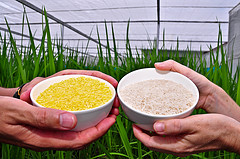
Golden Rice Plants IRRI
“Precaution does not necessarily mean a ban.
It simply urges that time and space be found to get things right.”

Professor Andy Stirling, writing in the Guardian

Overview

The UK Parliament Science and Technology Select Committee is carrying out an inquiry into genetically modified (GM) foods and the way in which these are regulated in Europe under the precautionary principle.

STEPS Centre Co-Director Professor Andy Stirling gives oral evidence on 19 November (09.15 GMT) following our written submission to the inquiry, which was signed by 19 academic experts in this area.

The Centre has long-argued that a simplistic ‘pro’ or ‘anti’ stance on GM crops leaves little room for a more informed and balanced debate not only about this technology, but a range of alternative innovations too. There are many advanced non-GM techniques and a multitude of non-technological solutions that tend to be eclipsed by the restrictive focus on GM.

The precautionary principle opens the door to many strategies for coping with these issues. It recognises that even the most confident science rarely compels a single solution. And many uncertainties and ambiguities further underscore the importance of more accountable discussion of contending values and priorities. Too often these open-ended complexities tend to get closed down, as if they were merely about 'risk'.

In these terms, precaution is not about blocking technologies, but steering innovation to more effectively favour of human health, environmental integrity and social well-being, and providing a counterweight to otherwise dominant incumbent interests.

Acknowledging the scope for systematic deliberation over values, priorities and alternatives in the context of uncertainty, precaution broadens out risk regulation to allow greater consideration for a wider plurality of issues, options, perspectives and scenarios. It allows the reshaping of established trajectories and a greater focus on qualities of diversity, flexibility and responsiveness.

In short, pecaution expresses the fundamental principle that — in innovation just as in science itself — reasoned scepticism fosters greater quality.

Innovation: managing risk, not avoiding it

Walport report: On 19 November the UK Government Chief Scientific Adviser Sir Mark Walport launches his inaugural annual report, focussing on innovation and risk. Prof. Stirling has contributed a chapter to the report, related to the evidence submitted to this inquiry.

Science and Technology Committee inquiry


The precautionary principle: selected reading from Andy Stirling

GM potato / Photo: BASFA selection of publications from Andy Stirling on the precautionary principle. For a fuller listing, see his publications page.

Key resources: selected reading from other authors
Media


The STEPS Centre’s work on GM and biotechnology around the world
A selection of our work on how science, policy and politics interact around biotechnology.


The Politics of GM Food: Risk, science and public trust
Crop experimentWhy do controversies such as BSE and GM food throw British governments and business off balance? This briefing on how to get out of the GM impasse and how to avoid these problems in future, remains as vital and current today as when it was written by Alister Scott, Frans Berkhout and Ian Scoones (Director of the STEPS Centre) in 1999.

The Politics of GM Food: Risk, science and public trust (PDF) ESRC Global Environmental Change Programme (1999). The Politics of GM Food: Risk, Science &Public Trust, Special Briefing No 5.

Medicine vendor, Central AfricaBiotechnology Research Archive
10+ years of research into GM crops, development and the food crisis, under four themes:
  1. Poverty reduction & food security: impacts of GM crops
  2. Regulating GM crops
  3. The role of the private sector and corporate control
  4. Public participation and the politics of policy
Projects

Books, blogs, media, articles

Media enquiries
Julia Day, STEPS Centre Head of Communications
Email: j.day@ids.ac.uk | +44 7974 209148

Tuesday, 2 September 2014

GM Nation or GM Planet? How to involve citizens in decisions about transgenic crops


world map
edited version of Tourism Office – Mijas – World map by ell-r-brown on Flickr (cc-by-sa)
The UK's GM Nation? public debate – conducted over a decade ago, tried to include the voices of citizens in decision-making over transgenic crops. With recent decisions by China and India possibly signalling a shift of opinion against GM in these 'rising powers', what kinds of institutions are required to enable democratic governance of these technologies across countries with diverging agricultural innovation pathways?

A recent decision by Narendra Modi's new Indian administration to halt GM crop trials, and China's decision not to renew biosafety certificates for GM rice and maize, both point towards shifting political positions in this ever-fractious debate. Given the complex and obscure national stories behind these positions (see last week's blogpost by my colleague Sam Geall on the Chinese case), scholars are wondering how open, transparent and inclusive governance might ever be possible at the international level.

In June this year I attended an event at the Royal Society entitled 'A New Approach to Governing GM Crops: Global Lessons from the Rising Powers' (previously discussed in this blog by Dominic Glover). Outputs of the 'GMFuturos' project are now being written up into an edited book, which will be part of the STEPS Centre's Pathways to Sustainability book series.

The organisers of the event asked me to provide a response to the project's studies and to consider what institutional innovations were needed to involve citizens in GM governance. I decided to approach the question based on my experience of the UK's 'GM Nation?' public debate, and the kinds of institutional innovations that would be needed in very different national contexts in order for a democratic, inclusive decision-making around this technology at the international level.

Lessons from the UK
Firstly I commented on the situation in the UK, which had been put forward in an earlier talk as a 'leader' in social science linked to GM crops. I agreed that the UK had produced some particularly interesting research (including some by STEPS) on what the public think, why and what that means for the governance of GM crops.

At the same time, I also think that the practical experience under the last government – of constituting the Agriculture and Environment Biotechnology Commission (AEBC) on one hand and supporting the multiple strands of the 'GM Nation?' public dialogue – offers a number of lessons for other countries. Granted, these initiatives had their faults, but they remain globally-relevant experiments in soliciting stakeholder and citizen input to policy making.

Taking it global
What innovations are required now? In my belief, one particular finding of the GM Nation? steering group – that "developing countries have special interests" – pointed to a limitation of the initiative and a key outstanding need: that of internationalising the debate.

For one thing, the global challenge of food security requires linking and co-ordinating across national jurisdictions, and a detailed understanding of the needs of beneficiaries and international partners. For another, decisions on GM food and agriculture taken in other countries affect those available to us here in the UK (and vice versa). The question is not so much GM Nation? as GM Planet?

As argued earlier this year in a paper I wrote with Paddy Van Zwanenberg and Andy Stirling, approaches to 'broadening out' and 'opening up' technology assessment can help feed in to a more co-ordinated approach, and enable perspectives from multiple international sources to inform political debates. Here, UK Foresight has made some attempts to seek international inputs (for example in the 'Future of Food and Farming' study) but there is still a need for further broadening out to include diverse (both UK and non-UK) voices in technology assessment.

However, calls for 'broadening out', 'opening up' and 'democratising' technology governance are unlikely to be taken up in China, where they are not new. Whilst there is increasing interest in such moves amongst some of the country's academic circles, a recommendation based on UK-centric values remains in tension with a technocratic approach to policy-making and a 'deficit model' perspective on communicating around science and technology is still prominent.

Crossing continents and cultures
This led me on to thinking about the real challenge of involving citizens – that of enabling processes that do so across different geographical and socio-political contexts to 'talk to each other'.

In a study for the Rockefeller Foundation, my colleagues and I pointed to the trade-offs between adopting a rigid framework to enable direct comparison/integration across multiple sites, and the need to remain flexible to local problem framings and perspectives. Proposing internationally-networked approaches to technology assessment, we argued for a combination of expert and lay inputs and flexible institutional designs to enable broad knowledge inputs.

In that study, we pointed to the IAASTD as an example of an internationally-organised attempt to broaden out the inputs to appraisal, with the result that the assessment highlighted the multi-functionality of agriculture. Alternatively, linking up smaller-scale, bottom-up technology assessment exercises might create space for yet more diverse voices.

Politics and institutions are vital for involving citizens
At the same time, international networked approaches need a responsive political system at which to target their outputs.

They also need functional institutions that can take them forward in policy, regulation and governance.

Without such institutions, the 'institutional void' that is highlighted at national levels for Brazil, Mexico and India in the GM Futuros working paper (pdf) will continue to act as an insurmountable barrier to meaningful citizen involvement at the international level.

GM in China: ‘Paranoia’ and public opinion

Maize harvest in China
Photo credit: Maize and sunflower harvest Chahaertan
by dfataustralianaid on Flickr (cc-by-2.0)

Biosafety certificates permitting Chinese researchers to grow genetically modified rice and corn expired last week, with little indication that the Ministry of Agriculture will renew them.

The certificates, issued in 2009, concerned two types of Bt rice, which express a gene of the bacillus thuringiensis bacterium, conferring pest resistance, and phytase maize, which when used as feed can increase the uptake of phosphorus in pigs and chickens, potentially leading to energy savings and more efficient land use. Though not the only homegrown transgenic crops, these projects had attracted particular attention, both for their potential to produce path-breaking examples of Chinese "indigenous innovation", and for the perceived risks of altering such culturally resonant staple crops.

Making sure people have enough food on the table is a political priority in most countries, but it is hard to overstate its importance in China, with one-fifth of the world's population and only 8% of its arable land, and where famine, scarcity and rationing are all-too-recent memories for the leadership. In 2014, for the 11th year in a row, China's first central policy document of the year concerned rural development. For many years, agricultural biotechnology has been a significant government priority: it is, for example, one of seven "Strategic Emerging Industries" in China's latest Five-Year Plan. Furthermore, China has in recent decades seen a massive increase in the production, sale and consumption of meat; phytase maize, in particular, represents an innovation geared towards increasing the efficiency and reducing the environmental costs of this expansion.

So, why were the certificates permitted to lapse before the crops could be commercialised? No clear answer has emerged, but media reports suggest four possible explanations. First, some point to the economics: in the case of Bt rice, Huang Jikun notes that China has nearly reached self-sufficiency in producing rice with conventional varieties, suggesting the ministry decided there was little need to commercialise GM rice in the near future. Second, others chalked it up to "social stability" concerns, with a Greenpeace official telling ScienceInsider that "public concern around safety issues" played an important role. This same campaigner suggested a third explanation, that problems with regulation — "loopholes in assessing and monitoring [GM] research" —underlay the decision, too. Finally, Cong Cao, an associate professor at University of Nottingham, suggested a fourth explanation: simply put, delusions of an ultranationalist variety. For Cao, the U-turn can be blamed on "outrageous" notions — apparently held by some military and other elite figures — that GM food is a "devious plot to annihilate the Chinese", disseminated by an "anti-GM movement whose power and influence are more than matched by its fervour and sheer, undiluted paranoia."

Of course, a fuller explanation might incorporate all four elements and others. In China today, scientific and environmental decision-making is fragmented and far less technocratic than is often assumed, and public and elite anxiety does seem to run high when it comes to genetic modification. But it would be careless to simply write off the situation as reflecting public, or even elite, ignorance and paranoia about food and agriculture.

First, China's anti-GM movement, such as it is, reflects the emergence of a larger public debate than in previous eras on many sides of this controversy. Scientists have also made impassioned public and private appeals to government: last year, a petition to the country's leaders, signed by 61 unnamed government-linked scientists, charged that "the promotion of industrialised cultivation of GM rice can wait no longer, otherwise we will harm the national interest." Recently, pro-transgenics advocates — spearheaded by the commentator Fang Zhouzi, who wrote about phytase maize in 2012 that it was evidence "the clever use of genetic modification will help protect the environment" — staged GM rice-tasting events in 22 Chinese cities.

Second, that public debate around GM food in China resonates with a number of deeper issues. Cao contrasts China and the United Kingdom, suggesting the UK will push ahead with the commercialisation of GM crops, despite it being "fanciful in the extreme" to suggest that China's "regulatory environment is conspicuously slacker" than that of the UK. Yet this seems to overlook quite legitimate public concerns around regulation, risk, trust and the litany of food safety problems China has encountered in recent years. News last month that a major supplier in China sold expired meat to western fast-food outlets followed widely reported cases of contamination by heavy metals, veterinary drugs and food additives, fears about "gutter oil", and most famously the scandal in 2008, when melamine-contaminated baby formula led to the deaths of six infants and sickened hundreds of thousands of children.

For many observers in China, the avoidance of food scarcity is a remarkable, laudable achievement of the Reform Era, but the dominant agricultural development paradigm has come at a cost. In this analysis, the "complex of interrelated problems" that resulted, sometimes known as the sannong problems (affecting nongmin, peasants, nongcun, the countryside, and nongye, agriculture), not only has had implications for food safety, but also has had other effects, such as the widespread overuse of chemical fertilisers and pesticides, soil erosion, the fragmentation of rural communities and rising social inequality. Furthermore, it would be wrong to suggest the UK boasts a pro-GM public consensus (few places do). In fact, opposition to GM foods in the UK stands as a good example of how high-profile failures around food safety, particularly in the management of the BSE crisis, can contribute to a breakdown of public trust in the regulatory system, as well as the difficulty of separating such issues from "political" concerns about ownership and the overall direction of agricultural development.

Finally, another narrative might point to a Chinese public grappling with a great many complex and uncertain problems around food, agriculture and the environment in an innovative and sophisticated fashion. Rather than ignoring or misunderstanding the challenge of producing safe food, citizens are establishing new networks, like Beijing Farmers Market, which connect farmers to consumers and benefit local producers while increasing trust and knowledge about sustainable agricultural practices; journalists have helped consumers to share information about food-safety risks; rural cooperatives have mushroomed across China, often practicing forms of ecological agriculture; innovative producers are laying bare their supply chains by applying social-media technologies; and participatory plant breeding projects have involved farmers and local organisations in improving crop varieties and rural livelihoods.

Certainly, some of the discourse around GM in China is paranoid and misguided, and much like its championing of clean energy, Chinese government support for innovation could perhaps be game changing for agricultural biotechnology. But focusing exclusively on one vision of high-tech innovation — or writing off its critics as purveyors of "anti-science" (when perhaps there are legitimate reasons for concern) — could not only obscure avenues for engagement on scientific and environmental decision-making, but also overlook other, emergent innovations addressing China's agricultural, food and environmental challenges. It's pertinent instead to ask how more open approaches to scientific governance could transform a debate, which – as demand for food and animal feed continues to rise – has surely only just begun.

This article first appeared on the University of Nottingham’s China Policy Institute blog, and is reposted with kind permission.

About the author: Dr Sam Geall is a Research Fellow at the Science Policy Research Unit (SPRU) and a member of the STEPS Centre. He is also Executive Editor of chinadialogue.net

Friday, 20 June 2014

GM crops: what people in the global South really think


maize poster
GMO maiz by nolosabias on Flickr
(cc-by-nc-nd)
Durham University has just published an important new research report on the governance of transgenic crops in three of the world’s ‘rising powers’ – Brazil, Mexico and India – looking at how different groups in those countries have reacted to GM crops.

The document, A new approach to governing GM crops? Global lessons from the rising powers, was launched during an interesting discussion workshop at the Royal Society’s premises in London on Friday 13 June.

If you’ve kept half an eye on public debates and media reporting about transgenic crop issues over the last decade, you may well have received the impression that farmers and publics in several ‘developing’ countries have embraced GM crops and foods. After all, transgenic crops such as soybeans, cotton and maize are being grown by numerous farmers, including small-scale cultivators, in populous low- and middle-income nations such as China, India, Brazil, South Africa, Pakistan, and a handful of others.

More than a few commentators have suggested that these countries’ openness to transgenic crop technologies puts the ‘selfish’ and ‘irrational’ anxieties of affluent European consumers into a shameful perspective. Unlike the well-fed Europeans, goes this argument, impoverished cultivators and hungry consumers in the global South cannot afford to turn up their noses at this vital, safe and productive technology.

Testing the narrative
The Durham University research used an innovative combination of social science research methods to put this narrative to the test. The project was carried out in collaboration with a team of academics from the countries concerned, and funded by the John Templeton Foundation, a philanthropic donor that likes to invest in the study of big social, philosophical and scientific questions.

The researchers spent time observing, interviewing and discussing GM crop issues with national scientists, groups of small-scale farmers and urban consumers in each of the three countries, culminating in deliberative workshops that brought these diverse groups and other stakeholders together.

The researchers found that the spread of GM crop cultivation did not necessarily mean that farmers and consumers were all completely comfortable or satisfied with the technology. In fact, transgenic crop technologies have proved quite controversial, and unpopular with some stakeholders in all three of the focus countries.

Both growers and consumers said that they felt ill-informed about the technology, its environmental and socio-economic implications, and its prevalence in agriculture and the food system. They felt excluded from decision-making and suspected the motives of agribusiness companies, entrepreneurs, large-scale farmers, politicians, and regulators.

Differences
Scientific experts were more likely to dismiss public concerns and argued that the development and deployment of transgenic technologies was rightfully an urgent priority for the sake of national prestige, scientific competitiveness, economic development, and food security.

Yet in some cases, younger scientists were more likely to have reservations about the necessity and benefits of genetic modification. They worried about ecological effects and sustainability, and did not necessarily share the confidence of previous generations in the inevitability of achieving social and economic progress through modern technology.

The researchers also identified interesting differences between Brazil, Mexico and India. For instance, it is quite widely known that maize (corn) occupies a central place in the cultural traditions and identity of Mexicans, but soybeans in Brazil are an introduced crop without traditional culinary associations, which is produced largely for animal feed or for export.

Cotton in India is an intermediate case – a non-food crop whose history is, nevertheless, intimately linked with that country’s experience of colonial exploitation. Differences like these help to explain why national controversies over genetic modification have followed different paths.

A breakdown in trust
For me, one of the report’s most troubling observations was of a pervasive breakdown in public trust in institutions of science, governance and regulation. This is especially troubling with regard to small-scale farmers’ lack of confidence in the scientists and technical advisors of the agricultural extension services, agro-dealers and seed companies, who should be helping them to solve their farming problems.

When agricultural technicians and farmers freely blame one another for problems that are beginning to appear in transgenic cropping systems (such as pest resistance and herbicide-tolerant weeds), and neither accepts responsibility for their part, we have evidence of a serious breakdown in a key relationship that should be helping to improve the productivity and sustainability of agriculture around the world.

New forms of governance
The Durham-led research team intends to build on the insights from this research in various ways. One of these ways is towards the practical goal of building better institutions for the governance of controversial technologies, using the ‘AIRR framework’.

AIRR stands for four dimensions of ‘responsible innovation’: anticipation of future developments in science and technology; inclusion of diverse stakeholders; reflexivity among scientists and technology developers; and responsiveness to societal needs and problems.

This framework has a lot in common with elements of the STEPS Centre pathways approach, which calls for the opening up and broadening out of public debates and governance frameworks for new technologies.

If the Durham report achieves the impact it deserves, it will achieve a valuable purpose by internationalising narrow British and European public debates about transgenic crops and foods, and about the relationship between agricultural technoscience and socio-economic development. It will undermine the complacent assumption that the ‘rising powers’ have definitively resolved the controversy over transgenic crops and that the future will see them inevitably race ahead in embracing GM technology.

Links

Monday, 9 June 2014

GM crops: continuing controversy

In 2002, the international press was full of headlines such as 'Starving Zimbabwe Shuns GM Maize'. This was repeated again in 2010. The context was the refusal to import whole-grain GM maize from South Africa, as regulatory approval had not been granted, and there were fears that the food aid grain would be planted when GM crops had not been approved for release by the national regulatory authorities. The 2002 episode in particular caused a massive furore, with the governments of Zambia, Zimbabwe and Mozambique cast as villains, at odds with the needs of their people.

The debate has re-emerged recently with calls from a number of quarters, including the CZI and CFU, for Zimbabwe to accept the inevitable and formally approve the planting of GM crops. Of course GM crops, and especially maize, are planted widely as so much maize grain has been imported through informal routes from South Africa in recent years. An official acceptance of GM crops would, it is argued, increase productivity, reduce food aid dependence and tackle poverty. GM for some is the silver tech bullet that Zimbabwe urgently needs.

The Zimbabwe debate, not surprisingly, almost exactly replicates the international discussion that has heated up recently too. In the UK a group of science advisors to the Prime Minister have recently reported their view that the UK should lift its moratorium. The UK Chief Scientist, Sir Mark Walport, argued in his covering letter that 'people will go unfed' if such a response was not forthcoming. Some extreme press coverage, including in the normally restrained Sunday broadsheet, the Observer, has backed the advisors, with claims that such a move would help solve the global food crisis and world poverty. A similar narrative is being pushed by some commentators in a debate this week convened by SciDev.net.

Most sensible scientists would not go so far. Indeed these days much of the advocacy of GM crops is presented in terms of seemingly balanced positions on technology choices. The same lead author of the recent advisers' report also led an inquiry for the Royal Society on 'biological science-based technologies' for crop production. Professor Sir David Baulcombe is a respected plant scientist from Cambridge, but also an ardent advocate of GM solutions. Yet the position of his 2009 Royal Society report seems at face value completely balanced: GM is only one part of a wider array of technologies, both genetic and agroecological:

Over the next 40 years, biological science-based technologies and approaches have the potential to improve food crop production in a sustainable way. Some of these technologies build on existing knowledge and technologies, while others are completely radical approaches which will require a great deal of further research. Genetic improvements to crops can occur through breeding or GM to introduce a range of desirable traits. Improvements to crop management and agricultural practice can also address the constraints identified….. There are potential synergies between genetic and agroecological approaches. Different approaches will be needed for different regions and circumstances. There is a need to balance investment in radical new approaches that may have major consequences on productivity with investment in approaches which deliver modest improvements on a shorter timescale.

What could be wrong with that? The strapline is 'reaping the benefits' from science-based 'sustainable intensification'. Seemingly all good things – although see next week's blog on some of the hidden politics of the 'sustainable intensification' buzzword. In his more recent report, Baulcombe is less circumspect: GM is most definitely central to the answer. Five years on there is a greater determination it seems to change the policy landscape, and deal with what they term 'dysfunctional' regulation imposed by the EU. Also the composition of the advisory group is distinctively different with strong industry links: no troublesome agroecologists amongst their number this time.

As someone who has tracked this debate now over 15 years, and studied the role of GM crops and the politics of regulation in India, Africa and the UK, it is interesting to note the changing patterns of discourse. Today the advocacy for new technologies to solve global food problems is particularly shrill. Yet where is the evidence for such approaches being 'pro-poor' and enhancing 'food security'? Dominic Glover did a very detailed analysis of the available data, and found very little in the way of hard evidence to support the claims made. Others have provided similar assessments. Yes, GM pest-resistant cotton has been a success, but has it always benefited the poor and improved food security? Probably not.

This is of course no reason to reject a technology as part a mix, but the near obsession with GM solutions can act to crowd out alternatives. As explained by Gaëtan Vanloqueren and Philippe Baret in an excellent paper, agricultural innovation processes can become locked in to particular trajectory: through R and D funding flows, the need to recoup investment costs through intellectual property sales and via the biases and motivations of particular scientists' professional careers. The GM hype that reached its apogee in the early 2000s has created such a dynamic, and some companies, most notably the US multinational Monsanto, have hooked their fortunes on GM technologies. As funders of much so-called public research, the big companies reinforce this too. This dynamic is unhealthy, and means that alternatives are not identified, funded and developed.

The counter to this is that the biotech and genomics revolution is throwing up all sorts of new possibilities. Certainly this is a frontier area of bioscience, and there are multiple exciting avenues being pursued. Indeed, many are not hooked into the transgenic GM promise at all, but more based on innovative applications of bioinformatics and genomics. The GM lobby for most of the past 15 years has promised an exciting 'pipeline' of new products that will solve inter alia constraints of drought, nutrients, aluminium toxicity and much more besides. Indeed, Baulcombe and colleagues provide a familiar list in their report. But while some may be forthcoming, others have been long promised. Unfortunately the hype fuels expectations, garners venture capital as well as public funding, and pushes R and D in ever narrower directions.

Despite the promises, GM science has yet to deliver anything approaching an effective product for tackling drought for example. Yet biotechnology and marker assisted selection has done wonders in improving drought tolerance in maize in Africa. This research, led by the CGIAR Centres CIMMYT and IITA, was pioneered in Zimbabwe, and has resulted in a suite of new varieties that have transformed farmers' possibilities in maize farming. This work has used high-end biotech science, but it has not relied on proprietary technologies and has been publicly-funded. The result is a widespread use of drought tolerant maize, with traits embedded in well-adapted background genetics. In many ways this approach is far more sophisticated than the rather brutal technique of transgenics, where a gene (or a stack of them), usually owned by a company, is inserted into a variety that the company also owns. Sometimes, while the transgene may be effective, the background variety may be hopeless, and the net effect is negative (as was the case in the early years of Monsanto's Bt cotton in India).

So should Zimbabwe hurriedly embrace GM crops? It's a difficult question to answer generically. It depends on the trait, the crop, the intellectual property arrangements, the costs and risks relative to the benefits and the alternatives that exist. This is why a precautionary policy stance, backed by a solid regulatory framework, is essential, as I argued in a paper with James Keeley over a decade ago. This has been the position of the Zimbabwe government since the 1990s, and there doesn't seem any reason to change now, despite the clamour.

Much of the simplistic advocacy of GM crops as the tech solution to 'feed the world', as illustrated by the recent flurry of reports and media articles in the UK, fails to take account of the political and social contexts in which such technologies (if they existed – remember most useful ones are 'in the pipeline') are used. It really does matter who owns, controls and oversees access. And when one technological track is favoured over others, then a whole raft of much more suitable and sustainable alternatives may be missed.

Contrary to the Observer's claim that 'there is no choice', there certainly is, and the multiple choices available need to be thoroughly debated, including by those who are the users of technologies (as occurred in an interesting engagement on Zimbabwe's food and farming futures in the early 2000s). We should always avoid being pushed in a singular direction by those who are (mis)using the authority of science, without a proper and open debate.

This post was written by Ian Scoones and originally appeared on Zimbabweland


Wednesday, 16 October 2013

Good & evil: two articles on closing down the debate on GM crops

goldenrice
Golden Rice grain compared to white rice (3)-19
by ricephotos on Flickr
By Nathan Oxley, STEPS Centre.

Is it right to call opponents of GM crops 'wicked'? In a recent interview, Owen Paterson denounced in starkly moralistic language people whom he sees as holding up progress on Golden Rice and other genetically modified foods.

In a piece for the Guardian’s Political Science blog, Andy Stirling argues in defence of scepticism and democracy in science.

“The issues go far beyond GM. What lies at threat more broadly, are both science and democracy – and their crucial interdependencies. [...] 
Rationality is not a kind of fairy dust that rubs off simply by invoking 'science'. And science itself is not a cargo cult, magicking into being single self-evident 'solutions' that brook no question. The real issues are about choices – both within and beyond science-based innovations. And as any real respect for science must show, the most important factors to explore will always be uncertainty and ambiguity. Here, the greatest assets are scepticism and democracy. 
Choices between technologies are not about 'yes' or 'no' to whatever the loudest voices assert uncompromisingly as 'progress'.”
Meanwhile, in a piece for the New Humanist blog, I've suggested that the rhetoric may close down important debates on how food is produced and consumed.

Extract:
"Are you in favour of “rolling out” GM crops, or do you want little children in Bangladesh to die? In an interview for the Independent, Owen Paterson, the UK Environment Secretary, has called opponents of GM technology “wicked”, and accused them of “casting a dark shadow over attempts to feed the world”. 
[…] If you join the dots in the way Paterson has done, it's almost impossible to see GM as anything other than a battleground for the life and death of the world's poor, with Paterson on the side of the angels; and anyone who questions this narrative with feet firmly planted among the infernal legions of Satan himself."
Read the full posts here:
 

Monday, 16 September 2013

Responses to frequently asked questions on genetically-modified crops and development

By Andy Stirling, co-director of the STEPS Centre

GM Rice / BASF / Flickr Creative Commons
 
Questions are never far from the headlines about how the world can farm more fairly, sustainably and productively. What is meant by these qualities varies greatly – including differing ways to raise income for poor farmers, improve nutrition, reduce environmental and health impacts or provide more food to feed growing populations. Almost irrespective of how to think about 'the problem', however, GM crops are often presented as a vital part of the solution. Fierce criticism is often dished out to any voices raising concerns – labelling them 'anti-technology' environmentalists, irrational media, nervous regulators or an ill-informed public.

But whatever side one is on, this kind of debate can easily miss the single most important fact. 'GM' is not one thing. And there exist a wide variety of other innovations – social and organisational as well as scientific and technological – for achieving the same ends (whatever these are). What is most irrational, is to focus disproportionately on 'GM' alone. Even more misleading, is to pretend that the issues are just about 'risk' – or that the solutions can be determined solely by 'sound science' or 'evidence based policy'. In the end, the answers depend on the questions. Science and evidence have absolutely crucial roles to play, But they are necessary, not sufficient.
 
The reasons why some GM technologies are often so strongly favoured by seed producers over other innovations, is more to do with commercial competition and profit than any other factor. It does not imply complete rejection of such interests, to see that the issues for society at large are much wider. The real issues are over which directions for innovation should be encouraged and which discouraged. This is not just technical, but a matter for ethical values, political judgement and clear democratic accountability. It is these qualities that are often most endangered by simplistic fixations with 'GM'.

The brief comments below respond to some questions about the part wealthier countries play in blocking or enabling GM technology, and the role that science and the public play in shaping decisions about GM and other innovations. To delve further in to these issues, take a look at the 10+ years of research in the STEPS Centre's Biotechnology Research Archive.

Why are GM crops stuck in the pipeline of regulatory approval?

The image of GM crops being 'stuck in a pipeline' presumes the role of regulation is simply to approve new technologies or products. In fact, as shown by a series of European Environment Agency studies, far from being over-restrictive, the history of European and wider regulation is at least as much one of being over-permissive.

Is the EU falling behind other regions in approving GM crops?

The idea that the EU is 'falling behind' presumes that there is just one direction of technological advance in this field (and that this is GM). In fact, innovation is at least as much a question of choosing directions to go in, as of how fast to proceed in any one of them.
GM is not the only biotech solution on offer. Marker-assisted selection and other genomic techniques offer important opportunities for enhancing conventional breeding through biotechnology. Investment in long-term, local, context-specific breeding and crop development programmes is needed.
This point is underscored by a major recent international assessment:

What role can science play in influencing policy and public opinion?

It is a foundational principle of science to provide a rigorous arena for engaging contrasting understandings and upholding the value of scepticism.
 
Like other groups of citizens and organised interests, the diversity of different kinds of science can of course exert influence in many different ways, both on policymakers and on wider public opinions. This is perfectly legitimate - but it should be recognised as a political activity and not something undertaken in the name of 'science' as a whole, let alone of 'objective truth'.

When any "science" organisation invokes the authority of the scientific process in general in favour of any particular technological product, it is being politically partisan. Frequently associated claims to objectivity are also spurious. The result is not only an undermining of reasoned democratic debate, but – by being less than trustworthy – amounts to nothing less than a betrayal of science itself.

Science as a process is equally implicated in a variety of contending innovation trajectories (see above), no one of which is inherently more 'scientific' than others.

The "Emerging Biotechnologies" report by the Nuffield Council on Bioethics is a good illustration of this point.
There often exist more effective innovation pathways that do not rely primarily on science-intensive products. When they advocate science-intensive approaches as preferential to these, then scientists are also being more generally politically partisan.  In any case, scientific (and wider expert) understandings of the world can never definitively determine any single uniquely rational 'way forward'. The available evidence always admits a variety of contrasting interpretations.

Is the EU's treatment of GM is having a detrimental impact on developing countries?

In fact, the resources deployed in favour of adopting wider use of GM of various kinds dwarf those arrayed directly against it.
 
In some circumstances, some farmers have benefited from GM crop technologies; while others had bad experiences or were by-passed altogether.

A STEPS Working Paper by Dominic Glover (2009) shows economic returns are highly variable, dependent on a range of factors. GM crops only perform well in good varieties, GM seed start-up costs and technology fees are sometimes too expensive for poorer farmers, and major adopters are usually richer, with more land. Meanwhile the institutional and policy environment is vital: without support, credit and sustained backing, new technologies often fail.

How crucial is public opinion in the GM debate?

In this debate, as in other areas of political life, public opinion is crucial. Science and innovation present political choices, rather than one-track imperatives which supposedly have no alternatives. It is normally the case that business takes a pride in meeting consumer needs. And governments like that of the UK are usually very supportive of this. But in the field of GM, the pattern is typically oddly different. When consumers express a preference for other kinds of food or agriculture, the mantra is that they should change to fit the needs of producers, rather than the other way around. This is not only bad economics, it is undemocratic. Citizens should have a crucial say in decisions about the directions taken by innovations, including GM.

Find out more

This article was originally posted on The Crossing.

Tuesday, 25 June 2013

‘Golden Rice’ and the GM crop debate

Golden Rice grain compared to white rice grain
in screenhouse of Golden Rice plants / IRRI
Guest blog by Sally Brooks, Researcher and Associate Tutor at the University of York, and former STEPS Centre member


In an interview on the Radio 4 Today Programme last week, Owen Paterson, Minister for Environment, outlined his case for a 'new push' by the Government to promote the development and adoption of GM crops in the UK.
 
Interestingly, Mr Paterson's argument was largely based, not on evidence demonstrating benefits to UK agriculture, but on an account of a project which aims to develop beta carotene-enriched 'Golden Rice' as a way to address malnutrition-induced child blindness and mortality, which is a 'problem mainly in Southeast Asia.'
 
The decision to back GM crops was presented as a matter of life and death. As Mr Paterson explained: "Over the last 15 years … every attempt to deploy this Golden Rice has been thwarted. And in that time, seven million children have gone blind or died." The implication was clear - those who had 'thwarted' attempts to deploy a life-saving technology bore some responsibility for this tragic outcome. Such people, Paterson suggested, "should really reflect".
 
This is not the first time that the specific case of the Golden Rice project has been deployed as the lynchpin of an argument for policy and regulatory changes to accelerate the commercialisation on GM crops in general. This is problematic for a number of reasons which I have set out in a new article.
 
The presentation of Golden Rice as a technology that has been available for 15 years, but whose deployment has been delayed only by excessive regulation, is familiar but misleading. In fact, the first genetic transformation, achieved in a Swiss laboratory in 1999, was just the first step in a complex, interdisciplinary research endeavor that has also included plant breeding (to 'back cross' the modified materials into rice varieties adapted to the tropical environments of Southeast Asia) and nutritional testing (to find out whether the beta carotene in Golden Rice converts to usable vitamin A when consumed by malnourished children and adults).
 
As well as bringing more heat than light to an already overheated debate, the deployment of Golden Rice as 'poster child' in the GM crop debate has had serious consequences for the way the research has been carried out 'on the ground' over the years. In research stations in Southeast Asia, the pressure cooker environment surrounding the project has not been conducive to the kind of open discussion and debate – among crop scientists, nutritionists, public health experts, and others – that an ambitious research effort such as this warrants and requires. Unfortunately, too much hype 'upstream' has tended to close down opportunities for open scientific enquiry and debate 'downstream', just where it is most needed.
 
A recent statement issued by the International Rice Research Institute, based in the Philippines (due to be the first country to commercialise Golden Rice) was therefore an important moment in the history of the project. Why was it so important? Because it stated, unambiguously, what is still a key unknown – whether Golden Rice will actually improve the nutritional status of malnourished children and adults. Moreover, it states clearly that the remaining stages of the project, which include both regulatory assessment and nutrition studies to establish whether Golden Rice does indeed have potential to prevent malnutrition-induced child blindness and mortality, will take 'two years or more'.
 
It is important, therefore, that at this critical stage in the project, the researchers and their partners in the Philippines are able to complete these studies – and, most importantly, openly share their results, whatever the outcome – unencumbered by inflated expectations and claims generated in support of the adoption of agricultural biotechnologies elsewhere. In the meantime, the GM crop debate in the UK would surely be better served by evidence sourced much closer to home.
 
Further reading:

 
This article was originally posted on the The Crossing.
 

Thursday, 9 May 2013

The GM debate should not be closed down to what is rational, but opened up to multiple rationalities…. A response to Chris Whitty and colleagues

By Stephen Whitfield, PhD student, Institute of Development Studies (Knowledge, Technology and Society Team)

Genetically modified rice / BASF
In a recent commentary published in Nature, Chris Whitty (chief scientific adviser at the UK Department for International Development) and colleagues rightly argue that the (ever-rich and seemingly-unending) debate over genetically modified crops should be premised on an identification of agricultural and food system priorities. But their suggestion that this would make for a 'rational' debate is problematic.

The authors argue that a GM debate that is based on societal needs in Africa and Asia should result in the emergence of a very different emphasis than that which is currently characterised in the GM policies of Europe, because of their (questionable) presumption that issues of poverty, food insecurity and malnutrition are prioritised within these continents.

Actually, their prescription has long been taken up by the organisations behind on-going GM crop development projects, including those identified in the paper, in both continents. Public crop breeding institutions, pro-GM lobby groups, and private multinationals alike have been vociferously making the case within GM debates that food insecurity, poverty, malnutrition, climate change, etc. are the 'rational' bases on which their technological, 'pro-poor' solutions should be supported.

In the case of the Water Efficient Maize for Africa (WEMA) project, the justification for investment in, and development of, the technology is the climate change-driven threat to the livelihoods of smallholder farmers and food security of Africans. This statement is taken from a WEMA policy brief:  

"Persistent incidences of drought in Kenya have continued to threaten the food security situation and subjected millions of Kenyans to starvation… modern biotechnology provides a major opportunity to address perpetual maize shortages that are now being compounded by new threats triggered by climate change."

But the rationality of such arguments belies the denial of the alternative rationalities that it frames out of the debate. Benessia and Barbiero have recognised the tendency for GMOs to be pushed within 'grand narratives of urgency based on the assumption of a morally binding necessity to bypass any delaying post-normal knowledge production and decision-making process, in favour of a silver bullet' (p.84). 

Of course Whitty and his colleagues are not arguing that rationality does, or must, come from the transgenic crop development projects themselves, but rather from 'policy-makers'. But the assumption that there is an arbiter of rationality that presides over the GM debate (singular) and makes a final judgement on it is to grossly misrepresent the politics of GM.  Crop development projects themselves often progress largely on the wind of their own their own rationalisation of the problems and solutions; they are, to some extent, the makers of their own policy, as are non-governmental organisations, lobby groups and (to a certain extent) farmers and consumers.

Policy debates focus on particular issues – biosafety, importation, labelling etc. – and are not about agricultural and food system pathways, but about regulation, and not about weighing up risks and benefits, but about particular risks and/or particular benefits. There are multiple layers and multiple locations to the governance of GM.

Within these locations, attempts by individuals, bodies, or organisations – both pro and anti –  to narrow down the debate to what is 'rational' or not 'emotional' (to adopt an equally problematic term used by the authors) belies the value base for their own position and essentially, and politically, acts to frame out alternative values. Arguments are perpetually made by the governments of GMO exporting countries, for example, that biosafety regulations should be 'science-based' and limited to a concern with issues of health and environmental safety, and yet the motivation behind their position is trade.

But even these environmental and health risks for which there is a conventional, 'scientific evidence' base (and of course the societal risks of GM are not and should not be limited to these alone) should not be void of debate about the completeness of knowledge, underlying assumptions and values, and interpretations.  The decision by the Kenyan Ministry of Public Health to ban the importation of GM foods, which the authors describe as an emotional decision, was in fact underpinned by an interpretation of a widely criticised (but nevertheless peer-reviewed) scientific study; highlighting quite clearly the ambiguities of the concept of 'science-based' regulation and the reality that there is not one objective evidence-based rationality, but multiple evidence-bases and multiple rationalities.

Similarly the relative and absolute benefits of GM crops are negotiable. Metrics of efficacy and preferences for alternative pathways are not easily categorised as 'rational' or 'irrational', but might emerge from different rationalities, experiences and evidences. As Dominic Glover, amongst others, has shown, for example, the idea that a technology is pro-poor is not a 'rational' evaluation, but is actually highly political and based on assumptions.

In considering the GM debate from the problem-based 'end of the telescope', as the authors make a case for, it is important to recognise that not everyone's telescopes are necessarily the same or pointing in the same direction. The risks faced by smallholder farmers may not be limited to food insecurity, poverty, malnutrition and climate change and these risks themselves may be experienced in different ways by different individuals and in different locations. There is a prior set of debates to be had about the priorities for change in agriculture and these must engage with the multiple mechanisms through which contemporary challenges have been created (e.g. opening up beyond the environmental determinism of climate change-driven drought), and the multiple projections of future change (e.g. opening up to multiple directions of climatic change).

I would make the case, therefore, that DFID's role in the GM debates is not simply to invest in the development of those technologies that emerge as appropriate, but to invest in the broader governance of agriculture, food systems, and technologies in both Africa and Asia, such that capacities for deliberation and debate around direction and appropriateness can be built. These debates are necessarily for everyone, not to be narrowed down to what is 'rational' but to be opened-up to multiple rationalities.

This article was originally posted on the The Crossing.


Thursday, 7 March 2013

‘Evidence’ of the health risks of genetically modified maize represents an interesting new dimension to the ‘GM debate’ in Kenya

by Stephen Whitfield, KNOTS PhD student

The recent decision taken by the Kenyan Ministry of Health to impose a ban on the importation and consumption of genetically modified foods has highlighted ineffectuality in Kenyan government and, more surprisingly, is indicative of an interesting new dimension to the previously stale ‘GM debate’.

That is because, arguably for the first time, the anti-GM campaign has effectively made an ‘evidence’-based objection that has gained political traction.

Kenya’s GM ban followed a similar decision taken by the Russian government, and it was almost entirely in response to a subtly-promoted, peer-reviewed study at the University of Caen (in France), led by Gilles-Eric Séralini, which tested the effects of the consumption of NK603 (round-up tolerant) maize on rats. The study was conducted over a period of two years and found that test groups were more likely to develop tumours, and at earlier stages, than the control group.

The results of the study, which may have touched on some significant and personal sensitivities within the Ministry of Public Health, were interpreted as pointing to an unacceptable health risk. In a Kenyan government in which ministries compete for authority, this may have been seen by the Ministry of Public Health, who had been largely excluded from the political debate around GMOs, as a chance to have their say. The embargo was put in place almost immediately and without cross-ministry consultation.  The Ministry for Science and Technology, within which a fairly sophisticated biosafety legislation has, over a number of years, been developed and enforced, were, effectively, side-swiped.

Kenya’s pro-biotech lobby, largely composed of politically powerful and well-connected corporations and academic institutions, have been left to wonder what the implications will be for their multiple transgenic products that are currently in the pipeline. As a fundamental part of many of these pioneering technology projects, representative of the Kenya Agricultural Research Institute (KARI), the Agricultural Biotechnology Stakeholders Forum (ABSF), the International Service for the Acquisition of Agri-Biotech Applications (ISAAA), CGIAR institutions, and biotechnology corporations have fervently campaigned for a more promotional and ‘science-based’ approach to technology regulation in Kenya.

This pro-biotech lobby has attempted to close down the biosafety issue, such that it is limited almost exclusively to human health, and they have subsequently argued, time and again, that there is no scientific evidence that there are health risks in consuming GMOs.

Significantly, up to this point, the anti-biotech campaign has predominantly focused on challenging this framing, attempting to open up the idea of regulation such that it turns attention to safeguarding against socio-economic, cultural, and ecological risks, and arguing for a precautionary approach in response to these. This is where the Séralini study is interesting. For some, it has provided a means to ‘fight fire with fire’. For organisations such as the Kenya Organic Agricultural Network, the study has given them the opportunity to say: ‘if you want to talk health and evidence, we can do that too’.

In response, the most obvious line of defence has been to discredit the science behind the Séralini study and, quite frankly, this hasn’t been difficult for biotech scientists to do. A number of curious methodological choices were made by the researchers, including an apparent incompatibility between the breed of rat used and the length of time of the study (Sprague-Dawley rats are highly susceptible to developing tumours naturally over such a long period), unclear statistical analysis methods, and the use of only one control group (in a study of 10 groups). Moreover, the Séralini group has been particularly uncommunicative in response to their critics, inevitably resulting in widespread scepticism about their methods and motives. The European Food Safety Authority (EFSA) conducted an independent investigation into the study and found it to be of ‘insufficient scientific quality’ and a number of anti-GM NGOs, such as Greenpeace, have been quick to disassociate themselves from the study.

However, it may be that it is the contested nature of the evidence, rather than the evidence itself, that is the real gold for the anti-biotech lobby. Dispute over the findings of the Séralini study have necessarily opened up broader questions about the authority of science and the legitimacy of the privileged position that scientific evidence holds within biosafety regulation. It exposes the ambiguities and assumptions of scientific enquiry and, in doing so, offers a real challenge to the way in which the pro-biotech lobby has largely attempted to frame regulation.

In reality, it is likely that the Kenyan embargo won’t last for too long. After all, Kenya is the country that is supposed to be the next African leader in transgenic technology development and it is a hub for international investment. However, the concerns that the ban has created will live in the memories of those consumers and farmers on whom the real success of Kenyan biotechnology depends. Debates over the labelling of GM foods, which was a key issue in the debate prior to the ban, will inevitably have to be resolved on the side of precaution and in protection of consumer choice. But even more significantly, the pro-biotech lobby will have to be more open about uncertainty within its own evidence bases and be willing to engage in a more transparent and plural science-policy process, if its technology is to earn the trust that it needs.