Emerging out of two major conferences and with a background reading list of more than 90 papers, a special issue of the Journal of Peasant Studies has just emerged on 'critical perspectives on food sovereignty'. This is free to view for a limited period (here: http://www.tandfonline.com/r/fjps-41-6 – click to articles via this link if you don't have a subscription), and contains a number of important papers and commentaries by both academics and activists, and many hybrids. It is an important moment, both for the food sovereignty movement and for the debate around it. For far too long there has been an absence of sustained critical and engaged debate about the meanings and implications of food sovereignty. These papers discuss, among other things, the origins of the concept, its connection to other food justice movements, its relation to rights discourses, the roles of markets and states and the challenges of implementation. It demonstrates a maturing of the movement, and a growing willingness to debate from a position of confidence and strength.
The most visible representation of the food sovereignty movement is the peasant movement, La Via Campesina. This has grown through combining diverse campaigns for changes in the global agri-food system. Some claim that it is the world's largest social movement. 'Food sovereignty', is a term, as Marc Edelman notes in his paper that has a longer genealogy but has become very effectively popularised. This is an argument for peasant autonomy, local food systems, fairer more environmentally-sound, agroecological production and trade and much more besides. As a vision and political programme it is one to which many would subscribe.
For a while I have been intrigued to find out where the food sovereignty debate had got to, what political strategies were emerging and whether, in different and diverse contexts, the ideals were in fact realisable. I attended one of the conferences early this year in the Hague. Elizabeth Mpofu, a Zimbabwean farmer from Shashe resettlement area near Mashava and now the General Coordinator of La Via Campesina and a leader of the movement, opened the proceedings with a passionate rallying call.
What are my reflections on the debate? In many ways I remain rather confused as to what food sovereignty is, and how it is to be translated into a political struggle. The concept has evolved, and the movement has adopted many different angles as more and more elements have been incorporated. These included the move from a focus on small-scale production and markets to concerns with gender, indigenous peoples, environment, workers, consumers, migrants, trade relations and more.
Through accreting issues and agendas, the movement thus offers an all-encompassing vision where nothing is left out it seems. This helps build linkages between different areas of activism, but it also makes it very difficult to get a handle on what the core issues are, and where to focus intellectual and political energies. This is made more challenging by the lack of clarity over the focus of the key concept – sovereignty. There is much focus on 'the local', but this may not be sovereign without addressing the role of the state, or indeed the relationships between states in international trade and global politics. A populist appeal to locality may miss the importance of defining the arenas for political action that necessarily impinge on what happens in local settings.
It is clearly intensely political issue, part of an assertive political project, but it often lacks a solid political analysis. As many argue in the Journal of Peasant Studies issue, a more thorough-going engagement with critical agrarian studies might help address this gap. Three areas of politics, I felt, are missing.
The first is the politics of peasants. La Via Campesina – the peasant's way – asserts the rights of peasants. But who is the peasantry in the context of a globalising world, with dynamic patterns of differentiation across sites? Classic issues of class formation and differentiation are raised, ones that Henry Bernstein so effectively elaborates in his 'sceptical view' paper for the issue. What is the relationship between the peasantry and workers, or indeed worker-peasants, with one foot in town and another in the countryside? Are petty commodity producers or even emergent commercial farmers part of the peasantry, or separate? What differences of gender, age, race for example cut across these class differences, and what conflicts and tensions arise? These are old questions, but highly pertinent to the formation of the emergent solidarities that must define a movement. Creating an idealised vision of a peasant, seemingly independent of context, makes the political project problematic, as the contradictions and conflicts that arise between and within groups may act to undermine the alliances required for a movement to gain traction.
The second area of missing politics is around the politics of technology and ecology. An important strand of the food sovereignty movement is the advocacy for an agroecological approach to farming. Low external inputs, organic production, rejection of biotechnology and so on are all hallmarks. Yet in the advocacy of agroecology too often there is a resort to an essentialist, technical argument, thus falling into the same trap as the advocates of the technologies that are opposed. As Jack Kloppenberg puts it in his paper in respect of agricultural biotechnology, the argument should be less about the particular technology but instead around the terms of access. An open access approach to research and development may generate a range of productivity-enhancing technologies that improve efficiency and reduce production costs, without being at the behest of large-scale corporations. New technologies are of course essential for improving agriculture. Improving the yield of crops through high-tech genetics or the use of chemical fertilisers and pesticides may be essential, yet seem to be rejected by agroecology fundamentalisms.
The bottom line is that farmers want good prices, and consumers want cheap food. This structural relation between producers is crucial. The current agri-food system involves much distortion of prices, and a distribution of value in corporate-controlled value chains that often benefits agribusinesses and retailers, and neither producers nor consumers. Yet too often local food systems can only produce expensive food for elite markets. Clearly internalising the costs to the environment and to labour of the current agri-food system is essential, and this will doubtless produce shorter commodity chains, more localised production and marketing, better conditions for workers and a more equitable distribution of value, as well as more ecologically-sensitive forms of production. Yet, even with such measures, a diversity of innovative, technological responses will be necessary that should not be limited by a technically narrow definition of agroecology.
The third area is the politics of capital, and in particular the relationships between capital and the peasantry. Again, a very old debate. Peasants, however they are defined, are never disengaged from the historical processes of capitalist development. Indeed they are mutually constituted by such processes. The debate is not therefore how to disengage, but how to negotiate the terms of incorporation. There are many examples of adverse incorporation, where poor, marginalised farmers are disadvantaged. But the solution is not to go back to earlier forms of production and market relationship, but to organise for a better deal. Re-embedding markets in social contexts, following Karl Polanyi, is essential if a more democratic control of the food system is to be realised, and this means a political struggle around the terms of trade, the rejection of monopolistic market behaviours, and the opening up of markets to a wider range of players. In many ways, this is an advocacy for a better functioning capitalism without the distortions of corporate concentration, not its rejection outright. This means developing a more strategic engagement with capital around the terms of incorporation and the relationships between markets and societal values, much as the fair trade, organic certification and other movements have done.
The progressive ambitions and utopian ideals of food sovereignty are clearly evident, and ones that many can easily subscribe to. You only have to visit Elizabeth Mpofu and her colleagues on Shashe farm to get a sense of the vision. But how to translate this into a political programme and strategic advocacy around which clear solidarities and alliances can build is less evident. Perhaps with a tighter political economic analysis of the nature of the problem, always necessarily contextualised by history and place, then a more targeted, more effective approach might emerge. I am inspired by the passion and vision of the movement participants and their academic allies, but I am perhaps more sceptical about the practicalities of how, in any setting that I know of, such a vision might be realised in practice, including in Shashe (a question asked by Tania Li). This is of course not a reason to reject trying, but it also suggests the need to think harder about both political possibilities and strategies, and be less dogmatic about approaches, technologies and economic arrangements for more sustainable, people-centred agriculture than sometimes the agroecology and food sovereignty advocates allow.
This blog draws from an earlier reflection on the ISS conference published by Future Agricultures
The post was written by Ian Scoones and appeared on Zimbabweland

Showing posts with label food security. Show all posts
Showing posts with label food security. Show all posts
Monday, 20 October 2014
Friday, 10 October 2014
Get involved! Your views on water and food security wanted by the UN
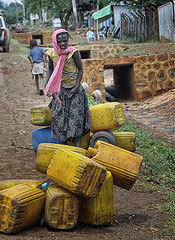 Would you like to help inform a report for the UN on food and water security? Now here is your chance. A year ago, the United Nations Committee on World Food Security (CFS) asked the High Level Panel of Experts on Food Security and Nutrition (HLPE) to prepare a report on Water and Food Security. Lyla Mehta, convenor of the STEPS Centre’s water and sanitation work, is the HLPR project team leader for the report, whose findings will feed into the CFS’s 42nd session meeting in 2015.
As part of the process, the HLPE is now seeking inputs, suggestions, comments on the ‘V0 Draft’ they have prepared, very much a work in progress document. This e-consultation will be used by the HLPE to further elaborate the report, which will then be submitted to external expert review, before finalization and approval by the HLPE Steering Committee.
To take part in the e-consultation, please visit the dedicated HLPE e-consultation website, or email your contribution direct to the HLPE Secretariat at cfs-hlpe@fao.org.
The e-consultation will run until 31st October 2014. Contributions are welcome in English, French and Spanish.

Monday, 29 September 2014
Zimbabwe is food secure this season, but more questions raised
The annual ZimVac assessment based on a national sample survey of over 10,000 households and carried out in May came out a month or two back. Unlike last year, when alarm bells were rung over a potential food security catastrophe, this year the prognosis was good. Excellent rains, including in some of the drier and usually more food insecure parts of the country, resulted in a bumper harvest.
Last year I critiqued the use of the headline figure from the assessment as potentially misleading. The same limitations of the survey apply, but the media reporting is more balanced this year (with some extreme exceptions – see comment string in an earlier blog). The survey is based on the 2012 Zimstat sampling frame and covers a large number of enumeration areas across the country, sampled proportional to population densities. Annoyingly the report still doesn't separate out communal areas and resettlement areas, and my guess is that there remains some sampling bias. More on this below. Last year fortunately the dire predictions were not borne out. In part this was because the rains came, and a green crop filled the hunger period, but also I hypothesised in an earlier blog that the production from new resettlement areas was being undercounted. I suspect this remains the case.
Anyway, I thought blog readers would like a quick summary of the report, as without an impending disaster the media has largely ignored it. You can read the powerpoint report in full, which covers all sorts ranging from nutrition to sanitation. I will concentrate on agricultural production and food security, and draw text directly from the report.
The Ministry of Agriculture, Mechanisation and Irrigation Development estimates that the country will have a cereal harvest surplus of 253,174 MT in the 2014/15 consumption year from a total cereal harvest of 1,680,293MT.
Maize remained the major crop grown by most households (88%) compared to 80% for 2012/13, while groundnuts were the second most grown crop. Generally, the proportion of households growing crops increased except for cotton which showed a decline (due to the collapse in prices) and soya beans which remained unchanged.
Nationally, average household cereal (maize and small grains) production was 529.5kg. This was higher than last season (346kg). In Masvingo maize production averaged 339.7 kg and small grains 126 kg, given a total of 525.7 kg per household. Overall, average household cereal production was highest in Mashonaland West and lowest in Manicaland, and the contribution of small grains to total household cereal production was significant in Masvingo, Matabeleland North and Matabeleland South.
While improvements, these average figures are still low. And compared to the production levels from new resettlement households minute. Our studies in Masvingo, even in the poor rainfall years of between 2010 and 2012, show much higher averages (although with variations). Gareth James' studies from Mashonaland shower higher outputs still. Again in the poorer rainfall years, he recorded average outputs of maize some 12 times these average national figures for all cereals for the good rainfall year of the past season. Of course the new resettlements have proportionately fewer people and so appropriately in a national representative sample this should be reflected. But, without data broken down and without indications of variation, the ZimVac study still fails to capture this story. As I have argued before (many times!), this is important for policy, and for thinking about national food security.
The ZimVac survey showed that for the 2013/2014 agricultural season approximately 45.2% of the households benefited from the Government Input Support Scheme, which was the main source of inputs. The proportion of households accessing maize inputs through purchase remained unchanged (39%) from 2013. About 2.3% of the households accessed their maize inputs from NGOs which was a decrease from 4.0% in the 2012/13 season.
Given the higher levels of production, the national average maize price was $0.37/kg down from $0.53/ kg during the same period last year. This pattern was also reflecting at the provincial level. Matabeleland South recorded the highest maize price ($0.65/kg). This was the same pattern during the same period last year.
Livestock (cattle, sheep and goats) were in a fair to good condition when the survey took place. Grazing and water for livestock were generally adequate in most parts of the country save for the communal areas, where it was, as is normal, generally inadequate. However, the report notes, there are marginal parts of Matabeleland North and South, Midlands, Manicaland and Masvingo provinces which had inadequate grazing which may not last into the next season.
According to the report, around 60% of the households reported not owning any cattle. Mashonaland East had the highest proportion of households not owning any cattle and Matabeleland South had the least. Nationally, only 14% of the households owned more than 5 cattle with Matabeleland South and Matabeleland Matabeleland North having a higher proportion of households owning more than 5 cattle.
Like the cereal production data, these national and provincial figures are very different to what we have found (and Gareth and others) in the new resettlements. Here cattle ownership is far higher, reflecting the richer, more capitalised form of farming found. Of course the ZimVac study may suffer from under-reporting, as in many large-scale surveys with huge samples, but the contrasts are interesting – and again potentially important.
In terms of food consumption, Masvingo had the highest proportion of households consuming an acceptable diet (75%) and Matabeleland North had the lowest (54%). This showed increased local availability of foodstuffs, and improved off-farm opportunities. However, nutritional indicators remained low, including a high prevalence of stunting. As commented on before, this mismatch between food intake and nutritional indicators remains puzzling.
So, following the food balance methodology the assessment adopts (see discussion of the methodology and its limitations in an earlier blog), the report estimates that for the 2014/15 consumption year at peak (January to March next year) is projected to have 6% of rural households food insecure. This is a 76% decrease compared to the (disputed) estimate the previous consumption year.
This proportion represents about 564,599 people at peak (which may of course be people suffering deficits for only a few days), not being able to meet their annual food requirements. Their total energy deficit is estimated at an equivalent of 20,890MT of maize; actually a very small amount, and not suggesting any urgent need for food aid, given the margins of error in the estimates. Matabeleland North (9.0%), Matabeleland South (8.3%) and Mashonaland West (7.7%) were projected to have the highest proportions of food insecure households. By contrast, Manicaland (2.7%) and unusually Masvingo (3.4%) provinces were projected to have the least proportions of food insecure households.
So in sum, a good harvest results in a good food security situation. This is of course good news, and no surprise. But the report and the analysis still raise many questions. I hope that those working on food and farming in Zimbabwe can join forces and think harder about questions of sampling, the contributions of the new land reform areas to production, and the complex dynamics at the heart of the food economy that underpins food insecurity prevalence and distribution. The ZimVac annual survey is a major contribution, but with some thought and adaptation it could be contributing much more to our understanding of changing livelihoods and food economies in the post-land reform era.
This post was written by Ian Scoones and originally appeared on Zimbabweland
Monday, 18 August 2014
Are we really tackling the challenge of improving livelihoods for poor farmers?
Agricultural research for development, including the consortium of research centres CGIAR, is regularly assessed to ensure money is being wisely spent on effective measures to promote better lives for rural communities. 2014 is the African Union Year of Agriculture and Food Security and the 10th Year of the Comprehensive Africa Agricultural Development Programme, CAADP, which is also being reviewed for its success in improving food and nutrition security.
On 15th July, the All-Party Parliamentary Group on Agriculture & Food for Development debated the impact of CAADP and how to ensure a sustainable future for African agriculture. The event, held at the UK Houses of Parliament, was chaired by Lord Cameron of Dillington and brought together a panel of experts including Dr Yvonne Pinto (Director, Agricultural Learning and Impacts Network (ALINe) and Colin Poulton (SOAS Centre for Development, Environment and Policy), co-authors of ‘African Agriculture: Drivers for Success for CAADP implementation’.
This is an excerpt from a post by William D. Dar of ICRISAT for Food Tank. Read the full post on the FoodTank blog.
by Nathan Oxley, Communications Officer, KNOTS
Wednesday, 13 August 2014
Sustainable Development Goals: lessons from the ‘nexus’
As part of our engagement with the ‘nexus’ of food, water, energy and the environment, STEPS members will be participating in an Overseas Development Institute event on 11 September 2014.
The event Tackling trade-offs in the food-water-energy nexus: lessons for the SDGs features contributions former STEPS Director Melissa Leach and includes a contribution from our Water & Sanitation theme convenor Lyla Mehta. The event will examine how certain developing countries have tackled the trade-offs inherent within the food-water-energy nexus, balancing environmental concerns with the need for development, and it will reflect on the importance of integrating across sectors for the implementation of the SDGs. New research conducted as part of ODI's Development Progress project will be discussed. For those who tweet, the hashtag is #envprogress. Event page (ODI website) |
Tuesday, 12 August 2014
Land Rush, Day 1: Food availability doesn’t always equal food access
While proponents of corporate farms argue that large scale land investment will enhance food security, activists and academics alike are highlighting how detrimental such land deals could be for the food security of those who are moved off the land to make way for corporate farming.
Speaking at a meeting of the Pan African Parliament yesterday, parliamentarians, civil society, academics and agribusiness came together to discuss how to make large scale land investment work for Africa.
Civil society activists, such as Constance Mogale from the Land Access Movement of South Africa (LAMOSA), highlighted how moving women off land to make way for investors meant that women could no longer produce food to secure their livelihoods. As this leaves affected women all but destitute, they also cannot access the food being produced by the commercial farm which had replaced their activity. Food security for the poor and vulnerable is often not about availability, but about access. Increasing production through commercial farming, therefore, does not help those who do not have cash to purchase their food.
Echoing Constance Mogale’s point, Prof Ruth Hall (PLAAS/Future Agricultures) explained that large scale land deals are not just creating land loss, but are actually restructuring the entire food system towards a model in which the food system is controlled and owned by multinational corporations. Corporate farming is leading to the supermarketisation of the food system, limiting access for those who cannot pay. She gave the example of South Africa, where most food is produced by the corporate sector. South Africa is food secure, produces abundant food and even exports food, yet many South Africans are going hungry, simply because they cannot afford to buy it.
While African governments enter into investment deals under the belief that large scale commercial farming will improve the lot of the hungry populations, the evidence from these examples suggests the opposite: these types of land deals often make the vulnerable even more vulnerable. Therefore it is essential that African governments look more closely at the fine print of such deals. They must ensure that the benefits of investment will accrue to their populations, not just to profit-hungry corporate investors.
by Rebecca Pointer, Institute of Poverty, Land and Agrarian Studies (PLAAS)
Monday, 9 June 2014
GM crops: continuing controversy
In 2002, the international press was full of headlines such as 'Starving Zimbabwe Shuns GM Maize'. This was repeated again in 2010. The context was the refusal to import whole-grain GM maize from South Africa, as regulatory approval had not been granted, and there were fears that the food aid grain would be planted when GM crops had not been approved for release by the national regulatory authorities. The 2002 episode in particular caused a massive furore, with the governments of Zambia, Zimbabwe and Mozambique cast as villains, at odds with the needs of their people.
The debate has re-emerged recently with calls from a number of quarters, including the CZI and CFU, for Zimbabwe to accept the inevitable and formally approve the planting of GM crops. Of course GM crops, and especially maize, are planted widely as so much maize grain has been imported through informal routes from South Africa in recent years. An official acceptance of GM crops would, it is argued, increase productivity, reduce food aid dependence and tackle poverty. GM for some is the silver tech bullet that Zimbabwe urgently needs.
The Zimbabwe debate, not surprisingly, almost exactly replicates the international discussion that has heated up recently too. In the UK a group of science advisors to the Prime Minister have recently reported their view that the UK should lift its moratorium. The UK Chief Scientist, Sir Mark Walport, argued in his covering letter that 'people will go unfed' if such a response was not forthcoming. Some extreme press coverage, including in the normally restrained Sunday broadsheet, the Observer, has backed the advisors, with claims that such a move would help solve the global food crisis and world poverty. A similar narrative is being pushed by some commentators in a debate this week convened by SciDev.net.
Most sensible scientists would not go so far. Indeed these days much of the advocacy of GM crops is presented in terms of seemingly balanced positions on technology choices. The same lead author of the recent advisers' report also led an inquiry for the Royal Society on 'biological science-based technologies' for crop production. Professor Sir David Baulcombe is a respected plant scientist from Cambridge, but also an ardent advocate of GM solutions. Yet the position of his 2009 Royal Society report seems at face value completely balanced: GM is only one part of a wider array of technologies, both genetic and agroecological:
What could be wrong with that? The strapline is 'reaping the benefits' from science-based 'sustainable intensification'. Seemingly all good things – although see next week's blog on some of the hidden politics of the 'sustainable intensification' buzzword. In his more recent report, Baulcombe is less circumspect: GM is most definitely central to the answer. Five years on there is a greater determination it seems to change the policy landscape, and deal with what they term 'dysfunctional' regulation imposed by the EU. Also the composition of the advisory group is distinctively different with strong industry links: no troublesome agroecologists amongst their number this time.
As someone who has tracked this debate now over 15 years, and studied the role of GM crops and the politics of regulation in India, Africa and the UK, it is interesting to note the changing patterns of discourse. Today the advocacy for new technologies to solve global food problems is particularly shrill. Yet where is the evidence for such approaches being 'pro-poor' and enhancing 'food security'? Dominic Glover did a very detailed analysis of the available data, and found very little in the way of hard evidence to support the claims made. Others have provided similar assessments. Yes, GM pest-resistant cotton has been a success, but has it always benefited the poor and improved food security? Probably not.
This is of course no reason to reject a technology as part a mix, but the near obsession with GM solutions can act to crowd out alternatives. As explained by Gaëtan Vanloqueren and Philippe Baret in an excellent paper, agricultural innovation processes can become locked in to particular trajectory: through R and D funding flows, the need to recoup investment costs through intellectual property sales and via the biases and motivations of particular scientists' professional careers. The GM hype that reached its apogee in the early 2000s has created such a dynamic, and some companies, most notably the US multinational Monsanto, have hooked their fortunes on GM technologies. As funders of much so-called public research, the big companies reinforce this too. This dynamic is unhealthy, and means that alternatives are not identified, funded and developed.
The counter to this is that the biotech and genomics revolution is throwing up all sorts of new possibilities. Certainly this is a frontier area of bioscience, and there are multiple exciting avenues being pursued. Indeed, many are not hooked into the transgenic GM promise at all, but more based on innovative applications of bioinformatics and genomics. The GM lobby for most of the past 15 years has promised an exciting 'pipeline' of new products that will solve inter alia constraints of drought, nutrients, aluminium toxicity and much more besides. Indeed, Baulcombe and colleagues provide a familiar list in their report. But while some may be forthcoming, others have been long promised. Unfortunately the hype fuels expectations, garners venture capital as well as public funding, and pushes R and D in ever narrower directions.
Despite the promises, GM science has yet to deliver anything approaching an effective product for tackling drought for example. Yet biotechnology and marker assisted selection has done wonders in improving drought tolerance in maize in Africa. This research, led by the CGIAR Centres CIMMYT and IITA, was pioneered in Zimbabwe, and has resulted in a suite of new varieties that have transformed farmers' possibilities in maize farming. This work has used high-end biotech science, but it has not relied on proprietary technologies and has been publicly-funded. The result is a widespread use of drought tolerant maize, with traits embedded in well-adapted background genetics. In many ways this approach is far more sophisticated than the rather brutal technique of transgenics, where a gene (or a stack of them), usually owned by a company, is inserted into a variety that the company also owns. Sometimes, while the transgene may be effective, the background variety may be hopeless, and the net effect is negative (as was the case in the early years of Monsanto's Bt cotton in India).
So should Zimbabwe hurriedly embrace GM crops? It's a difficult question to answer generically. It depends on the trait, the crop, the intellectual property arrangements, the costs and risks relative to the benefits and the alternatives that exist. This is why a precautionary policy stance, backed by a solid regulatory framework, is essential, as I argued in a paper with James Keeley over a decade ago. This has been the position of the Zimbabwe government since the 1990s, and there doesn't seem any reason to change now, despite the clamour.
Much of the simplistic advocacy of GM crops as the tech solution to 'feed the world', as illustrated by the recent flurry of reports and media articles in the UK, fails to take account of the political and social contexts in which such technologies (if they existed – remember most useful ones are 'in the pipeline') are used. It really does matter who owns, controls and oversees access. And when one technological track is favoured over others, then a whole raft of much more suitable and sustainable alternatives may be missed.
Contrary to the Observer's claim that 'there is no choice', there certainly is, and the multiple choices available need to be thoroughly debated, including by those who are the users of technologies (as occurred in an interesting engagement on Zimbabwe's food and farming futures in the early 2000s). We should always avoid being pushed in a singular direction by those who are (mis)using the authority of science, without a proper and open debate.
This post was written by Ian Scoones and originally appeared on Zimbabweland


The debate has re-emerged recently with calls from a number of quarters, including the CZI and CFU, for Zimbabwe to accept the inevitable and formally approve the planting of GM crops. Of course GM crops, and especially maize, are planted widely as so much maize grain has been imported through informal routes from South Africa in recent years. An official acceptance of GM crops would, it is argued, increase productivity, reduce food aid dependence and tackle poverty. GM for some is the silver tech bullet that Zimbabwe urgently needs.
The Zimbabwe debate, not surprisingly, almost exactly replicates the international discussion that has heated up recently too. In the UK a group of science advisors to the Prime Minister have recently reported their view that the UK should lift its moratorium. The UK Chief Scientist, Sir Mark Walport, argued in his covering letter that 'people will go unfed' if such a response was not forthcoming. Some extreme press coverage, including in the normally restrained Sunday broadsheet, the Observer, has backed the advisors, with claims that such a move would help solve the global food crisis and world poverty. A similar narrative is being pushed by some commentators in a debate this week convened by SciDev.net.
Most sensible scientists would not go so far. Indeed these days much of the advocacy of GM crops is presented in terms of seemingly balanced positions on technology choices. The same lead author of the recent advisers' report also led an inquiry for the Royal Society on 'biological science-based technologies' for crop production. Professor Sir David Baulcombe is a respected plant scientist from Cambridge, but also an ardent advocate of GM solutions. Yet the position of his 2009 Royal Society report seems at face value completely balanced: GM is only one part of a wider array of technologies, both genetic and agroecological:
Over the next 40 years, biological science-based technologies and approaches have the potential to improve food crop production in a sustainable way. Some of these technologies build on existing knowledge and technologies, while others are completely radical approaches which will require a great deal of further research. Genetic improvements to crops can occur through breeding or GM to introduce a range of desirable traits. Improvements to crop management and agricultural practice can also address the constraints identified….. There are potential synergies between genetic and agroecological approaches. Different approaches will be needed for different regions and circumstances. There is a need to balance investment in radical new approaches that may have major consequences on productivity with investment in approaches which deliver modest improvements on a shorter timescale.
As someone who has tracked this debate now over 15 years, and studied the role of GM crops and the politics of regulation in India, Africa and the UK, it is interesting to note the changing patterns of discourse. Today the advocacy for new technologies to solve global food problems is particularly shrill. Yet where is the evidence for such approaches being 'pro-poor' and enhancing 'food security'? Dominic Glover did a very detailed analysis of the available data, and found very little in the way of hard evidence to support the claims made. Others have provided similar assessments. Yes, GM pest-resistant cotton has been a success, but has it always benefited the poor and improved food security? Probably not.
This is of course no reason to reject a technology as part a mix, but the near obsession with GM solutions can act to crowd out alternatives. As explained by Gaëtan Vanloqueren and Philippe Baret in an excellent paper, agricultural innovation processes can become locked in to particular trajectory: through R and D funding flows, the need to recoup investment costs through intellectual property sales and via the biases and motivations of particular scientists' professional careers. The GM hype that reached its apogee in the early 2000s has created such a dynamic, and some companies, most notably the US multinational Monsanto, have hooked their fortunes on GM technologies. As funders of much so-called public research, the big companies reinforce this too. This dynamic is unhealthy, and means that alternatives are not identified, funded and developed.
The counter to this is that the biotech and genomics revolution is throwing up all sorts of new possibilities. Certainly this is a frontier area of bioscience, and there are multiple exciting avenues being pursued. Indeed, many are not hooked into the transgenic GM promise at all, but more based on innovative applications of bioinformatics and genomics. The GM lobby for most of the past 15 years has promised an exciting 'pipeline' of new products that will solve inter alia constraints of drought, nutrients, aluminium toxicity and much more besides. Indeed, Baulcombe and colleagues provide a familiar list in their report. But while some may be forthcoming, others have been long promised. Unfortunately the hype fuels expectations, garners venture capital as well as public funding, and pushes R and D in ever narrower directions.
Despite the promises, GM science has yet to deliver anything approaching an effective product for tackling drought for example. Yet biotechnology and marker assisted selection has done wonders in improving drought tolerance in maize in Africa. This research, led by the CGIAR Centres CIMMYT and IITA, was pioneered in Zimbabwe, and has resulted in a suite of new varieties that have transformed farmers' possibilities in maize farming. This work has used high-end biotech science, but it has not relied on proprietary technologies and has been publicly-funded. The result is a widespread use of drought tolerant maize, with traits embedded in well-adapted background genetics. In many ways this approach is far more sophisticated than the rather brutal technique of transgenics, where a gene (or a stack of them), usually owned by a company, is inserted into a variety that the company also owns. Sometimes, while the transgene may be effective, the background variety may be hopeless, and the net effect is negative (as was the case in the early years of Monsanto's Bt cotton in India).
So should Zimbabwe hurriedly embrace GM crops? It's a difficult question to answer generically. It depends on the trait, the crop, the intellectual property arrangements, the costs and risks relative to the benefits and the alternatives that exist. This is why a precautionary policy stance, backed by a solid regulatory framework, is essential, as I argued in a paper with James Keeley over a decade ago. This has been the position of the Zimbabwe government since the 1990s, and there doesn't seem any reason to change now, despite the clamour.
Much of the simplistic advocacy of GM crops as the tech solution to 'feed the world', as illustrated by the recent flurry of reports and media articles in the UK, fails to take account of the political and social contexts in which such technologies (if they existed – remember most useful ones are 'in the pipeline') are used. It really does matter who owns, controls and oversees access. And when one technological track is favoured over others, then a whole raft of much more suitable and sustainable alternatives may be missed.
Contrary to the Observer's claim that 'there is no choice', there certainly is, and the multiple choices available need to be thoroughly debated, including by those who are the users of technologies (as occurred in an interesting engagement on Zimbabwe's food and farming futures in the early 2000s). We should always avoid being pushed in a singular direction by those who are (mis)using the authority of science, without a proper and open debate.
This post was written by Ian Scoones and originally appeared on Zimbabweland
| You are subscribed to email updates from KNOTS blogger 2013 To stop receiving these emails, you may unsubscribe now. | Email delivery powered by Google |
| Google Inc., 20 West Kinzie, Chicago IL USA 60610 | |
Friday, 4 April 2014
Understanding water for food security
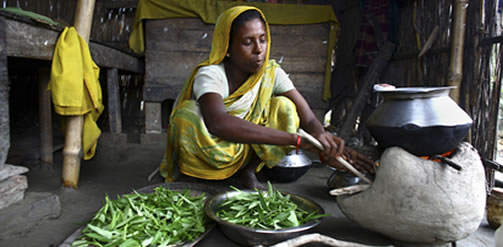 Lyla Mehta, STEPS Centre water & sanitation theme convenor, is heading a team writing the report on Water and Food Security to the Committee of World Food Security (CFS).
Water for all, provided in an equitable and sustainable way, is central to global justice for poor women and men. It has a particularly important role in food security through its multiple impacts on health, agricultural production and food processing. Yet despite successive global declarations and efforts, hundreds of millions still suffer from lack of access to water for drinking, cooking, agricultural irrigation and food production at domestic and industrial levels.
Simplistic portrayals of water ‘crises’ have often led to misunderstandings on the nature of the problem and how to address it. The result has been a failure to centralise the needs and interests of the poor and marginalised within different solutions. In recognition of this, and in follow-up of major international events such as Rio+20 and the World Water Forum, the Committee of World Food Security (CFS), in its 40th session, requested the High Level Panel of Experts on Food Security and Nutrition (HLPE) to prepare a report on Water and Food Security for its 42nd session in 2015. Following the open call for experts, the Steering Committee of the HLPE constituted a project team to write the report, led by IDS Fellow Lyla Mehta.
HLPE on water and food security and the CFS
Through a food security lens, the HLPE has been requested to focus its analysis on water for agricultural production and food processing, taking also into account gender-related aspects. It is also expected to, from a food security perspective, assess the impacts of water management practices on food security, including water usage for agricultural production, food processing and other ways of consumption and also also consider in particular issues related to the sustainability of irrigation systems, the salinization of agricultural land and the reduction of the quality of the ground water. On this basis, it will give appropriate recommendations so as to improve water and food security policies, as well as coordination among the different fields and actors at all levels, with a long-term perspective.The Committee on World Food Security (CFS), established in 1974, is the key intergovernmental forum addressing global food security and nutrition. Following the food crisis of the 2007-08, it was reformed to be a more inclusive and multi-stakeholder body with strong participation of civil society representing the rights of small-scale producers and workers alongside governments, donor agencies and private sector actors. The CFS created the HLPE to help them in identifying the problems and to bring expert knowledge to the attention of the CFS.
As directed by the CFS Plenary and Bureau, the HLPE will:
- Assess and analyse the current state of food security and nutrition and its underlying causes.
- Provide scientific and knowledge-based analysis and advice on specific policy-relevant issues, utilising existing high quality research, data and technical studies.
- Identify emerging issues, and help members prioritise future actions and attentions on key focal areas.
Project team and the report on Water for Food Security
The project team will meet for the first time at IDS this week. The team comprises:- Lyla Mehta (Team Leader, STEPS Centre/IDS)
- Oscar Cordeiro-Netto (University of Brasilia)
- Theib Oweis (Integrated Water and Land Management Program at the International Center for Agricultural Research in the Dry Areas)
- Claudia Ringler (International Food Policy Research Institute)
- Barbara Schreiner (Pegasys Institute)
- Shiney Varghese (Institute for Agriculture and Trade Policy).
The report will build on the work done by the Water Justice Programme and the STEPS Centre which have consistently sought bring together the food, agriculture, water, sanitation, and health domains against the backdrop of growing challenges of food and resource crises, rapid urbanisation and climate change. Our work seeks to enhance equity, social and gender justice and sustainability in the water domain by critically examining the politics and pathways of water and sanitation policy and practice through interdisciplinary research on scarcity, power, access, rights to and control over water and other resources.
This article first appeared on the Institute of Development Studies website.
Tuesday, 28 January 2014
Missing politics and food sovereignty
 |
| Por uma vida sem catracas – MPL e Via Campesina juntos via desvio on Flickr |
Over the last two decades La Via Campesina has grown as a movement campaigning for a change in the global agri-food system. Some claim that it is the world's largest social movement. Its main rallying cry has been a demand for 'food sovereignty', a term, as Marc Edelman notes, that has a longer genealogy but has become very effectively popularised by La Via Campesina in recent years. This is an argument for peasant autonomy, local food systems, fairer more environmentally-sound, agroecological production and trade and much more besides. As a vision and political programme it is one to which many would subscribe.
A major event was held last week at the Institute for Social Studies in the Hague, co-hosted by the Land Deal Politics Initiative. It brought together around 350 academics and activists concerned with food and agriculture in both the global North and South in a critical dialogue about food sovereignty. It followed on from a similar event at Yale University last year that was equally well attended. Over 80 papers have been produced, some of which have already appeared in the Journal of Peasant Studies.
I was intrigued to find out where the food sovereignty debate had got to, what political strategies were emerging and whether, in different and diverse contexts, the ideals were in fact realisable. The ISS event opened with an impressive keynote panel that I chaired. Elizabeth Mpofu, the General Coordinator of La Via Campesina from Zimbabwe opened the proceedings, and this was followed by a panel including Susan George, the famous author and activist and Chair of the Transnational Institute, another of the hosts; Olivier De Schutter, the UN Special Rapporteur on the Right to Food; Teodor Shanin, President of the Moscow School of Social and Economic Sciences a leading scholar on peasant issues; and Tania Li, professor at Toronto University and who has done excellent work on agrarian change in southeast Asia. An impressive array of expertise and experience indeed. The subsequent sessions were no less impressive and the discussion was vibrant and challenging. This is a debate that raises passions and differences.
What were my reflections on the day? In many ways I was left rather confused as to what food sovereignty was, and how it was to be translated into a political struggle. As Peter Rosset from ECOSUR in Chiapas explained, the concept has evolved, and the movement has adopted many different angles as more and more elements have been incorporated. These included the move from a focus on small-scale production and markets to concerns with gender, indigenous peoples, environment, workers, consumers, migrants, trade relations and more. All are unquestionably important themes, and each was debated intensively during the conference.
Through accreting issues and agendas, the movement thus offers an all-encompassing vision where nothing is left out it seems. This helps build linkages between different areas of activism, but it also makes it very difficult to get a handle on what the core issues are, and where to focus intellectual and political energies. This is made more challenging by the lack of clarity over the focus of the key concept – sovereignty. There is much focus on 'the local', but this may not be sovereign without addressing the role of the state, or indeed the relationships between states in international trade and global politics. A populist appeal to locality may miss the importance of defining the arenas for political action that necessarily impinge on what happens in local settings.
In my comments, I observed the slightly odd paradox that a clearly intensely political issue, part of an assertive political project, often lacked a solid political analysis, and indeed that a more thorough-going engagement with critical agrarian studies might help address this gap.
Three areas of politics, I felt, were missing.
The first was the politics of peasants. La Via Campesina – the peasant's way – asserts the rights of peasants. But who is the peasantry in the context of a globalising world, with dynamic patterns of differentiation across sites? Classic issues of class formation and differentiation are raised, ones that Henry Bernstein so effectively elaborated in his 'sceptical view' paper for the Yale conference. What is the relationship between the peasantry and workers, or indeed worker-peasants, with one foot in town and another in the countryside? Are petty commodity producers or even emergent commercial farmers part of the peasantry, or separate? What differences of gender, age, race for example cut across these class differences, and what conflicts and tensions arise? These are old questions, but highly pertinent to the formation of the emergent solidarities that must define a movement. Creating an idealised vision of a peasant, seemingly independent of context, makes the political project problematic, as the contradictions and conflicts that arise between and within groups may act to undermine the alliances required for a movement to gain traction.
The second area of missing politics was around the politics of technology and ecology. An important strand of the food sovereignty movement is the advocacy for an agroecological approach to farming. Low external inputs, organic production, rejection of biotechnology and so on are all hallmarks. Yet in the advocacy of agroecology too often there is a resort to an essentialist, technical argument, thus falling into the same trap as the advocates of the technologies that are opposed. As Jack Kloppenberg has put it in respect of agricultural biotechnology, the argument should be less about the particular technology but instead around the terms of access. An open access approach to research and development may generate a range of productivity-enhancing technologies that improve efficiency and reduce production costs, without being at the behest of large-scale corporations. New technologies are of course essential for improving agriculture. Improving the yield of crops through high-tech genetics or the use of chemical fertilisers and pesticides may be essential, yet seem to be rejected by agroecology fundamentalisms.
The bottom line is that farmers want good prices, and consumers want cheap food. This structural relation between producers and consumers was discussed many times at the event, while noting that the current agri-food system involves much distortion of prices, and a distribution of value in corporate-controlled value chains that often benefits agribusinesses and retailers, and neither producers nor consumers. Yet too often local food systems can only produce expensive food for elite markets – to the bourgeoisie of Paris' Left Bank shopping in the flourishing bio-organic weekend markets, as noted by one commentator. Clearly internalising the costs to the environment and to labour of the current agri-food system is essential, and this will doubtless produce shorter commodity chains, more localised production and marketing, better conditions for workers and a more equitable distribution of value, as well as more ecologically-sensitive forms of production. Yet, even with such measures, a diversity of innovative, technological responses will be necessary that should not be limited by a technically narrow definition of agroecology.
The third area was the politics of capital, and in particular the relationships between capital and the peasantry. Again, a very old debate. Peasants, however they are defined, are never disengaged from the historical processes of capitalist development. Indeed they are mutually constituted by such processes. The debate is not therefore how to disengage, but how to negotiate the terms of incorporation. There were many examples of adverse incorporation discussed at the conference, where poor, marginalised farmers were disadvantaged. But the solution, as Tania Li showed with her case from Indonesia, is not to go back to earlier forms of production and market relationship, but to organise for a better deal – in her case for small scale cocoa production, produced as a mono-crop in a remote area where few other livelihood opportunities existed. Re-embedding markets in social contexts, following Karl Polanyi, is essential if a more democratic control of the food system is to be realised, and this means a political struggle around the terms of trade, the rejection of monopolistic market behaviours, and the opening up of markets to a wider range of players. In many ways, this is an advocacy for a better functioning capitalism without the distortions of corporate concentration, not its rejection outright. This means developing a more strategic engagement with capital around the terms of incorporation and the relationships between markets and societal values, much as the fair trade, organic certification and other movements have done.
The progressive ambitions and utopian ideals of food sovereignty are clearly evident, and ones that many can easily subscribe to. But how to translate this into a political programme and strategic advocacy around which clear solidarities and alliances can build is less evident. Perhaps with a tighter political economic analysis of the nature of the problem, always necessarily contextualised by history and place, then a more targeted, more effective approach might emerge. I left the conference unsure. I was inspired by the passion and vision of the movement participants and their academic allies, but I was perhaps more sceptical at the end than when I arrived about the practicalities of how, in any setting that I know of, such a vision might be realised in practice. This is of course not a reason to reject trying, but it also suggests the need to think harder about both political possibilities and strategies.
Monday, 16 December 2013
To achieve food security, we need to talk about politics and power in the food system

:
- Food and nutrition security in the face of climate change
- Improving food security and poverty alleviation through production systems
- Understanding the link between agriculture-related investments, policies, and measures with climate smart agriculture
I’ve previously written about the focus on agriculture to meet food and nutrition security and the same argument holds for the agenda at the 2013 AFC conference. However, if we take it as given that there was very little discussion on what happens in the food system outside of the agricultural sector and that there was even less discussion on nutrition — even what species it is that farmers are growing/rearing or fishers catching — then there is still much to discuss.
Africa - viewed from outside
As a starting point, having the conference in Africa enabled many more views from the continent’s perspective to be aired, which made for some interesting highlights. Firstly, Prof Rukuni made the poignant remark, “I did not know that I was poor until somebody told me.”This reliance on external appreciation of African agricultural problems combined with external solutions became a common theme that was not necessarily critiqued during the conference, although there was a strong emphasis on Africa proactively taking the agriculture agenda forward and not relying on foreign assistance (especially through CAADP).Women and agriculture
FANRPAN’s Dr Sisulu also pointed out the looming elephant in the room — gender. Although after her most speakers mentioned the importance of women in agriculture, the structural barriers preventing women from engaging on an equal footing with men across spheres (not just in agriculture) was never, in my view, adequately addressed and requires much further room for discussion at a high level platform such as this.Farmers and the language of climate change
The next important emphasis that arose from the conference discussions was the critical role that farmers themselves play as the implementers of CSA. It was agreed that there were not enough farmers that were being engaged to share their knowledge and experience. Similarly, when it came to the science of climate change there was the long-held view that scientists do not know how to translate their science into a message that allows farmers to respond. A point raised from the floor and followed through by Dr Sisulu was around the translation of climate change not merely into ‘layman’s’ terms, but into vernacular. This comment resonated with me as earlier in the year a colleague at the Food Futures Networking Conference had mentioned that when returning to his native Nigeria, he was asked to give a presentation only to find out that they wanted it not in English, but in the local vernacular. His struggle to find words in his mother-tongue for the work that he was doing struck him deeply and he emphasised the need for more thought to be put into translating complex phenomena like climate change into terms with which people can identify.Land tenure and climate
The final important aspect that struck me as an issue that was insufficiently dealt with was that of land tenure for farmers in Africa in particular. Not just from the equity and social justice perspective, which is extremely relevant — especially in a country like South Africa— but the comment from the floor was more about the lack of incentives that farmers have to make investments in CSA when the land that they’re working isn’t even theirs.Adequately addressing these issues requires not just the mere implementation of a discrete CSA solution — although Dr Campbell shared some hopeful Success Stories — but requires more fundamental engagement with the political economy of power within the food system. This is a much harder conversation to have, but if we are to achieve food security for the 9 billion people we expect to share the planet with by 2050 then it is of utmost necessity. The Roadmap to a Climate Smart Alliance (pdf), expected to be launched in September 2014, is expected to form a platform for dialogue — let us hope that it will also enable us to have these less comfortable discussions where there is not always a win–win.
We have also launched a Youth Platform where we hope to engage with young people around the world on these issues. Please get in contact if you would like further information: email katp18@gmail.com .
Friday, 25 October 2013
Influencing CAADP on food and nutrition security
Earlier this month, about 80 participants from policy and research institutions that contribute to the Comprehensive Africa Agriculture Development Programme assembled on the campus of the International Livestock Research Institute (ILRI) in Addis Ababa, Ethiopia, for a three-day (7-9 Oct 2013) high level conference on “Research and Policy Challenges in Food and Nutrition Security in Africa” (conference agenda / roundtable agenda).
These included the review board of the FOODSECURE project; invitees from relevant organizations including African Union Commission and NEPAD Agency, UNECA, UNDP, FAO, Embassy Delegations, Ethiopian Economic Association, IFPRI; African Researchers and Policy Advisors; and members of the FOODSECURE research team.
Future Agricultures was represented at the conference by Sam Asuming-Brempong, who is the organisation's CAADP Coordinator and a Senior Lecturer at the Department of Agricultural Economics and Agribusiness, University of Ghana.
FOODSECURE is an EU-based research program to explore the future of global food and nutrition security (FNS). It aims to have an impact by strengthening the knowledge base to support EU policy makers and other stakeholders in the design of consistent, coherent, long-term policy strategies for improving food and nutrition security worldwide. The objective of the conference in Ethiopia was to engage in a dialogue with research peers and decision makers in Africa on the challenges of formulating FNS policies.
 In addition to contributing to the general discussion and emphasizing the role that Future Agricultures can play in improving FNS in Africa, Sam also presented the work he did with two others under the FAC Commercialization Theme last year: “Value chain analysis of smallholder pineapple in the Akuapim South municipality of Ghana” by Samuel Asuming-Brempong, Boahen Atta Oppong and Sampson Osei (Department of Agricultural Economics and Agribusiness, University of Ghana), which was well received.
These included the review board of the FOODSECURE project; invitees from relevant organizations including African Union Commission and NEPAD Agency, UNECA, UNDP, FAO, Embassy Delegations, Ethiopian Economic Association, IFPRI; African Researchers and Policy Advisors; and members of the FOODSECURE research team.
Future Agricultures was represented at the conference by Sam Asuming-Brempong, who is the organisation's CAADP Coordinator and a Senior Lecturer at the Department of Agricultural Economics and Agribusiness, University of Ghana.
FOODSECURE is an EU-based research program to explore the future of global food and nutrition security (FNS). It aims to have an impact by strengthening the knowledge base to support EU policy makers and other stakeholders in the design of consistent, coherent, long-term policy strategies for improving food and nutrition security worldwide. The objective of the conference in Ethiopia was to engage in a dialogue with research peers and decision makers in Africa on the challenges of formulating FNS policies.
In addition to contributing to the general discussion and emphasizing the role that Future Agricultures can play in improving FNS in Africa, Sam also presented the work he did with two others under the FAC Commercialization Theme last year: “Value chain analysis of smallholder pineapple in the Akuapim South municipality of Ghana” by Samuel Asuming-Brempong, Boahen Atta Oppong and Sampson Osei (Department of Agricultural Economics and Agribusiness, University of Ghana), which was well received.- See the Roundtable background information (pdf) for abstracts of the presentations, including Sam's talk.
Monday, 16 September 2013
Food crisis in Zimbabwe: 2.2 million a risk. But where do the figures come from, and what do they mean?
The newspapers have been full of commentary on a looming food crisis in Zimbabwe. This has followed from the World Food Programme's press release that 2.2 million people will be in need of food aid in the coming months. The Commercial Farmers Union has called it a 'man-made crisis', the direct result of the 'chaotic' land reform, and a decade of inappropriate policies.
I wanted to find out a bit more about where the 2.2 million figure came from. It's a big number, and would mean a lot of food imports, way beyond the means of the Finance ministry. After a bit of digging I eventually found the figure, buried on page 122 of the ZimVac (Zimbabwe Vulnerability Assessment Committee) livelihood assessment draft report for 2013.
Each year ZimVac, a coalition of NGOs, researchers and government agencies, undertake a major rural livelihood assessment, based on a sample of over 10,000 households across the country. The sample is drawn according to the latest ZIMSTAT 'master sampling frame', and the resulting data is aimed to be representative of the country as a whole. It's an excellent and important initiative, but it has its deficiencies, as those involved readily admit.
The process for deciding the headline figure is complex. It involves assessing for each household all the cereal production, and then adding in income from employment, remittances, livestock sales, and other sources of income that could be used to buy food (p. 120). Assumptions on prices and market availability are used to translate income into food and in turn energy (p.121). The food security assessment is based on the household's potential access to enough food from all sources, including purchases, to give each member a minimum of 2100 kilocalories per day in the consumption period 1 April 2013 to 31 March 2014 (p. 119). The total number in food deficit figure is then calculated as a sum of all of those experiencing any negative balance in the accounting period.
It's a complicated procedure with lots of steps and plenty of assumptions. What the headline figure doesn't indicate – although the report does, and the background documents for the ZimVac surveys over the years are quite transparent about this – is that the big number includes many people who may have a projected deficit for actually a very short period. Indeed, at the time of the survey in May 2013, over 80% of households surveyed had no hunger problems with only a very small proportion recording 'severe hunger' (p. 115). The report shows that there is a progression of food insecurity, with a peak of 2.2m people expected in January to March 2014 (p.124). 31% of the total (683,000 people) move into food deficit only in this crunch period before the next harvest; and some of whom may in fact be food insecure for only a very few days.
The 2.2 million figure is of course a good flag-waving number for the WFP to raise funds, and for the CFU to bash the government for the land reform (and even President Mugabe is now joining the critique of the 'new farmers'), but the actual implications are more complex. Here are five reasons why we need to be cautious about the figures.
One of the most striking figures in the report is the prediction that 98% of rural households nationally will hit a food deficit by next March if only cereal production and stocks were included (p. 123). Of course this includes those with no food production to speak of, such as farmworkers and other rurally-based non-farm households. But even discounting this group, this is striking, and does suggest a problem in agricultural production, as Charles Taffs of the CFU indicates. However, again we must be cautious in jumping to conclusions.
One big concern I have with recent national surveys is that they have been sampling according to old sample frames set before the land reform. This was the case for the 2011 PICES (Poverty, Income, Consumption and Expenditure Survey) study and the 2010-11 Demographic and Health Survey, both using the 2002 census sample frame. I have been assured that the ZimVac survey for 2013 used an updated sample, with 'enumeration areas' allocated proportional to population distribution derived from the 2012 census. If so, this would have included the significant populations, especially in A1 areas, who are – at least according to our data from Masvingo – producing more and doing better than their counterparts in the communal areas, where most the earlier rural samples are drawn from. And in our study areas on A1 sites we see between half and two-thirds of the households producing sufficient cereals for the year – not just 2%,
Following the 2012 census, ZIMSTAT is revising the national 'master sample frame', and hopefully from now on national surveys will be statistically more representative. Unfortunately it is still difficult to stratify the data according to land use types, and so distinguish between resettlement areas and others, so Taffs and co should probably hold off on their outright dismissal of land reform on the back of this data for now. As ever, it's more complicated than it first seems.
That said, last season was unquestionably a worse one than experienced in the last few years, including in Masvingo. It also hit some higher potential areas hard, with a very unevenly spread rainfall. Despite improvements since 2009, input supply was again erratic and untimely last year.
Also, maize area planted was again down, reflecting the shift from food crops to tobacco in some areas, perhaps especially in those food producing areas in the higher rainfall zones. This restructuring of the crop system is directly driven by incentives – tobacco, supported through contract arrangements – , is a much more profitable crop than maize, especially if marketed through the Grain Marketing Board. Over the last decade or more we have seen switches to small grains (although plantings were down this past year according to ZimVac), but these are still a small percentage of total crop output, and it remains maize that drives the food economy, although much of this circulates outside the formal channels, and so is difficult to capture in national statistics.
So what should we make of all this? Certainly there is going to be a problem of food deficits in the coming months. However, problems are going to be concentrated in a certain time period, and outside a few areas and for more vulnerable people, it's not going to be as bad as the headline figure and the media commentary perhaps suggests. Imports will certainly be needed, and targeted food aid will be important, but other coping strategies will also come into play to offset the worst.
Indeed this seems to have been the pattern over many years now. There is a ritualised flurry of activity around this time of year, with the aid agencies calling for funds to support food aid, and those critical of land reform saying that this 'proves' that Zimbabwe has gone for food producer to 'basket case'. Yet by the end of the season, the expected famine has not occurred and, although hardships unquestionably are faced, the scale and depth of the problem is not as expected. This can be explained due to both sampling and non-sampling errors inherent in the standard surveys; but also significantly because assessments have not got to grips with the new patterns of production (particularly in A1 areas) and marketing (mostly informal). This will require new, and better attuned, data collection techniques.
Unfortunately too often the emergency, humanitarian aid and disaster relief momentum overrides discussion of the developmental issues, and the scramble for food aid (and all the associated politicking) diverts attention and resources. As I have mentioned in this blog many times before, rural development challenges are many. They include the need to invest in irrigation to offset drought vulnerability, the importance of investment and reforms to ensure timely supply of inputs, a pricing and market policy to balance incentives between food and cash crops, a livestock policy that ensures such assets are secure and available in times of need, and, overall, more concerted support for the resettlement areas to ensure that they can indeed supply the nation with food.
Next week, I will continue this theme and look at the data on production and imports over time in a bit more detail. Since 2000 there is little doubt Zimbabwe is in a new era, and policy responses have to take this into account.
This post was written by Ian Scoones and originally appeared on Zimbabweland
I wanted to find out a bit more about where the 2.2 million figure came from. It's a big number, and would mean a lot of food imports, way beyond the means of the Finance ministry. After a bit of digging I eventually found the figure, buried on page 122 of the ZimVac (Zimbabwe Vulnerability Assessment Committee) livelihood assessment draft report for 2013.
Each year ZimVac, a coalition of NGOs, researchers and government agencies, undertake a major rural livelihood assessment, based on a sample of over 10,000 households across the country. The sample is drawn according to the latest ZIMSTAT 'master sampling frame', and the resulting data is aimed to be representative of the country as a whole. It's an excellent and important initiative, but it has its deficiencies, as those involved readily admit.
The process for deciding the headline figure is complex. It involves assessing for each household all the cereal production, and then adding in income from employment, remittances, livestock sales, and other sources of income that could be used to buy food (p. 120). Assumptions on prices and market availability are used to translate income into food and in turn energy (p.121). The food security assessment is based on the household's potential access to enough food from all sources, including purchases, to give each member a minimum of 2100 kilocalories per day in the consumption period 1 April 2013 to 31 March 2014 (p. 119). The total number in food deficit figure is then calculated as a sum of all of those experiencing any negative balance in the accounting period.
It's a complicated procedure with lots of steps and plenty of assumptions. What the headline figure doesn't indicate – although the report does, and the background documents for the ZimVac surveys over the years are quite transparent about this – is that the big number includes many people who may have a projected deficit for actually a very short period. Indeed, at the time of the survey in May 2013, over 80% of households surveyed had no hunger problems with only a very small proportion recording 'severe hunger' (p. 115). The report shows that there is a progression of food insecurity, with a peak of 2.2m people expected in January to March 2014 (p.124). 31% of the total (683,000 people) move into food deficit only in this crunch period before the next harvest; and some of whom may in fact be food insecure for only a very few days.
The 2.2 million figure is of course a good flag-waving number for the WFP to raise funds, and for the CFU to bash the government for the land reform (and even President Mugabe is now joining the critique of the 'new farmers'), but the actual implications are more complex. Here are five reasons why we need to be cautious about the figures.
- First, there's geography: as the report shows the problems are concentrated in the dry south of the country which experienced the worst season in terms of rainfall and its distribution (p.125-6).
- Second, there is almost certainly (as ever in surveys) an underreporting of income, and so purchasing power. Since in drought years, market purchases are essential for food entitlements, this is rather crucial.
- Third, the assessment model allows for only limited sales of livestock to compensate for food deficits (households are assumed to retain a minimum of 5 goats and 3 cattle). Yet livestock is precisely the asset in the drier parts of the country that are used in times of drought to exchange for grain, and distress sales are common, and important for food security.
- Fourth, remittances are especially important in drought-prone areas, yet the figures used in the model for this year are based on recall of last year's receipts. Last year was of course a relatively good year for rural production, and so remittance flows inevitably dropped. But this year, you can be sure, they will increase in response to the shortfalls. For perfectly good reasons, the model does not account for this, but it's another reason why we can expect things to be not as bad as predicted.
- Finally, the assessment does not include early cropping – for example of green maize – which is often important in that crunch period before the 'proper' harvest.
One of the most striking figures in the report is the prediction that 98% of rural households nationally will hit a food deficit by next March if only cereal production and stocks were included (p. 123). Of course this includes those with no food production to speak of, such as farmworkers and other rurally-based non-farm households. But even discounting this group, this is striking, and does suggest a problem in agricultural production, as Charles Taffs of the CFU indicates. However, again we must be cautious in jumping to conclusions.
One big concern I have with recent national surveys is that they have been sampling according to old sample frames set before the land reform. This was the case for the 2011 PICES (Poverty, Income, Consumption and Expenditure Survey) study and the 2010-11 Demographic and Health Survey, both using the 2002 census sample frame. I have been assured that the ZimVac survey for 2013 used an updated sample, with 'enumeration areas' allocated proportional to population distribution derived from the 2012 census. If so, this would have included the significant populations, especially in A1 areas, who are – at least according to our data from Masvingo – producing more and doing better than their counterparts in the communal areas, where most the earlier rural samples are drawn from. And in our study areas on A1 sites we see between half and two-thirds of the households producing sufficient cereals for the year – not just 2%,
Following the 2012 census, ZIMSTAT is revising the national 'master sample frame', and hopefully from now on national surveys will be statistically more representative. Unfortunately it is still difficult to stratify the data according to land use types, and so distinguish between resettlement areas and others, so Taffs and co should probably hold off on their outright dismissal of land reform on the back of this data for now. As ever, it's more complicated than it first seems.
That said, last season was unquestionably a worse one than experienced in the last few years, including in Masvingo. It also hit some higher potential areas hard, with a very unevenly spread rainfall. Despite improvements since 2009, input supply was again erratic and untimely last year.
Also, maize area planted was again down, reflecting the shift from food crops to tobacco in some areas, perhaps especially in those food producing areas in the higher rainfall zones. This restructuring of the crop system is directly driven by incentives – tobacco, supported through contract arrangements – , is a much more profitable crop than maize, especially if marketed through the Grain Marketing Board. Over the last decade or more we have seen switches to small grains (although plantings were down this past year according to ZimVac), but these are still a small percentage of total crop output, and it remains maize that drives the food economy, although much of this circulates outside the formal channels, and so is difficult to capture in national statistics.
So what should we make of all this? Certainly there is going to be a problem of food deficits in the coming months. However, problems are going to be concentrated in a certain time period, and outside a few areas and for more vulnerable people, it's not going to be as bad as the headline figure and the media commentary perhaps suggests. Imports will certainly be needed, and targeted food aid will be important, but other coping strategies will also come into play to offset the worst.
Indeed this seems to have been the pattern over many years now. There is a ritualised flurry of activity around this time of year, with the aid agencies calling for funds to support food aid, and those critical of land reform saying that this 'proves' that Zimbabwe has gone for food producer to 'basket case'. Yet by the end of the season, the expected famine has not occurred and, although hardships unquestionably are faced, the scale and depth of the problem is not as expected. This can be explained due to both sampling and non-sampling errors inherent in the standard surveys; but also significantly because assessments have not got to grips with the new patterns of production (particularly in A1 areas) and marketing (mostly informal). This will require new, and better attuned, data collection techniques.
Unfortunately too often the emergency, humanitarian aid and disaster relief momentum overrides discussion of the developmental issues, and the scramble for food aid (and all the associated politicking) diverts attention and resources. As I have mentioned in this blog many times before, rural development challenges are many. They include the need to invest in irrigation to offset drought vulnerability, the importance of investment and reforms to ensure timely supply of inputs, a pricing and market policy to balance incentives between food and cash crops, a livestock policy that ensures such assets are secure and available in times of need, and, overall, more concerted support for the resettlement areas to ensure that they can indeed supply the nation with food.
Next week, I will continue this theme and look at the data on production and imports over time in a bit more detail. Since 2000 there is little doubt Zimbabwe is in a new era, and policy responses have to take this into account.
This post was written by Ian Scoones and originally appeared on Zimbabweland
Africa needs to feed herself first, then the world
This guest post by Adetola Okunlola first appeared on the PLAAS blog.
 Are Africa’s farmers ageing and young people turning their backs on agriculture? Can large-scale land deals and industrial farming address food security in Africa? How can smallholder farmers be supported to build food security for their own families, communities and countries? These were among the debates that took place at the Society for International Development’s (SID) ‘Africa Speaker Dialogue Series’ on the theme of ‘Rethinking Food Security in Africa: New Paradigms, New Approaches’, which was held at the Norfolk Hotel in Nairobi on 12-13 June 2013. Present were key African thinkers from a variety of backgrounds from academics to government officials, farmers to activists, and, hearteningly, a large contingent of young people representing different forums. The Africa Speaker Dialogue Series aims to ‘promote reflection and conversation’ around key issues on the African continent.
The symposium consisted of five topics – Ideology, Technology, the African Farmer, Gender and Youth – with a speaker and respondents for each theme. From the outset, it became apparent that speakers, respondents and the audience were agreed on the need to give further attention to the role of women in agriculture, African identity and freedom from forms of dependence created by trade, economic and aid relationships.
Why is Africa food insecure?
The symposium was opened by Ali Hersi of SID East Africa, who introduced the opening round table discussion held by Dr Abdirizak Nunow (University of Eldoret and Future Agricultures), MagodeIkuya (Molo Integrated Agro-Farming Initiative Uganda), Gershon Nzuva (Past Chairman Central Agricultural Board) and Adetola Okunlola (Institute of Poverty, Land & Agrarian Studies). The discussants were challenged by Mr. Hersi to answer the question: ‘Why Africa is still food insecure even though she has enough people and resources to feed herself?’ A number of factors were mentioned including:
Ideology
The speakers and respondents on the theme of ‘Ideology’ were Situma Mwichabe (SID), Dr Alex Awiti (Director of the East African Institute of the Agha Khan University) and Oby Obyerodhianbo (Strategic communications Advisor at the Program for Appropriate Technology in Health, PATH), who spoke on ideologies around and of African farmers.
They exasperatedly reiterated the need for Africans to not be reliant on foreign aid, ideas and advice. It was strongly felt that the African continent was still held by forces of neo-colonialism in the guise of ‘technical advisors’ and World Bank/IMF financiers. One asked, ‘Who shall be the ones to change the African people’s ideology?’ as it was felt that those in power in African governments had no serious aspirations to address such issues. It was also noted that African farmers had ‘given up’ on dreams of success and were happy to partake in projects to save them from starvation but still keep them on the brink of poverty. The panel concluded that this mindset must be changed and African farmers must understand that dependence on projects and aid will never change lives… social organization and mobilization is what is needed to facilitate economic growth.
Technology
The ‘Technology’ speaker was Dr Nicholas Ozor (African Centre for Technology and Policy studies). Respondents Dr Paul Seward (Director Farm Inputs Promotion Africa) and Dr Hannington Odame (Director Center for African Bio-Entrepreneurship and Future Agricultures East Africa hub coordinator) discussed the acquisition of technology by African small-scale farmers. The roles of different types of technology were discussed such as mechanization, biological and indigenous technology. It was felt that many farmers were crop loyal and preferred crops they had always grown over other higher yield varietals. Dr Seward demonstrated the effectiveness of a ‘farm-inputs’ model in which smallholders are trained how to use appropriate amounts of inputs such as fertilizer and seeds, through simple methods such as a seed planting string which are low in cost and highly effective.
The African Farmer: agency and adaptation
‘The African Farmer’ session was presented by Dr Abdullahi Khalif (Country representative for FEWSNET Somalia) with responses by Dr Julius Gatune (African Center for Economic Transformation) and Adetola Okunlola (PLAAS). The discussion centred on African farmers’ agency and ability to adapt in order to access rapidly changing and complex global value chains. A warning was given against notions of an ‘African Farmer’; farmers are a highly heterogeneous group, both across the continent and within specific geographical areas. One of the reasons for so many years of development failure has been due to ‘one size fits all’ approaches, which do not recognise the differences between farmers. It was also noted that there are other ways to improve food security and economic success for small-scale farmers than including them in high-value export value chains. A further understanding and support of informal markets is also a viable and favourable option. The ‘African Farmer’ discussants echoed some of the points made within the ideology discussion, however, it was felt that hope does lie with African small-scale producers, many of whom are not plagued by dependency, but are rather economic actors producing despite constraints and utilising all advantages given to them, whether by NGOs, the state or charities.
Gender and Youth
The second day of the symposium saw a focus on ‘Gender’ and ‘Youth’. The Gender speakers included Okumba Miruka (independent consultant), Ester Mwaura-Muiru (Founder of GROOTS Kenya) and Elias Mutinda (agriculture and food security advisor, Action Aid Tanzania). The role of women in agriculture was a recurring theme throughout the two days. The fact that women do most of the agricultural work on the continent yet often are not recognised nor paid for their work was repeated and challenged. Often they are not able to own title deeds or be recognized as the rightful owners of their cropping land, and have little say as to what is planted. This needs to change: if the majority of African farmers are women, they need to be recognised legally and financially (and not just through micro-finance schemes!). A cultural shift must also occur which results in women becoming more empowered and able to be recognised for the work that they undertake.
Youth involvement in agriculture
The last discussion was that of ‘Youth’ and ‘Youth involvement in Agriculture’. Katindi Sivi was the speaker (Program Director SID East Africa) with three respondents: Moses Mutungi (Farm Concern International), Olawale Ojo (Agroprenuer Naija) and Emmie Kio (Young Professionals in Agricultural Research for Development). The respondents spoke about their experience as young farmers and farming advocates. They argued that the notion of agriculture being a ‘last resort’ was passed on by the older generation who should refrain from such thinking and rather encourage their children to farm. As Emmi Kio of YPARD stated ‘We need to stop spreading the ideology that farming is a poor man's profession.’ In fact, with adequate support and information, young people are often inclined to get involved in agriculture. The youth respondents also demonstrated their use of information and communications technology (ICT) and social media as platforms through which to communicate, disseminate information and advocate for youth in agriculture, using twitter handles such as @emmiewakio and @agropreneur9ja to do so [editor's note: Emmie Kio has also reflected on the event on her blog].
Some conclusions
Overall, a sense of African pride and unity against outside forces was prevalent in the room, with many of the comments and suggestions coming back to this point. The need to prioritise food security on the continent was also key, with a call to those in power and the youth, our future leaders, to fully commit to ensuring this rather than ensuring food security for outside countries through growing export crops and selling land. Africa needs to feed herself first, then the world.
Follow Adetola Okunlola on Twitter: @AdetolaOkunlola
 Are Africa’s farmers ageing and young people turning their backs on agriculture? Can large-scale land deals and industrial farming address food security in Africa? How can smallholder farmers be supported to build food security for their own families, communities and countries? These were among the debates that took place at the Society for International Development’s (SID) ‘Africa Speaker Dialogue Series’ on the theme of ‘Rethinking Food Security in Africa: New Paradigms, New Approaches’, which was held at the Norfolk Hotel in Nairobi on 12-13 June 2013. Present were key African thinkers from a variety of backgrounds from academics to government officials, farmers to activists, and, hearteningly, a large contingent of young people representing different forums. The Africa Speaker Dialogue Series aims to ‘promote reflection and conversation’ around key issues on the African continent.
The symposium consisted of five topics – Ideology, Technology, the African Farmer, Gender and Youth – with a speaker and respondents for each theme. From the outset, it became apparent that speakers, respondents and the audience were agreed on the need to give further attention to the role of women in agriculture, African identity and freedom from forms of dependence created by trade, economic and aid relationships.
Why is Africa food insecure?
The symposium was opened by Ali Hersi of SID East Africa, who introduced the opening round table discussion held by Dr Abdirizak Nunow (University of Eldoret and Future Agricultures), MagodeIkuya (Molo Integrated Agro-Farming Initiative Uganda), Gershon Nzuva (Past Chairman Central Agricultural Board) and Adetola Okunlola (Institute of Poverty, Land & Agrarian Studies). The discussants were challenged by Mr. Hersi to answer the question: ‘Why Africa is still food insecure even though she has enough people and resources to feed herself?’ A number of factors were mentioned including:
- Unequal global trade regulations,
- Poor infrastructure and linkages, resulting in food being available but not easily distributable to the masses,
- A lack of youth interest in farming, partly due to the ‘Westernisation’ of African youth, resulting in the notion that farming is for those who are not successful, and
- A lack of real focus by governments on ensuring food security.
Ideology
The speakers and respondents on the theme of ‘Ideology’ were Situma Mwichabe (SID), Dr Alex Awiti (Director of the East African Institute of the Agha Khan University) and Oby Obyerodhianbo (Strategic communications Advisor at the Program for Appropriate Technology in Health, PATH), who spoke on ideologies around and of African farmers.
They exasperatedly reiterated the need for Africans to not be reliant on foreign aid, ideas and advice. It was strongly felt that the African continent was still held by forces of neo-colonialism in the guise of ‘technical advisors’ and World Bank/IMF financiers. One asked, ‘Who shall be the ones to change the African people’s ideology?’ as it was felt that those in power in African governments had no serious aspirations to address such issues. It was also noted that African farmers had ‘given up’ on dreams of success and were happy to partake in projects to save them from starvation but still keep them on the brink of poverty. The panel concluded that this mindset must be changed and African farmers must understand that dependence on projects and aid will never change lives… social organization and mobilization is what is needed to facilitate economic growth.
Technology
The ‘Technology’ speaker was Dr Nicholas Ozor (African Centre for Technology and Policy studies). Respondents Dr Paul Seward (Director Farm Inputs Promotion Africa) and Dr Hannington Odame (Director Center for African Bio-Entrepreneurship and Future Agricultures East Africa hub coordinator) discussed the acquisition of technology by African small-scale farmers. The roles of different types of technology were discussed such as mechanization, biological and indigenous technology. It was felt that many farmers were crop loyal and preferred crops they had always grown over other higher yield varietals. Dr Seward demonstrated the effectiveness of a ‘farm-inputs’ model in which smallholders are trained how to use appropriate amounts of inputs such as fertilizer and seeds, through simple methods such as a seed planting string which are low in cost and highly effective.
The African Farmer: agency and adaptation
‘The African Farmer’ session was presented by Dr Abdullahi Khalif (Country representative for FEWSNET Somalia) with responses by Dr Julius Gatune (African Center for Economic Transformation) and Adetola Okunlola (PLAAS). The discussion centred on African farmers’ agency and ability to adapt in order to access rapidly changing and complex global value chains. A warning was given against notions of an ‘African Farmer’; farmers are a highly heterogeneous group, both across the continent and within specific geographical areas. One of the reasons for so many years of development failure has been due to ‘one size fits all’ approaches, which do not recognise the differences between farmers. It was also noted that there are other ways to improve food security and economic success for small-scale farmers than including them in high-value export value chains. A further understanding and support of informal markets is also a viable and favourable option. The ‘African Farmer’ discussants echoed some of the points made within the ideology discussion, however, it was felt that hope does lie with African small-scale producers, many of whom are not plagued by dependency, but are rather economic actors producing despite constraints and utilising all advantages given to them, whether by NGOs, the state or charities.
Gender and Youth
The second day of the symposium saw a focus on ‘Gender’ and ‘Youth’. The Gender speakers included Okumba Miruka (independent consultant), Ester Mwaura-Muiru (Founder of GROOTS Kenya) and Elias Mutinda (agriculture and food security advisor, Action Aid Tanzania). The role of women in agriculture was a recurring theme throughout the two days. The fact that women do most of the agricultural work on the continent yet often are not recognised nor paid for their work was repeated and challenged. Often they are not able to own title deeds or be recognized as the rightful owners of their cropping land, and have little say as to what is planted. This needs to change: if the majority of African farmers are women, they need to be recognised legally and financially (and not just through micro-finance schemes!). A cultural shift must also occur which results in women becoming more empowered and able to be recognised for the work that they undertake.
Youth involvement in agriculture
The last discussion was that of ‘Youth’ and ‘Youth involvement in Agriculture’. Katindi Sivi was the speaker (Program Director SID East Africa) with three respondents: Moses Mutungi (Farm Concern International), Olawale Ojo (Agroprenuer Naija) and Emmie Kio (Young Professionals in Agricultural Research for Development). The respondents spoke about their experience as young farmers and farming advocates. They argued that the notion of agriculture being a ‘last resort’ was passed on by the older generation who should refrain from such thinking and rather encourage their children to farm. As Emmi Kio of YPARD stated ‘We need to stop spreading the ideology that farming is a poor man's profession.’ In fact, with adequate support and information, young people are often inclined to get involved in agriculture. The youth respondents also demonstrated their use of information and communications technology (ICT) and social media as platforms through which to communicate, disseminate information and advocate for youth in agriculture, using twitter handles such as @emmiewakio and @agropreneur9ja to do so [editor's note: Emmie Kio has also reflected on the event on her blog].
Some conclusions
Overall, a sense of African pride and unity against outside forces was prevalent in the room, with many of the comments and suggestions coming back to this point. The need to prioritise food security on the continent was also key, with a call to those in power and the youth, our future leaders, to fully commit to ensuring this rather than ensuring food security for outside countries through growing export crops and selling land. Africa needs to feed herself first, then the world.
Follow Adetola Okunlola on Twitter: @AdetolaOkunlola
Monday, 10 June 2013
How can the G8 solve hunger?
 by Ian Scoones, Future Agricultures
Next weekend the leaders of the G8 gather in Northern Ireland for their annual summit. This year it's hosted by the UK, and Prime Minister David Cameron has been highlighting hunger and malnutrition as a major priority, together with the Enough Food for Everyone If… campaign. Top issues are transparency around tax and land deals, and tackling undernutrition in the developing world. A pre-summit summit and rally in Hyde Park were held in London last weekend to discuss the issues.
Africa and agriculture were at the centre of the debate, and the themes touched on many central to the work of the Future Agricultures Consortium research programme. But questions are being raised about the approaches being taken. Have the wider questions of policy and politics been taken into account? Will the silver bullets of agricultural and nutrition interventions really work in practice? Are the solutions to the scandal of continued hunger and child malnutrition technical, or actually more social and political?
Tim Lang of City University in London was quoted in the UK Sunday newspaper the Observer as commenting: "We've had many summits talking about hunger..., but not enough has happened to change the food system. My worry is that this one is shifting policy focus away from the complex picture of how food connects land, health, power and ecological damage. Technical fixes like food supplements may appear sensible, but they do little to address the systemic problems.... What I want to see is political leaders accepting that their task is to recalibrate the food system entirely. We have to recivilise food capitalism and recalibrate markets."
In other words, we need to tackle unequal policy processes around food systems, North and South. This theme was central to our work on the political economy of seed systems, highlighting that solutions lay less in new technologies, but in institutional and political issues around ensuring access to seed technologies. Equally, Future Agricultures research on land deals shows how large areas of land are being acquired, with little accountability. Making land deals more transparent is definitely a good idea, but exactly what this will mean in practice is unclear, as Anna Locke and Andy Norton describe in a recent blog post for Future Agricultures and ODI. Equally, vitamin enriched sweet potato - a product launched again this past weekend - will help tackle deficiencies, but, as Sally Brooks has shown, biofortification - the breeding of nutrient-enriched crops - may not be the easiest, cheapest or most appropriate solution to undernutrition.
The G8 summit is expected to give more impetus to the New Alliance for Food Security and Nutrition, launched at last year's summit by the US. This is an alliance of governments, private sector players and others, committed to delivering new technical and market based agricultural and nutrition interventions, in a number of focus countries. But, as I wrote just over a year ago, there are concerns about the role of large, western agribusiness concerns in the New Alliance, and how these big players may exclude others, including local private sector players, as well as Africa-led policy initiatives, such as the African Union's Comprehensive Africa Agriculture Development Programme (CAADP). This concern is being raised again by NGOs, activists and others.
Of course the G8 is an exclusive club that does not involve the new emerging powers, all increasingly influential in Africa. Looking at China and Brazil’s role in African agriculture, it is clear that they need to be at the table too.
As the summit nears, a greater emphasis on the politics of policy at global, regional and national levels is needed. This requires attention to the complex, often slow and difficult process of effecting change. Unfortunately, quick fixes and silver bullets never work.
Picture: Waking up to health by Gatesfoundation on Flickr (creative commons)
This article was first posted on the Future Agricultures blog.
Subscribe to:
Posts (Atom)