Showing posts with label STEPS. Show all posts

Monday, 8 December 2014

COP20: Research from the edge

cop20_logo_text_173The UN Climate Change Conference (COP20) in Lima, Peru (1-12 December 2014) will settle the key elements of a global climate deal to be finalised in Paris next year, when the deadline for a new deal runs out.

The ESRC STEPS Centre and its partners around the world have been working on policy-relevant research in the places at the sharp edge of climate change, where it is having a huge effect on people’s lives and livelihoods. Here are a selection of resources, relevant to the COP20 negotiations, on the impact of climate change on poor and marginalised people, at the intersections of intersections of energy, agriculture, water and health.

Latin American partner:
Centro STEPS America Latina – the new Latin American regional hub for our Global Pathways to Sustainability Consortium, based at CENIT in Buenos Aires, Argentina.

Projects:

  • Energy and Climate Change domain With increasing access to modern energy services a key international development priority, the STEPS Centre believes a much broader and ambitious approach to energy and development is needed.
  • Political Ecologies of Carbon in Africa New deals and funding mechanisms aim to reduce emissions. One consequence of this is the growth of a market in carbon. This project examines the power, politics and perceptions of carbon in Africa as new schemes are planned and put into action.
  • Uncertainty from Above and Below How do people deal with uncertainty about the climate? Theories, models and diagrams from "above" may have little to do with the way how everyday men and women live with, understand and cope with uncertainty. This project brings together the views of people who study uncertainty, with the perspectives of people who experience it.
  • Pro-poor, low carbon development This project aims to improve the transfer and uptake of low carbon technologies in developing countries, and to do so in ways that can assist in their economic development.
  • Environmental Change and Maize Innovations in Kenya
    In East Africa, maize is an important staple crop, a vital part of food security. This project examined the various options for farmers in the region – from choosing alternative crops, to using new techniques or technology. It looked at how farmers and others see and make these choices in the context of climate change, uncertain markets and changes in land use.
  • Low Carbon Innovation in China This project explores the extent, nature and social implications of low-carbon transitions in China, a key concern for the whole world.
Publications:
Recent blogposts:
Key People:

Monday, 1 December 2014

Maker culture and sustainability

What are citizen labs and ‘maker’ culture providing to sustainable development? STEPS researcher Adrian Smith was part of a panel discussing this question at an event on 18 November in Madrid. A recording from the event is now available.

Listen to the discussion on the Medialab-Prado website (audio in Spanish)

The debate explored the connections between sustainability and the growing number of participatory spaces, mainly in cities, where people experiment with new ways of producing objects and processes – Fab Labs, hackspaces, makerspaces, urban orchards and the like.

The event was organised by Medialab Prado and itdUPM (Centro de Innovación en Tecnología para el Desarollo Humano). The other participants in the panel were Carlos Mataix (itdUPM director), a representative from Makespace Madrid, Ignacio Prieto (coordinador of the Fablab UPM), and Marcos García (director of Medialab-Prado), and the chair, Xosé Ramil (itdUPM’s communications coordinator).

For more on this topic, see our project Grassroots innovation: historical and comparative perspectives

STEPS America Latina launches new website

The Centro STEPS America Latina – the new Latin American regional hub for our Global Pathways to Sustainability Consortium – has unveiled its own dedicated website.

The new website is now live at www.stepsamericalatina.com.

stepsalweb

The Centro STEPS website is run by a team at the Centro de Investigaciones para la Transformación (CENIT) in Buenos Aires, Argentina, who have been working with the STEPS Centre since 2008 on issues linking science, technology and innovation with environmental sustainability and social justice.

The new website showcases the Latin American hub's research, policy engagement and other activities in the region, featuring publications, multimedia outputs, events and a blog. Research areas highlights include 'innovation movements', 'productive transformations', 'power & knowledge', and 'knowledge networks'.

At the moment, the website is available only in Spanish, but English-language content will be added soon.

Making global connections

Centro STEPS America Latina is the first centre in our Global Consortium to launch its own website following the launch of the hub with a series of debates earlier this year (insert link. The five other hubs in the Consortium are being developed by our partners in South Asia, China, Africa and North America. News from the hubs will be posted here as it happens.

To keep up to date with developments, join our mailing list.

To contact the Latin America team, email info@stepsamericalatina.com

Monday, 24 November 2014

Innovation choices in the face of uncertainty

Innovation-Walport-report
Professor Andy Stirling writes chapter in the UK Government Chief Scientific Adviser’s inaugural report

Sir Mark Walport today launches his first ever annual report as UK Government Chief Scientific Adviser, Innovation: Managing risk not avoiding it, which includes a chapter written by Professor Andy Stirling, Co-Director of the ESRC-funded STEPS Centre, based at the Science Policy Research Unit (SPRU) of the University of Sussex.

In his contributory chapter, Making choices in the face of uncertainty: towards innovation democracy? Professor Stirling criticises the tendency in conventional debates on new technologies, to treat supporters as being simply ‘pro innovation’ and critics generally ‘anti-science’. Such language can be routinely heard being used, for instance, in controversies over GM foods, new chemicals or nuclear power.

According to Prof. Stirling: “The problem is that this misses the single most important point about innovation. Like other areas of policy – the key issues are about choosing between alternatives. To reduce this to simply being ‘for’ or ‘against’ the particular choice favoured by the most powerful interests is both irrational and anti-democratic”.

Referring to torture, weapons of mass destruction and financial fraud, Prof. Stirling points out that not all innovation is necessarily positive. Any particular innovation is typically ambiguous – open to being viewed in different ways. He therefore argues: “Whether any given innovation is preferable to the alternatives is not just a technical issue, but a fundamentally political question. To pretend that this is simply about ‘science based’ evidence – with no room for different social values – is also undermining of democracy”.

Prof. Stirling’s chapter explores the case for more mature debate and more reasoned decision-making. Across a range of areas, if we are to secure a future for all, there is a need to treat alternative priorities, resource allocations and innovation options in much more balanced and transparent ways, he believes.

For Prof. Stirling, the issues are not just about how fast to go, or even what the risks or benefits might be, in pursuing some supposedly single option, like GM foods. The real questions are about how privileged innovations can quickly get ‘locked in’ and alternatives ‘crowded out’. In the case of sustainable global food production, the chapter details a wide range of alternatives that even UK government support suggests often to be preferable to GM in their potential.

Also today, Prof. Stirling and Professor Paul Nightingale, also of SPRU, gave evidence at the fourth session of the House of Commons Science and Technology Select Committee’s inquiry into genetically modified (GM) foods and the way in which these are regulated at European level under the precautionary principle. See resource pack GM food and the precautionary principle.

In both his chapter and his evidence to the committee, Prof. Stirling highlights the importance of more democratic institutions, practices and debates around innovation. Rather than reducing everything simply to ‘risk’, much more attention needs to be given to unquantifiable uncertainties – highlighting the value of more responsible, participatory and precautionary methods for assessing alternative choices.

He also argues for much greater attention to diversity – both in the portfolios of options that can be supported and in the plurality of perspectives to take into account. There exist a range of different practical methods for more effectively addressing these issues, but these also tend to be neglected in simplistic polarizing ‘pro’ / ‘anti’ debates.

The Government Chief Scientific Adviser’s report aims to help improve decision making in regulation and innovation policy. It is hoped the report will promote discussion and a regulatory culture surrounding risk in which robust scientific evidence is openly considered alongside political and other non-scientific issues in shaping policy.

Read the report and Andy Stirling’s chapter


More resources

The precautionary principle must be retained, unless we are willing to be reckless with our common future

rupert-readI recently submitted evidence to the House of Commons Science and Technology Committee inquiry on GM food and the Precautionary Principle. Unfortunately, as you’ll see intimated at the outset of my remarks there, I have relatively little faith in the inquiry.

It seems to me that the inquiry’s terms have pre-judged the outcome – very ironic, given the Committee’s alleged desire for an ‘evidence-based’ policy! Sadly, I think that they have decided that they want to force GM food on an unwilling British public, and are cynically using the chimera of a solely ‘evidence-based’ policy-process to justify a conclusion that they have pre-judged.

Why do I say use the strong term, “chimera”? My reasons are explained here, in this my main published piece thus far on this matter, co-authored with Nassim N. Taleb (author of The Black Swan) and others.
In very brief (and as set out in a suitably brief form here – scroll forward to page 9): it might be true that the evidence against GM food is weak. Even if that were true, that would in no way license the conclusion that GM food is safe. Absence of evidence of harm is not evidence of absence of harm. One needs to consider the vast unevidenced realm of what else might have happened in the past but didn’t and of what might happen in the future (which by definition hasn’t happened yet), and not just the thin sliver represented by the best available evidence.

Nevertheless, we have to try, and not just give up on the Select Committee process altogether. And so, along with the good people of STEPS and various others, we’ve had and are having a go (jointly-signed written evidence). Perhaps the Select Committee will prove me wrong. Perhaps the Committee and its inquiry are less cynical and pre-judged than I fear.

Perhaps.

Guest blog by Rupert Read

About the authorRupert Read is Reader in Philosophy at the University of East Anglia, and the Chair of Green House. His recent work includes the first and last essays in The Post-growth project, and his book Wittgenstein among the sciences. www.rupertread.net

Find out moreResource Pack: GM Food and the Precautionary Principle

China and the new climate deal

“The joint US-China announcement on tackling climate change has been described as "historic", a "turning point" and a "positive signal". It has also been written off as insubstantive or even "hype".
“The reality, perhaps unsurprisingly, lies somewhere in between. What it might represent, however, is a future that pairs economic growth with environmental concerns,” writes STEPS Centre member Sam Geall in a piece entitled What next for China after historic climate deal? published in The Conversation, where you can read the full article.

Earlier this week the President Barack Obama and Xi Jingping announced a deal to reduce their greenhouse gas output, with China agreeing to cap emissions for the first time and the US committing to deep reductions by 2025.

Although there is no formal agreement yet in place, the deal represents a boost to international efforts on reaching a global deal on reducing emissions beyond 2020 at the crunch climate change negotiations in Paris next year.

Wednesday, 19 November 2014

GM Food and the precautionary principle

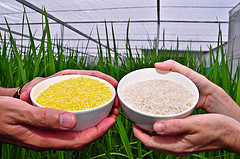
Golden Rice Plants IRRI
“Precaution does not necessarily mean a ban.
It simply urges that time and space be found to get things right.”

Professor Andy Stirling, writing in the Guardian

Overview

The UK Parliament Science and Technology Select Committee is carrying out an inquiry into genetically modified (GM) foods and the way in which these are regulated in Europe under the precautionary principle.

STEPS Centre Co-Director Professor Andy Stirling gives oral evidence on 19 November (09.15 GMT) following our written submission to the inquiry, which was signed by 19 academic experts in this area.

The Centre has long-argued that a simplistic ‘pro’ or ‘anti’ stance on GM crops leaves little room for a more informed and balanced debate not only about this technology, but a range of alternative innovations too. There are many advanced non-GM techniques and a multitude of non-technological solutions that tend to be eclipsed by the restrictive focus on GM.

The precautionary principle opens the door to many strategies for coping with these issues. It recognises that even the most confident science rarely compels a single solution. And many uncertainties and ambiguities further underscore the importance of more accountable discussion of contending values and priorities. Too often these open-ended complexities tend to get closed down, as if they were merely about 'risk'.

In these terms, precaution is not about blocking technologies, but steering innovation to more effectively favour of human health, environmental integrity and social well-being, and providing a counterweight to otherwise dominant incumbent interests.

Acknowledging the scope for systematic deliberation over values, priorities and alternatives in the context of uncertainty, precaution broadens out risk regulation to allow greater consideration for a wider plurality of issues, options, perspectives and scenarios. It allows the reshaping of established trajectories and a greater focus on qualities of diversity, flexibility and responsiveness.

In short, pecaution expresses the fundamental principle that — in innovation just as in science itself — reasoned scepticism fosters greater quality.

Innovation: managing risk, not avoiding it

Walport report: On 19 November the UK Government Chief Scientific Adviser Sir Mark Walport launches his inaugural annual report, focussing on innovation and risk. Prof. Stirling has contributed a chapter to the report, related to the evidence submitted to this inquiry.

Science and Technology Committee inquiry


The precautionary principle: selected reading from Andy Stirling

GM potato / Photo: BASFA selection of publications from Andy Stirling on the precautionary principle. For a fuller listing, see his publications page.

Key resources: selected reading from other authors
Media


The STEPS Centre’s work on GM and biotechnology around the world
A selection of our work on how science, policy and politics interact around biotechnology.


The Politics of GM Food: Risk, science and public trust
Crop experimentWhy do controversies such as BSE and GM food throw British governments and business off balance? This briefing on how to get out of the GM impasse and how to avoid these problems in future, remains as vital and current today as when it was written by Alister Scott, Frans Berkhout and Ian Scoones (Director of the STEPS Centre) in 1999.

The Politics of GM Food: Risk, science and public trust (PDF) ESRC Global Environmental Change Programme (1999). The Politics of GM Food: Risk, Science &Public Trust, Special Briefing No 5.

Medicine vendor, Central AfricaBiotechnology Research Archive
10+ years of research into GM crops, development and the food crisis, under four themes:
  1. Poverty reduction & food security: impacts of GM crops
  2. Regulating GM crops
  3. The role of the private sector and corporate control
  4. Public participation and the politics of policy
Projects

Books, blogs, media, articles

Media enquiries
Julia Day, STEPS Centre Head of Communications
Email: j.day@ids.ac.uk | +44 7974 209148

Thursday, 13 November 2014

Informing the UK’s approach to SDGs

A Parliamentary inquiry about the UK’s position and approach to the development targets to replace the millennium development goals has published evidence from the ESRC STEPS Centre.
The Environmental Audit Committee’s inquiry is looking at how best the UK can move forward on setting and implementing the Sustainable Development Goals (SDGs).

The STEPS Centre has been engaged in policy debates associated with the SDGs since before the Rio+20 conference. Our submission to this inquiry emphasised the importance of a diversity of technical and social innovation approaches, inter-generational issues, particpatory approaches to amplify the voices of the poor and marginalised, attention to the direction (rather than purely the rate) of technical change, enhancing corporate environmental accountability and the need for cross-Ministerial coordination and support.

The final set of SDGs are due to be presented at a special session of the United Nations general assembly in September 2015 with implementation expected in 2016.

The proposed SDGs to be attained by 2030 aim to "end poverty in all its forms everywhere", and include broad topics such as hunger, health, gender energy, economic growth and climate change.
The Committee considers which UK governmental policies and programmes contribute to environmental protection and sustainable development, and audits their performance. It has examined the development of the SDGs through previous reports on Preparations on Rio+20 (in October 2011) and Outcomes of Rio+20 (in June 2013).

With the UK negotiating the final goals through the EU as part of the UN process, the Committee requested submissions to inform its scrutiny of the UK government's approach. Earlier this autumn Prime Minister David Cameron called for the current list for 17 goals to be reduced to 12, or ideally 10.

Written by Julia Day, Deputy Director and Head of Communications, STEPS Centre

Friday, 7 November 2014

Were ‘Technology Networks’ the Fab Labs of the 1980s?

Technology Networks
GLEB Technology Networks book advertisement, New Scientist, 9 Feb 1984
A new article by Adrian Smith in the Journal of Peer Production looks at the story of Technology Networks – community based workshops which arose in the UK in the early 1980s. At a time of high unemployment, they provided a space for sharing machine tools, access to technical advice, and prototyping services – anticipating the hopes invested in FabLabs today. The article is available to read and download free of charge.

Technology Network participants developed various prototypes and initiatives; including electric bicycles, small-scale wind turbines, energy conservation services, disability devices, re-manufactured products, children's play equipment, community computer networks, and a women's IT co-operative. Ideas and enthusiasm for these workshops drew upon a wider movement for socially useful production, which in turn drew together strands of thought and activism from broader social movements, old and new. Reflecting that wider movement, Technology Networks contained tensions in terms of social purpose, cultures of knowledge production, and political economy.

A 1984 promotional booklet for Technology Networks (pdf) provides some insights into how they were advertised to the public.

This article links to a STEPS Centre project on grassroots innovations and includes references to the Lucas Plan (see our feature on the Lucas Plan and socially useful production).

Read the article online
Smith A. (2014) Technology Networks for Socially Useful Production, Journal of Peer Production Issue 5

Wednesday, 5 November 2014

ESRC Studentships: study with the STEPS Centre

The STEPS Centre is delighted to offer PhD training in association with the Sussex ESRC Doctoral Training Centre, one of a network of 21 Doctoral Training Centres in the UK, set up by the Economic and Social Research Council to support the development and research training of postgraduate researchers.

A grant of more than £3.5million from the ESRC together with further funding from the University enables the Centre to provide 22 studentships each year for social science research.

Innovation and Sustainability: Management and Policy
The STEPS Centre’s researchers are involved with the Innovation and Sustainability DTC pathway, which is aligned with STEPS’ co-host institution SPRU – Science Policy Research Unit and led by Prof Ed Steinmueller.

Research students collaborate with a diverse cross-section of government, business, and third sector organisations on issues of:
  • policy and management in the transition to more sustainable use of energy:
  • reducing the human footprint on the environment
  • establishing and renewing enterprises that create wealth or contribute to social well-being
  • seizing opportunities emerging from the Internet and other information and communication technologies
  • regulating technological risks ranging from the food that we eat to the potential dual uses of chemical and biological technologies
Research training is organised in to the 1+3 model . Candidates undertake the MSc Science and Technology Policy, or join the DTC for a +3 standalone programme if they already have an equivalent level of research training.

If you would like to find out more about the STEPS Centre’s contribution to the Innovation and Sustainability pathway contact: Jeremy Allouche j.allouche@ids.ac.uk

How to apply
Applications for ESRC studentships can only be considered from those who have already received an offer of a place on a doctoral degree at Sussex. There are therefore two stages in the application process and two deadlines to meet.
  1. First deadline: Fri 30 Jan 2015 – Application for a PhD
  2. Second deadline: Thu 5 March 2015 5pm – Application for an ESRC studentship
Find out more on the Sussex DTC website

Political Ecology: resources, power and justice

With conceptual roots in political economy and cultural ecology, as well as close relationships with development studies and science and technology studies, the multidisciplinary field of political ecology shares a number of theoretical and methodological complementarities with the STEPS Centre’s pathways approach.

In early September 2014, the Lancaster Environment Centre at Lancaster University hosted an exciting workshop that brought together leading political ecologists from throughout the UK and Europe to discuss the state of the field of political ecology and explore promising new directions in field research and in conceptualising environment-society relations in a dynamic world.

The workshop, Political Ecology: Resources, Power, and Justice, featured a full day of doctoral research presentations followed by a second day of research talks by senior scholars in the field.

New questions and directions
The event addressed issues of longstanding significance in political ecology related to resource extraction, conservation, neoliberal natures, and social justice. New and renewed questions and directions emerged as well, for example around development-environment relationships and engagement.

Using research spanning the globe, key themes that emerged over the two-day event included securitisation and militarisation of conservation; the financialisation of nature, including the role of the state in securing control and brokering; ethics; land and resources; the politics of dispossession, belonging, and exclusion; labor and the production of environmental knowledge and value; conflicts, contradictions, and paradoxes in the politics of natural resources; and the role of technology in visualisation and value creation around resources and landscapes.

The PhD sessions engaged a number of topics ranging from the transformation of natural landscapes, livelihoods, and ecological imaginaries through processes of resource expropriation, visualisation, valuation, and marketisation, to conflicts and contradictions between goals of human development and biodiversity conservation, to the discursive space created through the politics of indigeneity.

Conservation and the War on Terror
In her keynote address, 'Environmental governance: from global markets to global security', Professor Rosaleen Duffy (SOAS, University of London) used conservation as an example to make the case that we have entered a new phase of environmental governance characterised by the intersection of neoliberal environmental governance and securitisation/militarisation, specifically linked to the imagery, crisis messages, and technology of the War on Terror.

The keynote was thematically complemented by Dr. Bram Büscher's presentation, which linked the historical intersectionality of race and landscape in South Africa with the contemporary "politics of hysteria" and role of social media in conservation related to the creation of a "space of exception" justifying green militarisation around rhino poaching in Kruger National Park.

Using the case of bioprospecting in Madagascar, conference co-organiser Dr. Ben Neimark discussed the role of scientific labor in producing commodities for green economic development. Neimark particularly highlighted the inequitable and subordinate role of Malagasy scientific labourers in the green economy that they help to produce.

One hallmark of an excellent conference is that attendees come away, not only with answered questions, enhanced knowledge, and clarified concepts, but invigorated by new questions and excitement about the future of the field and its engagements with important contemporary problems that will shape our shared social and environmental futures. In that sense, Political Ecology: Resources, Power, and Justice was thoroughly excellent.

Questions raised
Reflecting on two very busy days, some of the broad questions raised by the event include:
  • How do the themes, issues, methods and orientations represented at link up with and diverge from broader global trends in political ecology?
  • How do we best conceptualise and research environmental struggles and transformations in a world in which environmental governance is increasingly inscribed with market logic, bringing together global discourses around crisis, scarcity, and the market on one hand and place-based narratives of value and crisis on the other in processes of value-laden abstraction?
  • What are the implications possibilities of these processes for lived experience, for social justice, and for environmental futures?
Many thanks to the co-organizers Dr. John Childs and Dr. Ben Neimark, the Lancaster Environment Centre at Lancaster University, and the STEPS Centre.

Thursday, 30 October 2014

STEPS América Latina at the Open and Collaborative Science in Development Network

Between 13 and 15 October the Open and Collaborative Science in Development Network held its first workshop in Nairobi. The objective of the workshop, organized and funded by the Canadian International Development Research Centre, and supported by the University of Toronto and Kenya iHUB, was to kick-start the construction of a research network to promote 'open science' for the Global South.

This initiative arises in a context where open science has become a buzzword for large foundations such as the Bill and Melinda Gates Foundation and development institutions internationally. In the midst of so much interest, the inevitable question is whether open science can live up to its promises. In this spirit we went to Kenya to learn about and discuss the issue.

STEPS América Latina was privileged to be amongst 14 other institutions whose proposals had been pre-selected (from over 90 applications) by OCSDnet. Participants came from Argentina, Brazil, Costa Rica, Jamaica, Canada, India, Kenya, South Africa, Lebanon, Kyrgyzstan and Thailand. Co-ordinated by Leslie Chan, from the University of Toronto the workshop also included a set of international advisors including Lidia Brito, Hebe Vessuri, Cameron Neylon, Apiwat Ratanawaraha, Matthew Todd and Kaitlin Thaney, representing the Science Lab of the Mozilla Foundation.

If, before the event, a number of elements – the meeting venue, the novelty of the subject, and the excellent background paper – suggested a rewarding and challenging encounter, it rapidly became clear that the event would exceed our expectations. In part this was because the workshop brought together a truly interdisciplinary group of anthropologists, chemists, biologists, lawyers, geographers, ecologists, engineers, experts in social development, forest conservation and sociologists who all shared an interest in the production of open and collaborative knowledge.

In most cases, the participants also had practical experience of the development and use of participatory tools for the collection, management and dissemination of scientific evidence in relation to social or environmental issues. As such, we discussed projects that sought to expand access to scientific databases on botany, foster public control over the emission of gaseous pollutants in urban areas, study the asymmetries of power in cases of indigenous intellectual property, and support the construction of laboratories of open hardware in order to study water contamination, amongst other examples.

Creating dialogue amongst such a heterogeneous set of disciplines, development issues and geographical situations sometimes proved challenging. Of course, there were several moments “lost in translation” (especially between scientists and the few sociologists who participated in the meeting). And yet, the workshop enabled us to explore a rich variety of definitions and interpretations of what it means to do open science (and open innovation).

We cannot summarize here the different points of view aired within the workshop, and interpretations of the event. But if it is interesting to note that it became clear, during the three days, that the notion of open science is intertwined with the collaborative and iconoclastic spirit of the communities of open software and open hardware (along with the hacker and maker movements), the history of grassroots innovation movements, the experiences of Science Shops in Europe and North America and, closer to Latin America, the tradition of participatory action research. All these movements not only share some history with open science, but they also help to form a central aspect of its definition: the search for the democratization of knowledge.

A second issue highlighted during the discussions in Nairobi is the importance of information technology tools for data collection, visualization and communication for the practice of open science. Incorporating these tools is a challenge and a necessity in order to establish ways to collaborate that are open and accessible to the largest number of participants possible.

In the context of increasing interest and discussion of the potential and uses of open science to address major development challenges – for example in research initiatives for orphan diseases – an analysis of the history, diversity and uses of open science practices is more than welcome. It’s also likely that reflection on the notion of open science and citizen participation in the production of knowledge allows us to shed some light on other current topics of innovation and development, as in the cases of research into innovation for social inclusion, and of the tensions between public research and policies for the private commercialization of knowledge.

Of course, there are still more questions than answers. For example: Is it possible to use methodologies of open science for research on issues that are neglected or rejected by dominant institutions of science and technology? In what ways can citizen participation contribute to the collection and validation of evidence on climate change and/or biodiversity loss? In what ways might mechanisms of participatory design and innovation accelerate the development of technologies for social inclusion?

It is difficult to know even if experimentation with forms of open science will be able to help address the growing problems of access and democratization of knowledge about the challenges of inclusive and sustainable development. The OCSDnet initiative certainly contributes to broaden the discussion, and connect the different visions, methods and tools in different regions of the global South. For now, it has given us an excellent reason to investigate the issue, and try to understand different experiences of open and collaborative knowledge production in Argentina and the region.

Find our more about STEPS America Latina Media coverage of the most recent seminar in the STEPS America Latina’s series: Los nuevos senderos que se abren, Pagina 12

By Mariano Fressoli, STEPS America Latina

Wednesday, 22 October 2014

Melissa Leach on Ebola & inequality – lecture text & audio

Some materials are now available from the recent Sussex Development Lecture on Equality, Sustainability, Security: Interlaced challenges in a global development era by former STEPS Director Melissa Leach. The text is available to download below as a PDF, and you can listen to Melissa's lecture online, courtesy of the Institute of Development Studies.

In the lecture, Melissa uses Ebola as a lens to look at how inequalities, unsustainability and insecurity can interact, enhanced by misguided interventions, to render people and places deeply vulnerable. Addressing these interactions must become central to a renewed vision of development for all.


Further reading
Ebola: difficult questions for development blogpost by Ian Scoones, 13 October 2014
Our resources on Ebola and other animal-to-human diseases

Monday, 20 October 2014

Gender equality and Sustainability: STEPS members contribute to new UN Women report

STEPS Centre members have contributed to a major United Nations report that highlights the deep connections between gender equality and sustainable development, as the world moves towards a post-2015 framework.

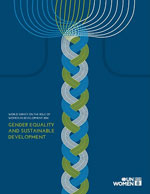
The World Survey on the role of women in development 2014: Gender equality and sustainable development is the latest in UN Women's flagship series, published every five years. Its conceptualisation was led by Melissa Leach, former STEPS director and now Institute of Development Studies Director; Lyla Mehta, STEPS Centre Water & Sanitation theme convenor; with assistance from Preetha Prabhakaran.

World-Survey-2014-coverThis year’s report highlights the fundamental links between gender equality and pathways to sustainability, and recommends concrete policy actions to move towards an economically, socially and environmentally sustainable future, in which all women and girls, men and boys enjoy their human rights.

Pathways and gender
The framing of the report draws centrally on the STEPS Centre's Pathways Approach, outlining a 'gendered pathways approach' which unites the challenges of working for environmental sustainability and gender equality. Melissa Leach has written a STEPS blog explaining the background to this thinking.

The report criticises dominant development models that support particular types of underregulated market-led growth, which rely on unequal power relations between women and men, at the same time as promoting the overexploitation of natural resources and the pollution of climates, land and oceans. Alternative pathways and trajectories, responding to these problems, are suggested in a number of areas such as the green economy, care, food security and investment.

The report also warns against stereotypes of women as ‘sustainability saviours’ and instead calls for approaches which recognise women’s rights, knowledge and values, and ensure their proper role in decision-making.

The report will be presented to the Second Committee of the General Assembly on Monday 20 October, followed by a panel discussion (pdf) about the key issues raised. Panellists will include, among others, Melissa Leach and Hilal Elver (UN Special Rapporteur on the Right to Food).

Find out more

Why gender equality and sustainable development are inextricably linked

CIFOR-woman-forest1As the world moves towards Sustainable Development Goals for the post-2015 era, there is emerging debate about how target-setting and implementation might integrate across the 17 goals proposed by the Open Working Group (OWG) so that the inextricable links between, say, climate change, water and food are properly addressed. Meanwhile, feminists and others rightly celebrate that goal 5 ('Achieve gender equality and empower all women and girls') survived the fraught, politicised OWG process.

But while retaining this as a 'standalone' goal is a victory that may guard against the perils of gender mainstreaming and marginalisation, arguably the integration of this with the implementation of the other SDGs is the most important task of all.

As a major United Nations report launched on 20th October argues, gender equality must be integral to sustainable development. This is the latest in the flagship series of five-yearly World Survey on the Role of Women in Economic Development reports, prepared by UN Women. I had the privilege, together with IDS and STEPS Centre colleagues Lyla Mehta and Preetha Prabhakaran, of leading its conceptualisation. This included authoring the background conceptual framing chapter laying out a 'gendered pathways approach', and working with international feminist scholars to shape contributions in areas where gender-sustainability intersections are biting hard.

Interlocked pathways
The report shows how the effects of unsustainable patterns of development often intensify gender inequalities, as women and girls are disproportionately affected by economic, social and environmental shocks and stresses.

It argues that around many issues – whether work and industrial production, population and reproduction, food and agriculture, or water, sanitation and energy – dominant development pathways have often contributed to both unsustainability and gender inequality. Both are produced by development models that support particular types of under-regulated market-led growth and the persistence of unequal power relations between women and men.

Such pathways rely on and reproduce gender inequalities, for instance by exploiting women's labour and unpaid care work. They also produce environmental problems, as market actors seek and secure profit in ways that rely on the overexploitation of natural resources and the pollution of climates, land and oceans. As troubling intersections of unsustainability and gender inequality threaten or exceed planetary boundaries around climate change, biodiversity and pollution, so shocks, stresses and feedbacks may undermine gendered rights and capabilities even further.

Women from Lumanti (Thankot, Nepal) participate in awareness raising sessionBut the reverse is also possible: gender equality and sustainability can powerfully reinforce each other in alternative pathways. Women's knowledge, agency and collective action are often central to these, whether in managing local landscapes, adapting to climate change, producing and accessing food, or securing sustainable water, sanitation and energy services. We see this in examples where women are fully involved in forms of local forest governance that deliver both livelihood and conservation benefits, as Bina Agarwal has traced, and where networks of grass-roots women leaders are working to scale up capacity to reduce vulnerabilities to climate change in their communities.

For pathways to be truly sustainable and advance gender equality and the rights and capabilities of women and girls, those whose lives and well-being are at stake must be involved in leading the way, through community groups, women's organizations and other forms of collective action and engagement – supported by appropriate forms of investment and public services.

Women as 'sustainability saviours'? Beyond stereotypes to a relational view
However, a simple ‘win-win’ relationship between gender equality and sustainability cannot be assumed. Indeed, a policy focus on women can risk casting them as 'sustainability' saviours' in ways that stereotype their roles in relation to the family, the community and the environment. Such responses often add 'environment' to women's already heavy unpaid care and work burdens, without conferring rights, resources and benefits. Power imbalances in gender relations shape whether women's actions and work translate into the realization of their capabilities. And gender is always and everywhere cross-cut by other, intersecting power relations and inequalities, whether around class or ethnicity, age or place.

Hence analysis of interactions, tensions and trade-offs between different dimensions of gender relations and of sustainability is needed, along with attention to the structural foundations of gender discrimination and struggles against this. Recent policy attention to women and girls, from campaigning around the 'girl effect' to debates around the UK's Girl Summit earlier this year, while laudable in many respects, often lacks this relational perspective. Instead, women and girls are treated as individual victims, saviours or development beneficiaries in ways that may entrench stereotypes, while ultimately failing to empower. If goal 5 is to do its vital integrative work for the SDGs and the post-2015 agenda, then attention to gendered power relations, in all their rich, intersecting variety, must remain centre stage.

by Melissa Leach, Director, Institute of Development Studies

Find out more
UN Women: World Survey on the Role of Women in Economic Development 2014
The STEPS Centre's Pathways Approach: video, briefings and book

Pictures:

New Multicriteria Mapping software launched

mcm diagramMulticriteria Mapping (MCM), a new software package to aid decision-making by exploring contrasting perspectives on complex issues, has been launched.

MCM was pioneered by STEPS co-director Andy Stirling as a way of ‘opening up’ technical assessment by systematically ‘mapping’ the practical implications of alternative options, knowledge, framings and values. The new software will make MCM usable for a wider range of users in academia, civil society and industry.

About Multicriteria Mapping
Originally developed to explore debates around GM foods, MCM techniques have been in use since 1997. Recently the MCM project has worked with Brighton based developers DabApps to develop software for a wider range of users in academia, civil society and industry.

MCM focuses as much on ‘opening up’ as on ‘closing down’ a strategy or policy process. With a mix of qualitative and quantitative approaches, it aims to give users and collaborators a clear picture of how and why different perspectives vary on key issues and options – as well as the practical implications for decisions.

The software, backed by a manual, is available as a free trial version for single projects, as well as paid-for versions for collaborative and larger-scale projects.

For more information and to download the software, visit www.multicriteriamapping.com

MCM and STEPS
The STEPS Centre has used and adapted a variety of methods to open up alternative social, technological and environmental pathways to sustainability, including MCM.

mcm-kenya

STEPS Methods: Multicriteria Mapping
Read a more detailed description of how MCM helps with broadening out academic research or policy appraisal, its benefits and limitations.

Maize project: MCM project method
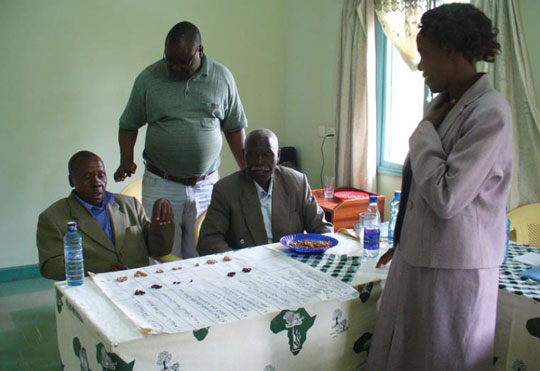
This 4-page briefing explains how MCM was used in our project on climate change and maize innovation in Kenya to evaluate different perspectives on possible pathways for farmers confronted by droughts and climate change.

For more related material, visit our methods and methodologies website.

Wednesday, 15 October 2014

Ebola: difficult questions for development

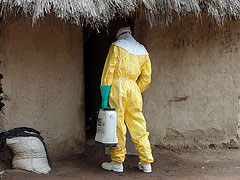
ebolaAs the horrific Ebola crisis unfolds across West Africa, and the international community belatedly responds, there are some bigger questions that arise beyond the immediate challenges on the ground. These are worth raising and discussing, as they challenge our understanding of ‘development’ as framed and practised over the last few decades in fundamental ways.

The Ebola crisis has exposed the consequences of a pattern of systematic ‘underdevelopment’ or ‘structural violence’, and the implications of deep-seated unequal global relations. Yet poverty, inequality, conflict and unsustainability in poor, far-off places can usually be ignored. Pigeon-holed into suitable labels of ‘conflict prone’, ‘failed state’ or ‘weak governance’, development acts to displace such challenges. Yet viruses know no boundaries, and the threat of the Ebola outbreak has rung alarm bells far away in the seats of global economic and political power.

While much of the response is about control and containment, to avoid spread to richer more privileged settings, our attention must turn to why such outbreaks occur and have such devastating impacts in some places and not others. What responsibility does ‘development’, as practised in recent decades, have?

Unsettling questions are raised. We must ask whether the Ebola crisis is in large part the result of failed development, and indeed systematic underdevelopment and inequality entrenched by development policies imposed by western countries. For many years, West Africa has suffered the consequences of structural adjustment and economic reform pushed as a condition of aid. This has resulted in the hollowing out of states and the decimation of public services, including health systems. In poor countries in West Africa, this active neglect has surely been a contributory factor to the devastation being wreaked by Ebola. This in turn has been compounded by shifting service provision to the private sector and failing to train professionals and support state capacity in health and other services. This has resulted in an inability to spot and respond to the crisis, both in West Africa, but also internationally.

Zoonotic diseases such as Ebola initially emerge due to a complex combination of ecological, economic and social drivers. We don’t know the details of the recent Ebola emergence, but we must ask whether development policies have been part of the cause. For example, does an advocacy for private sector investment – in mining, large-scale agriculture and so on – result in forms of ecological and social dislocation and disruption that feed into such crises, facilitating spill-over and spread of disease? Complex ecological dynamics in forest-farm ecosystems may have resulted in changes of bat-human interactions causing the disease to spread. But again, we must ask whether environmental and land use policies have at least been in part a cause. For example, have our poor understandings of environmental and forest change, and the top-down interventions that have been promulgated by donors, NGOs and governments made things worse?

The most affected countries in West Africa have been subject to long-running conflicts. These have resulted in population movements, changes in social dynamics and deepening poverty. Development aid efforts have invested considerable sums in post-conflict ‘reconstruction’. But we must ask if much of this has missed the mark, failing to build social relations, community fabrics and institutions that provide the basis for effective responses to disease outbreaks, and the forms of resilience needed to weather crises. Reconstruction may have been only superficial, creating new forms of vulnerability to unexpected shocks such as Ebola.

Where growth has happened following conflict, it has been exceptionally uneven. Inequalities and vulnerabilities have risen. We must ask whether rapid urbanisation, precipitated by unequally distributed economic growth, has created new forms of vulnerability, especially for the poor. In the absence of urban planning and effective service provision due to inadequate state finances, the conditions for rapid spread of disease is set, exposing the most marginal to heightened risks.

In the last weeks we have seen a late rush to intervene in the Ebola crisis. Too often this has been without attention to the social and cultural logics that underpin local disease responses, and included a failure to involve local players. Some have argued that this could actually make matters worse, particularly for some social groups. This pattern replicates the past failings of development, rooted in a lack of understandings of root causes, structural drivers, and the complexity of local settings.
The Ebola crisis then poses some harsh questions. Has ‘development’ and the wider development business, including the research community in organisations like my own, been at fault, pushing failed development models based on poor understandings. Is ‘development’ in some ways culpable for the Ebola crisis?

The questions are multiple, troubling and profound. They also raise important challenges for the future of development. The Ebola crisis demonstrates how the development model of the last decades has failed; and indeed made matters worse, entrenching global, regional and local inequality, undermining sustainability and fuelling conflict. These conditions have led in part to the Ebola crisis.
Ebola is not the first major disease outbreak emerging out of conditions of structural poverty, political marginalisation and deep inequality, but it is perhaps the most dramatic in recent times, and acts to shine a spotlight on development failings as well as future challenges in the most stark of terms.

We must ask what are the alternatives that rebuild state capacity, draw on local community understandings and practices, and shift attention to reinforcing resilience in health systems, urban planning and land use?

Ideological positions and poor understandings have created a set of assumptions about development that are fundamentally challenged by the Ebola experience. Can this terrible crisis provide a moment for reframing development? Surely now is the time for a fundamental rethink of development approaches.

by Ian Scoones

This article first appeared on the Huffington Post.

Photo: The fight against Ebola in West Africa by European Commission DG ECHO on Flickr. Published under a Creative Commons attribution-no derivatives licence.

Tuesday, 14 October 2014

David Ockwell at UNFCCC workshop on innovation systems (live webcast)

On 13–14 October, the Technology Executive Committee (TEC) of the UNFCCC is holding a workshop on Strengthening national systems of innovation in developing countries, covering the entire technology cycle for climate technology. This workshop will be webcast (see link below).

The workshop includes a presentation by David Ockwell, convenor of the STEPS Centre's Energy and Climate Change domain, on the subject of Transferring climate technology knowledge and developing national capacity to absorb knowledge.

The TEC is organizing the workshop to facilitate the implementation of its 2014-2015 rolling workplan. The workshop will support the TEC's work on enhancing enabling environments for and addressing barriers to technology development and transfer, in accordance with its mandated functions. It will have three sessions:
  1. Strengthening national systems of innovation
  2. Issues related to knowledge transfer between national systems of innovation
  3. Knowledge transfer mechanisms: enhancing collaboration.
Full details of the event, including an agenda, background note and speaker biographies, can be found on the TEC web page about the workshop.

Webcast and virtual participation
All stakeholders are invited to follow the workshop through the live webcast and participate in the workshop discussions via social media. By using the Twitter hashtag #climatetech, you may tweet questions for the consideration of the workshop participants.