Thursday, 14 August 2014

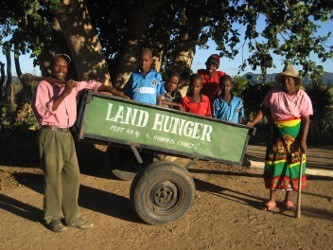
Livelihood pathways after land reform in Zimbabwe


landhunger
Understanding livelihood pathways requires sustained fieldwork in particular sites in order to understand what changes and why. Systematic longitudinal studies are sadly rare in many developing country settings. Project grants for a few years are insufficient to sustain the research effort required. Long term studies are especially important when major changes have occurred. We cannot understand their impact unless influences are tracked over time, discovering new pathways as they unfold.

Such long-term work has been ongoing in Masvingo province in Zimbabwe since 2000, led by myself with a team of Zimbabwean colleagues – BZ Mavedzenge, Felix Murimbarimba and Joseph Mahenehene. Over the last 14 years the team has been tracking 400 households across 15 sites, and finding out what has happened to people’s livelihoods in areas taken as part of Zimbabwe’s radical land reform that unfolded from 2000.

There is no simple story, and there’s much complexity. Diverse livelihood pathways can be identified: some have gained from land reform, while others have not. Outcomes are dependent on access to assets, income from off-farm activities, as well as hard work and luck. Livelihood pathways are constructed from many sources, and while patterns exist, there is huge variation across and within sites.

As processes of differentiation occur, new livelihood pathways are forged. Some are now moving into more commercial agriculture, while others are diversifying to off-farm activities, while some are combining farming on their new plots with selling labour to other farmers. Understanding agrarian change through a pathways lens helps link livelihoods – the specific day to day activities and strategies people employ to sustain themselves – with wider structural patterns of class formation, and the implications this has for patterns of accumulation and investment.

The results of the research to 2010 were published in the book Zimbabwe’s Land Reform: Myths and Realities. But much has happened in the years since. The economy has stabilised, and the disastrous hyperinflation was stopped with a new currency regime from 2009 and some level of political and economic stability has followed, even if disputes between the Zimbabwe government and the international community persist. The Masvingo studies are regularly updated with on-going surveys and focused studies, and the latest results were reported on the Zimbabweland blog in the last few months. A series of four blogs give an overview, starting here:
Understanding new livelihood pathways is best done when comparing with others. Another set of studies has compared the Masvingo resettlement sites with nearby comparators. These are communal areas – rural areas where many of those in the new resettlements came from. The results show how gaining access to land has been an important boost to livelihoods, creating new pathways, when compared with communal area comparators. Again, another series of five blogs was recently posted, highlighting the results:
While a focused provincial study cannot tell us about what has happened in other areas of the country, the longitudinal and comparative studies offer important insights into new pathways of livelihoods following land reform.

by , Director of STEPS Centre

Wednesday, 13 August 2014

Sustainable Development Goals: lessons from the ‘nexus’


As part of our engagement with the ‘nexus’ of food, water, energy and the environment, STEPS members will be participating in an Overseas Development Institute event on 11 September 2014.

The event Tackling trade-offs in the food-water-energy nexus: lessons for the SDGs features contributions former STEPS Director Melissa Leach and includes a contribution from our Water & Sanitation theme convenor Lyla Mehta.

The event will examine how certain developing countries have tackled the trade-offs inherent within the food-water-energy nexus, balancing environmental concerns with the need for development, and it will reflect on the importance of integrating across sectors for the implementation of the SDGs. New research conducted as part of ODI's Development Progress project will be discussed. For those who tweet, the hashtag is #envprogress.

Event page (ODI website)
 

Tuesday, 12 August 2014

Land Rush, Day 1: Food availability doesn’t always equal food access

While proponents of corporate farms argue that large scale land investment will enhance food security, activists and academics alike are highlighting how detrimental such land deals could be for the food security of those who are moved off the land to make way for corporate farming.

Speaking at a meeting of the Pan African Parliament yesterday, parliamentarians, civil society, academics and agribusiness came together to discuss how to make large scale land investment work for Africa.

Civil society activists, such as Constance Mogale from the Land Access Movement of South Africa (LAMOSA), highlighted how moving women off land to make way for investors meant that women could no longer produce food to secure their livelihoods. As this leaves affected women all but destitute, they also cannot access the food being produced by the commercial farm which had replaced their activity. Food security for the poor and vulnerable is often not about availability, but about access. Increasing production through commercial farming, therefore, does not help those who do not have cash to purchase their food.

Echoing Constance Mogale’s point, Prof Ruth Hall (PLAAS/Future Agricultures) explained that large scale land deals are not just creating land loss, but are actually restructuring the entire food system towards a model in which the food system is controlled and owned by multinational corporations. Corporate farming is leading to the supermarketisation of the food system, limiting access for those who cannot pay. She gave the example of South Africa, where most food is produced by the corporate sector. South Africa is food secure, produces abundant food and even exports food, yet many South Africans are going hungry, simply because they cannot afford to buy it.

While African governments enter into investment deals under the belief that large scale commercial farming will improve the lot of the hungry populations, the evidence from these examples suggests the opposite: these types of land deals often make the vulnerable even more vulnerable. Therefore it is essential that African governments look more closely at the fine print of such deals. They must ensure that the benefits of investment will accrue to their populations, not just to profit-hungry corporate investors.

by Rebecca Pointer, Institute of Poverty, Land and Agrarian Studies (PLAAS) 

Monday, 11 August 2014

Sexuality and Sport in Burkina Faso: “Gentle” actions and partnerships that stand up to homophobia


Like many sport and development (S&D) organisations throughout Africa, the organisation I have been working with since 2011 in Burkina Faso uses sport to bring youth together and to communicate lessons about HIV and sexual health practice. Using sport as a means of communicating information has shown to be an engaging alternative to talking at young people in a classroom.  As an athlete myself, and one who squirmed through lessons about sexual health in a small room when I was a teenager, I can see the benefit of teaching in a setting where young people are comfortable and attending out of interest, rather than obligation.  
 
Since its inception in 2005, the S&D organisation I work with in Burkina Faso has grown and now works in partnership with the National Ministry of Health, UNHCR, local health organizations and local schools.  Through these partnerships, the organisation has been part of a movement to push policies in Burkina Faso (and West Africa) to extend access to sexual health resources and to fund education about HIV and sexual health in youth centres.[1] Despite the successes of this movement, the drive and focus to educate youth about sexual health has a dangerous blindspot: homophobia and transphobia.
 
The limits of inclusion
I can remember only one occasion during a session about HIV infection out on a football pitch when homosexuality was mentioned.  In this moment, the coach brushed quickly through the mandatory statement that condom use is necessary for protection not only for sex between a man and a women, but also between men. This was followed by giggles.  The coach did not address the reaction of the youth, nor did anyone ask about women who have sex with women, or people who have sex with both men and women. They quickly moved on to the next exercise in the session.  This moment made me pause, and I reflected on how I might feel as a young LGBT person who was part of that group.  I would have felt invisible.
 
S&D programmes that address issues of sexual health should address them for everyone.  These same programmes proclaim inclusion in their mission statements and programme goals; they work with girls, boys, different ethnicities, classes and nationalities, and with youth with disabilities. But how many of them are working with youth who identify as lesbian, gay, bisexual or transgender?  I would venture that the unfortunate answer is that they do not know.  And yet, in a climate where laws in countries like Uganda and Nigeria make it dangerous to even broach the topic of gender identity and sexual orientation, it is understandable that these development programmes may not even know how to begin.  But this is also an opportunity, and an example of a strategic avenue for productive policy engagement that the Sexuality, Poverty and Law Programme at IDS is exploring.
 
The value of ‘gentle’ action
Some of the young women I met through my involvement with sports in Burkina Faso earlier this year introduced me to an organization called the Queer African Youth Networking Center (QAYN).[2] QAYN is based in Ouagadougou and works throughout West Africa.  They are an example of a small group of dedicated young people whose mission it is to support and foster youth activism about LGBT issues and to promote the safety and well being of gays, lesbians, bisexual, transgender and questioning youth in West Africa.  They may not be a very big or visible organization, but they are providing a vital resource to youth who need support.  Just like S&D programmes, they are helping these youth to build confidence and leadership skills. 
 
When I sat with some of the youth who are part of QAYN, and asked them what the biggest problem they face in their community is, the answer they gave me was visibility.  The youth in QAYN work to make LGBT people, and rights, visible; but this visibility also comes at a cost. They told me that they are often shunned by their families, and have to hide from their friends and in public because people just do not have any awareness about diversity of sexual orientation and gender identity.  They said that the more people who know someone who is LGBT and who accepts them, the more their families will begin to understand and accept them. 
 
Some of the youth who have found QAYN take part in the sport activities and sessions on HIV and sexual health that are facilitated by the S&D programme I work with.  In fact, this is how I met them. And yet their identities have been all but invisible in the S&D context.  Is this not an ideal opportunity for a partnership between the S&D sector and an organization that works with LGBT youth to give these young people a voice and critical support?
 
In a conversation with one of the young members of QAYN, he explained that laws – like societal norms – cannot change overnight.  QAYN’s strategy, therefore, uses ‘gentle’[3] actions for building toward change. These ‘gentle actions’ include supporting LGBT youth, creating partnerships with other NGOs in their communities and raising awareness with local organisations and policy makers to lay the groundwork for potential policy and law change in the future. 
 
The members of QAYN are incredibly brave and safety is a perpetual challenge for them, even in a country like Burkina Faso where homosexuality is not specifically outlawed but is socially proscribed[4].  QAYN welcomed me and my colleagues from the S&D organization, offering to help with our sexual health curriculums and activities, and asking with genuine interest if they could visit a sport event.  This rare meeting of sectors is an opportunity to contribute to these “gentle” changes in perceptions that QAYN is working toward, and one that other S&D organisations should actively seek out.   It is part of the necessary on-the-ground steps toward social change that are the undercurrent to legal and policy changes on such controversial issues.
 
By Alison Carney, Consultant and Researcher on Sport, Development and Gender.

A year on from ZANU-PF’s election victory: limits and constraints


On July 31 last year, ZANU-PF were victorious in the elections. The opposition was annihilated. The elections were disputed by many, and many questions were raised about the process, but most commentators agreed that this was a shift of support back to ZANU-PF, with the opposition having run out of steam.

A number of good commentaries were published in the Journal of Southern African Studies that offered views from different perspectives, including from Miles Tendi, Phillan Zamchiya and Brian Raftopolous. Perhaps the most powerful though comes from McDonald Lewanika and Delta Milayo Ndou (formerly of the Zimbabwe Crisis Coalition) in 'We the People', a beautifully illustrated edited book of personal testimonies and reflections from Zimbabweans after the elections. Most are urban, educated and opposition supporters, but the sense of melancholy and loss, reflecting on a moment that had so much hope, is tangible and powerful.

Nearly a year ago on September 10 2013, a confident ZANU-PF announced a new cabinet and ambitious plans for the future under the ZimAsset programme. Attempts to rebuild relationships with the west started, while overtures to the Chinese continued. A new minister of lands, Douglas Mombeshora, has stated boldly that no new land invasions would be allowed, and that land administration would be regularised, with those illegally occupying land or underutilising it evicted.

It sounded as if a corner had been turned. But sadly such a transition has not occurred. In the last year, the economy has floundered, as the new investment has failed to arrive; relationships with Europe and the US remain tetchy; the Chinese are playing hardball; and land invasions have continued, despite attempts at audits and new permit systems (see next week's blog).

Meanwhile, the opposition has imploded. The expected departure of Morgan Tsvangirai has not happened, and he clings on to one faction, with surprisingly wide public support. The MDC-T though has fractured, with Tendai Biti and colleagues declaring a 'renewal team', and presumably in time a new party, for a revived opposition. They are actively courting investors and foreign governments, while belatedly accepting that a focus on economic and social rights and redistribution issues – ZANU-PF's political territory for the 2013 elections – must be central to any revamped approach. The situation is very messy indeed.

The warring factions continue to slug it out within ZANU-PF too, with different groupings being speculated on in the press almost daily. What is clear is that there is no easy resolution of the 'succession' issue, and Mugabe is playing the longer game (to the 2018 elections) to see how this will resolve itself.

The consequence is that there is massive uncertainty on the political scene, and this translates itself into challenges for economic regeneration. In May at a SAPES Trust event, Finance Minister Patrick Chinamasa declared:

Zimbabwe is open to Foreign Direct Investment from all Nations of the World, whether these be in the North, South, East or West… Zimbabwe is ready to re-integrate into the global economy. Zimbabwe is looking for new friendships, new opportunities while consolidating old ones. We are looking for mutually beneficial economic relationships not confrontation. We are too small a country to pursue a policy of confrontation.

This signaled a softening of stance, and a willingness to engage. Equally the purge of corrupt parastatals and their officials led by Jonathan Moyo was clearly aimed at an international audience, with a very visible attempt to deal with corruption – although of course only in one area. Statements on the flagship 'indigenisation' policy have been much more tempered since the elections, with senior party officials stating that expropriation and nationalization are not on the agenda, and that there has to be flexibility in the application of the policy.

In a typically perceptive piece for the Solidarity Peace Trust, Brian Raftopolous argues:

The mixed policy messaging of the Mugabe regime can be attributed both to the challenges of seeking fuller international re-engagement while holding on to its empowerment programme, and the tensions within ZANU PF about how to proceed with such a re-engagement. The tropes of sovereignty, liberation history, regional solidarity and empowerment have been integral to ZANU PF's political imaginary and 'language of stateness', in both the party's 'practical languages of governance' and the 'symbolic languages of authority'. However the exposure of the limits of the state's capacity to effect its indigenisation programme has led to the dual strategy of seeking a rapprochement with the West, while promising to export the Zimbabwean model to the SADC region.

Such contradictions are the legacy of the past 14 or so years. The radical redistributive policies, most notably the land reform, have presented major challenges in economic terms. The withdrawal of external support and international investment has hampered the rebounding of the economy, and the business-political patronage networks that were established to prop up the regime in this period are certainly not the basis for a prosperous, competitive economy.

There are bright spots though. The informal sector is booming, and providing jobs and livelihoods. While many argue this is not the real economy, it is certainly the main economy. In the restructured agricultural sector, the tobacco boom continues, with a massive 210 million tonnes of tobacco being traded this year. While livelihoods are unquestionably improving especially for those on the land, galvanising new, coherent and sustained economic growth is a big challenge, and the long (often rather sensible) wish-lists in the ZimAsset blueprint will not be realized without sustained investment.

Much of course relies on a rapprochement with the west, and with international capital and finance. Given the bad feeling, abuse and threats that have occurred over time, this will not be easy, especially with Britain. Miles Tendi offers a fascinating analysis of this challenge, based on interviews with some of the key players, on both the UK and the Zimbabwe sides, and how a sustained 'demonisation' invective from both has not helped matters.

A fundamental question remains, however: how to balance a commitment to redistribution and economic empowerment with engagement in a globalized economy, and in a context where national debt amounts to a staggering US$6 billion? Is there any way to resist the inevitable reincorporation into a neoliberal world order, and sustain the progressive gains of reform? Despite the socialist solidarity rhetoric, the Chinese are interested in commercial business just as any other western nation or multinational company. And countries in the region are wary of heading down an alternative route, despite the electioneering rhetoric of Julius Malema further south. So ZANU PF is in a bind. As Brian Raftopolous argues, there are clear 'limits to victory'.

This post was written by Ian Scoones and originally appeared on Zimbabweland.