Friday, 13 June 2014

Solar Power? Kenya’s energy future at a crossroads

As the UNFCCC Bonn Climate Change Conference discussions come to a close, an IDS-led project funded by the Climate and Development Knowledge Network (CDKN) examines the recent lessons they have learnt on how ‘climate compatible development’ initiatives are unfolding in Ghana, Kenya and Mozambique. Using a political economy approach, the case studies focus on:
  • Contexts in which initiatives occur
  • Potential competition or conflict between different actors and their goals, and 
  • The consequences in terms of who wins and who loses from different aspects of climate compatible development.
This, the second in a series of  three blogs, originally posted on the Global Studies Blog SussexGlobal is by Peter Newell, Professor at the University of Sussex. Peter is the lead research fellow for the Kenya case study which explores the political economy analysis of the national energy policy that aims to support a transition to a low carbon economy, delivering poverty reduction and climate resilience at the same time.

The first blog came from Overseas Development Institute (ODI) Research Fellow Thomas Tanner.

Kenya faces an energy dilemma. It is hardly alone in this but unlike many developing countries it has developed a National Climate Change Action Plan and the need to address climate mitigation and adaptation alongside poverty features strongly in its Vision 2030 plan for the country. Kenya is also home to a highly successful solar home system market and a large part of its energy mix comes from renewable resources including geothermal and hydropower. Yet it has also recently discovered oil and there is growing interest in exploiting the countries coal reserves and though the potential for a clean energy revolution is high, the policy and regulatory framework to support it is not yet in place.

A recent workshop held in Nairobi to showcase recent Sussex research on these issues highlighted some of these challenges and suggested ways forward.

  1. Donor support is critical. Despite being feted as a purely market-led success, detailed tracking of the history of innovation and deployment of solar home systems suggests public money was vital to building markets, networks and reducing risk. 
  2. There is no substituting for a proactive and forward looking entrepreneurial state, one which sets the direction of change, supports Research & Development (R&D) and creates a positive enabling environment for the uptake of renewable energy through tax, regulation and industrial policy. 
  3. Businesses that stand to benefit from clean energy need a greater voice in the debate. Renewable associations exist and are active in these debates. But assembling a broader ‘coalition of the willing and the winning’ from a low carbon economy is vital to showing private sector support for clean energy future in Kenya. 
  4. Given the potential benefits of renewables for poorer groups that often lack access to the grid there is real scope to build alliances at country level whom the Kenya 2010 constitution grants increasing powers. There is a power struggle unfolding over the authority that central as opposed to county level government exercises over key areas of policy such as energy. But it looks like being a possible site for change where counties have been enthusiastic and renewables and if they are able to generate real benefits in terms of jobs and revenue, supported by a feed-in-tariff scheme, could provide tangible wins for poorer groups.   
This is then both a worrying and exciting time for Kenya. Affected by drought and highly vulnerable to the effects of climate change, Kenya has a lot to lose from climate change. But proactive responses to the issue that can help to improve access to energy and do so in a low carbon way suggest the genuine potential of climate compatible development.

Photo credits: Peter Newell | University of Sussex
More information on the project, contact Lars Otto Naess

Wednesday, 11 June 2014

Ending sexual violence in conflict means looking beyond the ‘warzone’

Effective action will mean challenging assumptions about the location of conflict, and paying closer attention to the socio-economic and legal contexts in which survivors and perpetrators of sexual violence navigate their lives.

With the Global Summit to End Sexual Violence in Conflict taking place this week, much needed attention will be firmly focused on how to put an end to this pervasive problem.  The widespread use of sexual violence has been reported in Liberia, Northern Uganda, Democratic Republic of Congo (DRC), Sudan, Iraq, Libya and Syria and Rwanda - where in the 100 days of the Rwandan genocide, an estimated 500,000 women were raped.

Effective global action on sexual violence will need politicians, civil society and local communities to be prepared to challenge a number of commonly-held assumptions about where and why sexual violence takes place beyond the misleading focus on the false binary of the ‘victim’ and the ‘perpetrator’.

The majority of victims of sexual violence are women and the perpetrators mostly men.  Yet a newly published IDS Rapid Response Briefing, Addressing sexual violence in and beyond the ‘warzone’, highlights a growing body of research that shows that sexual violence is experienced by both men and women.  Almost 24 per cent of men in the eastern Democratic Republic of Congo reported sexual violence at least once in their lifetime, including being forced to watch their female family relatives being raped, or being raped themselves. 

As we have also seen recently, with the abduction of the group of school-girls by the militant Islamic group Boko Haram in Nigeria, sexual violence is not only perpetrated by states and militias but also occurs at the hands of militant factions. 

In the build-up to the summit there has been a significant focus on the use of sexual violence as a ‘weapon of war’ within conflicts.  Yet, high levels of conflict-related sexual violence take place outside of internationally recognised conflict zones, particularly within Internally Displaced Persons (IDP) camps or in urban areas where the majority of civilians seeking refuge from conflict flee.  One in five female refugees or IDPs living in camps or urban areas worldwide has experienced sexual violence while displaced.  High poverty levels, an absence of security and pernicious, frequently gendered, power dynamics mean that migrants and refugees in these settings are particularly vulnerable to sexual violence.  These intersecting problems are further exacerbated by the fact that while international humanitarian law applies to areas of conflict (like refugee camps), it does not apply outside of armed conflict-zones (like IDP camps and urban areas to which conflict-migrants have fled).   

It is often the socio-cultural norms underpinning entrenched gender inequalities that are the hardest to shift and that pose the greatest obstacle to tackling sexual violence.  But they must shift if any real traction in is to be achieved, and as our research into collective action to tackle sexual and gender based violence in Kenya has shown any initiatives must involve men.  It is frequently the case that the very areas that civilians seek refuge from conflict are those same areas where gender inequalities continue to be reinforced through practices such as forced marriage and female genital mutilation, and where levels of domestic violence are extremely high. 

Recent IDS research in South Sudan shows how men, seeking to reassert their authority after the civil war, have imposed rules that have reduced women’s mobility and prevented them for carrying out their usual responsibilities such as collecting wood and water. As a result women have faced the dual risks of being punished by men in the community for not completing their duties, and of being beaten by their spouses for breaking these rules. 

The participants at the forthcoming summit have an essential role to play in tackling these challenges. The first step is in helping the international community to develop a more nuanced approach that looks beyond the ‘warzone’ to achieve real and urgently-needed action on sexual violence irrespective of how, where and by whom it is perpetrated.

By: Hannah Corbett, Public Affairs and Policy Officer, IDS

Tuesday, 10 June 2014

Complexity of politics in Climate Compatible Development: Creating wins over space and time

As the United Nations Framework Convention on Climate Change - Bonn Climate Change Conference takes place in Germany, an IDS-led project funded by the Climate and Development Knowledge Network (CDKN) looks at the recent lessons they have learnt on how ‘climate compatible development’ initiatives are unfolding in Ghana, Kenya and Mozambique. Using a political economy approach, the case studies focus on:

  • the contexts in which initiatives occur
  • the potential competition or conflict between different actors and their goals, and 
  • the consequences in terms of who wins and who loses from different aspects of climate compatible development.

The first in a series of three blogs comes from Overseas Development Institute (ODI) Research Fellow Thomas Tanner. Tom is the lead researcher of the Ghana case study that considers the political economy of climate compatible development in the coastal fisheries sector.


I still remember the moment I realised that I ‘got’ what geography was all about -  mapping two axes of time and space, with points on the graph marked as events occurring at particular places. So simple, but effectively summing up what a geographers eye brings to an analysis.

Climate compatible development
And such simplicity underlies the appeal of the three interlocking circles that characterise the 'Climate Compatible Development' approach championed by the Climate and Development Knowledge Network (CDKN). It was originally devised to communicate the inter-relationship between climate change and development to the Department of International Development (DFID) senior managers and Ministers – rather effectively it seems as climate change is one of DFID’s 6 strategic Structural Reform Priorities.

Climate Compatible Development
Source: Mitchell and Maxwell, 2010
  • The diagram is useful because it helps us consider development processes and pathways in terms of whether they will contribute to these distinct but related objectives:
  • Improving access to cleaner energy can help prevent climate change at the same time as providing people and businesses with the light, heat and electricity they need
  • Diversified livelihoods or flood-proof infrastructure can improve incomes and services at the same time as being more resilient in the face of climate change impacts.
  • And in the sweet spot at the centre, the holy grail of the ‘triple win’ – such as growing climate-resilient cassava for ethanol production as fuel for cook-stoves, or planting trees alongside crops such as coffee or cocoa to provide shade, stabilise soils and store soil carbon and biomass.  


Political economy of climate change
But while the diagram points us towards enhancing synergies, it hides some of the challenges of hitting ‘the sweet spot’ at the centre that are linked to the political economy of climate change. There will usually be trade-offs between the three different strategies, with potentially different winners and losers from different policy mixes:

  • Should the designs of new cook stoves aim to maximise fuel efficiency or maximise usability?
  • Should adaptation to coastal erosion prioritise protecting infrastructure or local livelihood activities? 
  • Would removal of fossil fuel subsidies prevent people moving out of poverty? 

Such tradeoffs highlight the politics underpinning climate compatible development policy making the development. I’ve been involved in these issues through a project examining the political economy of climate compatible development in Ghana, Kenya and Mozambique. This is an interesting understanding of the realities of how the space for climate compatible development has been and might be further expanded – we can see this as how the three interlocking circles can be brought closer together to enlarge the space for synergies (see figure below).

 In reality, this actually means understanding the forces keeping these circles apart, such as

  • Simple low awareness
  • The short-term nature of investment decision making, 
  • The benefits of oil and gas exploitation for revenue and energy security that might be incompatible with mitigation objectives. 

But the work has also got us thinking about space and time in more depth (and woken the sleeping geographer that lives in each of us). Prof Chris Gordon, Director of the University of Ghana’s Institute for Environment and Sanitation Studies (IESS), challenged us to think of the three circles as dynamic across time and space as presented in the figure below from IESS Ghana. As such, we should also try to understand how the drivers of these different strategies lead them to be more or less prominent, and more or less interconnected, over time. And thinking spatially, how do international factors such as climate funds, international policy under the UNFCCC, or the release of the new IPCC Assessment Reports affect the national and local drivers of change?


Dynamic Triple Wins across space and time Source: Chris Gordon, IESS Ghana

In Ghana for example, while the mitigation agenda was strongly endorsed by senior politicians following the Copenhagen Summit of 2009, national adaptation needs are now being given much greater attention as a response to impacts on people’s livelihoods from factors like coastal erosion, changing rainfall patterns and heat-waves. Similarly, reductions in the subsidies for premix fuel used by small-scale fishermen might have a detrimental effect on development in the short term by making fishing less viable as a livelihood, but contribute to mitigation and help prevent collapse of fish stocks from overfishing over longer timescales. As payment systems for avoiding deforestation become more advanced, perhaps the drivers of mangrove preservation will swing towards their mitigation benefits?

So the geographer in me continues to ask: Is it time to make space for spacetime thinking in climate compatible development?

Monday, 9 June 2014

GM crops: continuing controversy

In 2002, the international press was full of headlines such as 'Starving Zimbabwe Shuns GM Maize'. This was repeated again in 2010. The context was the refusal to import whole-grain GM maize from South Africa, as regulatory approval had not been granted, and there were fears that the food aid grain would be planted when GM crops had not been approved for release by the national regulatory authorities. The 2002 episode in particular caused a massive furore, with the governments of Zambia, Zimbabwe and Mozambique cast as villains, at odds with the needs of their people.

The debate has re-emerged recently with calls from a number of quarters, including the CZI and CFU, for Zimbabwe to accept the inevitable and formally approve the planting of GM crops. Of course GM crops, and especially maize, are planted widely as so much maize grain has been imported through informal routes from South Africa in recent years. An official acceptance of GM crops would, it is argued, increase productivity, reduce food aid dependence and tackle poverty. GM for some is the silver tech bullet that Zimbabwe urgently needs.

The Zimbabwe debate, not surprisingly, almost exactly replicates the international discussion that has heated up recently too. In the UK a group of science advisors to the Prime Minister have recently reported their view that the UK should lift its moratorium. The UK Chief Scientist, Sir Mark Walport, argued in his covering letter that 'people will go unfed' if such a response was not forthcoming. Some extreme press coverage, including in the normally restrained Sunday broadsheet, the Observer, has backed the advisors, with claims that such a move would help solve the global food crisis and world poverty. A similar narrative is being pushed by some commentators in a debate this week convened by SciDev.net.

Most sensible scientists would not go so far. Indeed these days much of the advocacy of GM crops is presented in terms of seemingly balanced positions on technology choices. The same lead author of the recent advisers' report also led an inquiry for the Royal Society on 'biological science-based technologies' for crop production. Professor Sir David Baulcombe is a respected plant scientist from Cambridge, but also an ardent advocate of GM solutions. Yet the position of his 2009 Royal Society report seems at face value completely balanced: GM is only one part of a wider array of technologies, both genetic and agroecological:

Over the next 40 years, biological science-based technologies and approaches have the potential to improve food crop production in a sustainable way. Some of these technologies build on existing knowledge and technologies, while others are completely radical approaches which will require a great deal of further research. Genetic improvements to crops can occur through breeding or GM to introduce a range of desirable traits. Improvements to crop management and agricultural practice can also address the constraints identified….. There are potential synergies between genetic and agroecological approaches. Different approaches will be needed for different regions and circumstances. There is a need to balance investment in radical new approaches that may have major consequences on productivity with investment in approaches which deliver modest improvements on a shorter timescale.

What could be wrong with that? The strapline is 'reaping the benefits' from science-based 'sustainable intensification'. Seemingly all good things – although see next week's blog on some of the hidden politics of the 'sustainable intensification' buzzword. In his more recent report, Baulcombe is less circumspect: GM is most definitely central to the answer. Five years on there is a greater determination it seems to change the policy landscape, and deal with what they term 'dysfunctional' regulation imposed by the EU. Also the composition of the advisory group is distinctively different with strong industry links: no troublesome agroecologists amongst their number this time.

As someone who has tracked this debate now over 15 years, and studied the role of GM crops and the politics of regulation in India, Africa and the UK, it is interesting to note the changing patterns of discourse. Today the advocacy for new technologies to solve global food problems is particularly shrill. Yet where is the evidence for such approaches being 'pro-poor' and enhancing 'food security'? Dominic Glover did a very detailed analysis of the available data, and found very little in the way of hard evidence to support the claims made. Others have provided similar assessments. Yes, GM pest-resistant cotton has been a success, but has it always benefited the poor and improved food security? Probably not.

This is of course no reason to reject a technology as part a mix, but the near obsession with GM solutions can act to crowd out alternatives. As explained by Gaƫtan Vanloqueren and Philippe Baret in an excellent paper, agricultural innovation processes can become locked in to particular trajectory: through R and D funding flows, the need to recoup investment costs through intellectual property sales and via the biases and motivations of particular scientists' professional careers. The GM hype that reached its apogee in the early 2000s has created such a dynamic, and some companies, most notably the US multinational Monsanto, have hooked their fortunes on GM technologies. As funders of much so-called public research, the big companies reinforce this too. This dynamic is unhealthy, and means that alternatives are not identified, funded and developed.

The counter to this is that the biotech and genomics revolution is throwing up all sorts of new possibilities. Certainly this is a frontier area of bioscience, and there are multiple exciting avenues being pursued. Indeed, many are not hooked into the transgenic GM promise at all, but more based on innovative applications of bioinformatics and genomics. The GM lobby for most of the past 15 years has promised an exciting 'pipeline' of new products that will solve inter alia constraints of drought, nutrients, aluminium toxicity and much more besides. Indeed, Baulcombe and colleagues provide a familiar list in their report. But while some may be forthcoming, others have been long promised. Unfortunately the hype fuels expectations, garners venture capital as well as public funding, and pushes R and D in ever narrower directions.

Despite the promises, GM science has yet to deliver anything approaching an effective product for tackling drought for example. Yet biotechnology and marker assisted selection has done wonders in improving drought tolerance in maize in Africa. This research, led by the CGIAR Centres CIMMYT and IITA, was pioneered in Zimbabwe, and has resulted in a suite of new varieties that have transformed farmers' possibilities in maize farming. This work has used high-end biotech science, but it has not relied on proprietary technologies and has been publicly-funded. The result is a widespread use of drought tolerant maize, with traits embedded in well-adapted background genetics. In many ways this approach is far more sophisticated than the rather brutal technique of transgenics, where a gene (or a stack of them), usually owned by a company, is inserted into a variety that the company also owns. Sometimes, while the transgene may be effective, the background variety may be hopeless, and the net effect is negative (as was the case in the early years of Monsanto's Bt cotton in India).

So should Zimbabwe hurriedly embrace GM crops? It's a difficult question to answer generically. It depends on the trait, the crop, the intellectual property arrangements, the costs and risks relative to the benefits and the alternatives that exist. This is why a precautionary policy stance, backed by a solid regulatory framework, is essential, as I argued in a paper with James Keeley over a decade ago. This has been the position of the Zimbabwe government since the 1990s, and there doesn't seem any reason to change now, despite the clamour.

Much of the simplistic advocacy of GM crops as the tech solution to 'feed the world', as illustrated by the recent flurry of reports and media articles in the UK, fails to take account of the political and social contexts in which such technologies (if they existed – remember most useful ones are 'in the pipeline') are used. It really does matter who owns, controls and oversees access. And when one technological track is favoured over others, then a whole raft of much more suitable and sustainable alternatives may be missed.

Contrary to the Observer's claim that 'there is no choice', there certainly is, and the multiple choices available need to be thoroughly debated, including by those who are the users of technologies (as occurred in an interesting engagement on Zimbabwe's food and farming futures in the early 2000s). We should always avoid being pushed in a singular direction by those who are (mis)using the authority of science, without a proper and open debate.

This post was written by Ian Scoones and originally appeared on Zimbabweland


Friday, 6 June 2014

The Badaun murder: violence, vulnerability and safer sanitation

The heinous rape and murder of two teenaged girls in the Badaun district of Uttar Pradesh (India) has provoked a mix of outrage and debates across the globe. Among them is the critical issue of women's vulnerability and safety. In particular, as the girls were heading out to the fields to defecate in the open when they were attacked, the incident raises the neglected problem of safe sanitation.

On Tuesday 27 May, these two girls went missing, and were later found hanging by a mango tree. The reports confirm that they were raped and then choked to death. As much as this crime is about failed policies, village strongmen, caste based violence, and misplaced law and order in the village of Badaun, it is also a microcosm of the everyday vulnerability that young girls and women are exposed to when they have to go out in the dark or early morning to relieve themselves. This is further exacerbated by the caste politics involved in the reaction to the case (the girls were from a lower caste).

The Nirbhaya case (2012), where a young student paramedic was raped in a moving bus in Delhi, had drawn worldwide outrage. This also led to the tightening of anti-rape laws in India, sanctioning the death penalty for the perpetrators. Today, when we raise our voice against this horrific case of sexual violence in Badaun, we should also unequivocally raise our voice and demand for the human right to 'safe' sanitation in India.

Gender and sanitation
Sanitation is a global crisis. About 2.5 billion people lack access to adequate sanitation facilities all over the world. Nearly 1 billion people continue to defecate in the open and 82 percent of them live in ten countries, with India topping the list with the highest number of open defecators. In India, more than half a billion people lack access to sanitation in the country. In rural India, nearly 65 percent of the people defecate in the open (WHO-UNICEF 2014). Clearly, government policies on top-down management and initiatives such as, Total Sanitation Campaign have showed limited and scattered results as toilets are often used as storehouses or lack maintenance falling into disuse.

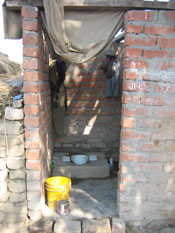
CLTS toilet, Indonesia
CLTS toilet, Indonesia by Lyla Mehta

In recent years, grassroots initiatives such as Community Led Total Sanitation (CLTS) have concentrated on locally-developed solutions to build toilets and provide for low cost latrines, usually built by local populations sourcing local materials. By focusing on local mobilization, collective triggers and behavioural change, CLTS has emerged as a successful counter to the top down, subsidy centric approach. Pioneered by Dr Kamal Kar, it is now practised in over 60 countries worldwide and has also been mainstreamed in several national policies across Africa. (A STEPS Seminar in May 2014 provided an update into the progress of CLTS towards the aim of ending open defecation.)

Drawing on several case studies from India, Bangladesh and Indonesia, Lyla Mehta and Synne Movik's book Shit Matters (2011) also reiterates the point that infrastructure neither guarantees access nor equity. The sanitation needs of women differ widely from men but the top-down policies of 'giving toilets' obviate such differences. Having women on sanitation committees does not necessarily translate into factoring in their needs and demands. On the other hand, maintaining these toilets often becomes the responsibility of women. The gendered perception regarding the 'domestic' women ties them to exploitative burdens of fetching water and cleaning the toilets. This gender blindness and invisibility in policies linked to the top-down, supply driven momentum end up as layers over oppressive structures and practices.

Violence and safety
The reality is that women defecating in the open exposes them not only to risks of hygiene and health, but as the many reported and unreported cases show, they are subjected to violence of all sorts; stalking, teasing, lewd remarks, and rape being the final one. Lack of toilets or 'unsafe' toilets, i.e. toilets located in unguarded public places and dark alleys, prevent female mobility and lead to unhealthy practices of holding up. Women and girls gain dignity and privacy through proper sanitation and menstrual hygiene facilities. Lack of such facilities results in absenteeism from school, especially during menstruation (UN)These are indeed those everyday forms of violence, which are invisible in the homogenised policy solutions.

The roots of sexual violence run deep into patriarchy and its technologies of oppression. Toilets are, by no way, a panacea, but they are steps to mitigate and address those everyday forms of oppression and vulnerabilities. It's time we find more entry points into the mainstream policy issues that use and reinforce masculine perspectives and solutions to incisively gendered problems. Safe sanitation is but one step towards a future of safer health, hygiene and security for women.

Giving away toilets may do little by way of change unless women's perspectives are taken into account. We certainly need to factor in the voices of women about the suitability and location of toilet construction, and challenge the implicit assumptions about gender roles. This time, let’s not stop at the outcry against institutional apathy but push our claims for the right to demand sanitation rights and tackle gender violence squarely in all these very significant everyday sites.

By Shilpi Srivastava, DPhil Student, Institute of Development Studies