Monday, 13 January 2014

STEPS-JNU Symposium: Exploring Pathways To Sustainabilty

Innovation_Nyoin_Flickr CCOur 2014 Annual Symposium, ‘Exploring pathways to sustainability’, is being co-organised with the Centre for Studies in Science Policy at Jawaharlal Nehru University, New Delhi and will be held on 10-11 February at JNU.

JNU_CSSP-logo

Exploring pathways to Sustainability

Overview | Programme | Resources
Video | Blog | Photos | Storify (coming soon)


Overview

The 2014 Annual Symposium will focus on the theme of ‘pathways to sustainability’. Our participants will consider how particular mainstream, development interventions emerge as part of self-reinforcing trajectories for change, and the implications of these pathways for both environmental integrity and social justice. Together, participants will examine a range of contemporary issues including urbanisation and environmental health, climate change, securisation and grassroots innovation. Over two days we intend to explore future trajectories of change and possibilities for switching to more sustainable alternative pathways. Due to available space, the event is invitation-only.


Programme

The Symposium runs across 10-11 February, with dynamic presentations and full audience participation in discussions. A keynote address by Nitin Desai, Former Under Secretary General, Department of Economic and Social Affairs, United Nations, will open proceedings. Following sessions cover four areas being investigated by STEPS Centre research projects in India: environmental health and urban transtitions; living with climate change uncertainty; grassroots innovation; and securitisation. The Resources section below gives more details on the four STEPS Centre sessions. There will also be an audience-led interactive ‘World CafĂ©’ session and an final expert panel.

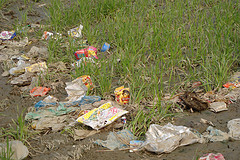
plastic bag waste on agricultural land, Karehda, Ghaziabad_Pritpal Randhawa

Symposium resources


Session 1: Pathways to environmental health / urban transitions
There are recognised tensions between urban and industrial development and environmental
protection, but limited understanding of how emerging environmental challenges
associated with rapid economic development, and the responses to them on the
ground, impact on human well-being. This session draws on STEPS Centre work in India.
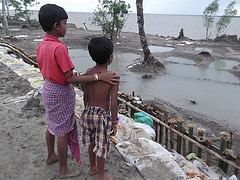
10051965616_a1ccd128f6_mSession 2: Uncertainty from Below
Ecological uncertainty has usually been theorized from 'above' by experts. But the theories and models concerning uncertainty from "above" may have little to do with the way how everyday men and women (poor or rich, urban or rural especially in the global South) live with, understand and cope with uncertainty in their daily lives. This panel draws on ongoing STEPS Centre research in the Sunderbans, Kutch and urban India.
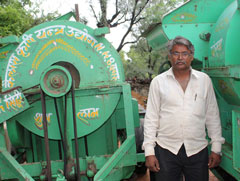
Grassroots-innovation_honeySession 4: Grassroots Innovation
A radical new approach to innovation is urged by STEPS, Stockholm Resilience Centre and Tellus Institute in this paper, published as a contribution to the Rio+20 Earth Summit. We argue that Sustainable Development Goals that keep human societies within a 'safe operating space' of planetary boundaries requires far greater recognition and power for grassroots actors and processes, involving them within an inclusive, multi-scale innovation politics.
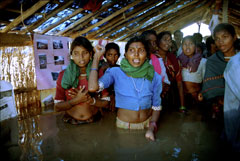
240px_Anti-dam-protestors_ISession 5: Securitisation
The Water-Energy-Food (WEF) nexus is emerging globally as a research agenda and governance framework for understanding the relationship between water resources development and the energy and food sectors. This session will discuss case studies from Nepal-India and Thailand-Laos, countries that each share transboundary rivers (Mekong, Ganga) and that are increasingly tied together by jointly developed water resource development projects and cross-border power trade.


Selected resources

Friday, 10 January 2014

Linking global and local sustainability: new journal article

The United Nations Conference on Sustainable Development (Rio+20) in 2012 was another opportunity to reflect on the links between global and local sustainability. High-profile global processes, including the Convention on Biological Diversity, the United Nations Framework Convention on Climate Change and others, have aimed to unite action at a global level to address sustainability challenges. But these are only half the story: these global initiatives need to be connected to local aims, debates and action.

A new paper by STEPS Centre members Adrian Ely, Adrian Smith, Andy Stirling, Melissa Leach and Ian Scoones examines the successes and challenges of globally linked local action through a number of illustrative examples. In the paper, Innovation politics post-Rio+20: hybrid pathways to sustainability?, the authors discuss the steps forward in understanding how innovation contributes to transitions at multiple levels, and what this means for governance approaches which link global and local processes.

They also propose a 'hybrid politics' of innovation linking global and local sustainability, which pays attention to three key issues: the direction in which innovation and development proceed; second, the distribution of the costs, benefits, and risks associated with such changes; third, the diversity of approaches and forms of innovation that contribute to global transitions to sustainability. This paper is part of a special issue on 'Governing sustainability: Rio 2012 and the road beyond' in the journal Environment and Planning C: Government and Policy.

Thursday, 9 January 2014

8 January 2014: China and Brazil in African Agriculture - news roundup

By Henry TugendhatCBAAnews

This news roundup has been collected on behalf of the China and Brazil in African Agriculture (CBAA) project. For regular updates from the project, sign up to the CBAA newsletter.

Sino Zim Cotton Holding opens new ginnery
President Mugabe officially commissioned Sino Zim Cotton Holding’s new plant in Harare last month. The company is a joint venture set up between China and Zimbabwe in 2010 and the new ginnery has a capacity of processing 25000 metric tonnes of cotton. Yarn is then destined for both domestic and international markets in Africa, Asia and Europe. The company “boasts a farmer database of over 20 000 annually on a combined contract of 100 000 hectares and has seven regional offices in the different areas in the country.”
(Zimbabwe Herald)

Chinese group plans agricultural tech production in Ghana
A Chinese company called the Shandong Group has been in talks with Ghana’s Northern Regional Coordinating (NRCC) to set up manufacturing and assembly plants of agricultural equipment in Tamale. “The plant will produced and assemble equipments; these he outlined as wheeler tracks, Motor kings, Bowler Taxies, power Tiller Machine that could be used for sanitation and agricultural purposes.” Accra and Kumasi are also mentioned as potential sites for such plants. The company is also interested in investing in commercialised rice cultivation for domestic consumption and export.
(Ghanaweb)

Zambian Mining Union Wins Wage increase with Chinese company
“Zambia’s biggest mining union agreed to a 12 percent wage increase with Jinchuan Group Ltd. in a deal that sets a benchmark for the rest of the industry in Africa’s biggest copper producer.” Workers’ rights in relation to Chinese extraction companies has played a large part in shaping opinions on China-Africa relations in Western and African media, so this case is an important development.
(Business Week)

China-Africa engagement: has it peaked?
Kai Xue argues that China’s three main aims in African countries are 1) winning support on the One China Policy, 2) to export goods and services, 3) to buy natural resources. On this basis, he argues that point one is largely covered and that on point two Africa as a whole still only makes up a small share of China’s export market (5%), and this is unlikely to change. On point three he argues that mineral prices are dropping and African government policies/tariffs are strengthening, thus potentially making the continent less of a priority for Chinese businesses and policy-makers in the near future.
(This is Africa - free registration required)

Conflicts over land and threats to customary land tenure
This article by Pauline Peters published at the end of last year in African Affairs explores land disputes between customary land tenure and the state. It centres on the motivations of both the state and local chieftains, in their disputes and looks at the impacts on farmers involved.
(African Affairs – subscription required)

Mozambique's small farmers fear Brazilian-style agriculture
 This article looks at smallholder farmers’ challenges in the face of ProSavana. Land registration has proved ineffective for many and communication between the government and farmers over land sales is often lacking. The article lists companies that have already started developing tracts of land sold by the government and concludes that many are worried about the Brazilian model in Mozambique.
(The Guardian)

China accused of stealth land grab over Xai-Xai Project in Mozambique
This article looks at developments in the Xai-Xai rice project in Mozambique being carried out by the Chinese group Wanbao. The article has embedded video clips of interviews with the various actors involved and affected by the project.
(The Ecologist)

Future Diets - the rise of obesity and other health problems in developing countries

Changing diets and accompanying health problems are the focus of a new report published by the Overseas Development Institute, co-authored by our Future Agricultures Consortium's Commercialisations theme convenor Steve Wiggins.

There has been a dramatic increase in the numbers of overweight or obese people in the past 30 years. Previously considered a problem in richer countries, the biggest rises are in middle income countries and the developing world.

The ODI report, 'Future Diets', traces how the changes in diet - more fat, more meat, more sugar and bigger portions - have led to a looming health crisis. It also looks at how policy-makers have tried to curb our eating excesses - with mixed results.

The report is launched on 10 January 2014 in London.

For more information, see the Future Diets pages on the ODI website.

Monday, 6 January 2014

A fictitious budget or a sensible plan in constrained circumstances? Zimbabwe’s 2014 budget

The national budget was finally presented on December 19. It was much delayed, provoking multiple rumours that the government had run out of money, that the missions to the International Finance Institutions had failed,  that the Chinese had refused to offer a bail out, and that confidence was so low that there was likely to be a run on the banks. In the end a $4.4bn budget was presented by Finance Minister, Patrick Chinamasa. The Source offered the highlights:
  • Economy to grow by 6.1 % in 2014.
  • Exports seen reaching $5 billion in 2014, from $4.43 bln this year.
  • Imports ballooning to $8.3 billion in 2014 from $7.6 bln this year.
  • Government to assume $1.35 billion Reserve Bank debt, to recapitalize central bank by $200 million.
  • Indigenisation laws to stay.
  • Royalties on gross diamond earnings up to 15pct .
  • Interbank market back, Afreximbank to provide guarantee.
  • Zim gets $1.6 billion Diaspora remittances annually.
Here is the full statement; all 262 pages of it!

The budget was greeted with derision in certain quarters. Yet in many ways the budget statement contained plenty of sensible proposals, not hugely different to those offered in previous years. Contrary to the arguments of some, the focus on the 'informal sector' is to be welcomed.

But the big questions were: was there enough money to back the proposals, and were the projections anywhere near accurate? The budget is based once again on assumptions about the growth of agriculture (9%) and mining (11%) in particular. Given the experience of the last year, when the agricultural sector shrunk, and mining did not grow as much as predicted, some argued that these figures were more wishful thinking than sound economic analysis.

In the agricultural sector, a number of sensible measures are proposed. The central one was the continued effort to 'drought proof' production, and substantial investment in irrigation was again identified as the priority. Timely provision of inputs was also again on the table. And there were other specific measures for particular commodities, such as wheat, dairy and so on where production has been languishing. There was help for the sugar sector too, with a hike in customs duty for imports to avoid further dumping of cheap sugar on the local market.
Overall, the agriculture policy focus was on A2 farms, with proposed investments in infrastructure and credit and finance instruments. This may be appropriate given the poor performance of the A2 farms to date, but given the need to get things moving fast, backing the winners in the A1 areas may have made more sense.

On land, there is again a commitment to push ahead with the registration and issuing of leases for A2 farms. This is important, but the issue of compensation has yet to be addressed, and there is no evidence of substantial financing for this coming from the Treasury.

The ongoing concern about 'indigenisation' policy is also addressed, with attempts to clarify what is proposed, with differences between natural resource based industries and others. While requirements for a 51% national ownership are not unusual, even in very progressive, fast-growing economies in Asia, such as Thailand and Indonesia, this particular policy in Zimbabwe has been plagued by controversy and confusion. This has arisen from the extreme politicization of the debate, and the way 'indigenous' has been defined in racial terms, combined with the rather aggressive stance of the previous minister responsible, Saviour Kasukwere. Now under the rather less flamboyant Francis Nhema, the rhetoric has been scaled down a peg or two. For example, just before the January 1 deadline, the government backtracked on the proposed ban on foreign ownership in certain sectors, with the minister assuring investors that they had reconsidered.

Nevertheless uncertainty prevails and, even though potential investors might be happy to contemplate a 49:51 split in ownership, the prospect of things changing due to political whim remains. And it is this that is perhaps the most unnerving, still preventing significant foreign investment in the Zimbabwean economy.

As Chinamasa commented in his statement "policy consistency, credibility, certainty and transparency are critical building blocks for confidence building" (p 89). Absolutely. And the sooner these become sacrosanct principles of Zimbabwean policymaking the better.

This post was written by Ian Scoones and originally appeared on Zimbabweland