Tuesday, 2 September 2014

Ten things to know about causal loop diagrams (CLDs)

Editor's note: This blog is part of a series of reflections emerging from a workshop on complex adaptive systems research methods held in Baltimore in June 2014.

Publications on causal loop diagrams (CLDs) have increased fourfold since 2007!
Okay, that probably sounds more impressive than it actually is – in reality it means that we've risen from one publication per year to four. Though, this year, that number is likely to jump even further with the recent release of the Alliance for Health Policy and Systems Research new journal supplement on systems thinking for health research.

While the number of publications using CLDs remains negligible, in the grand scheme of things, the appearance of causal loop diagrams on PubMed's radar signals that researchers are increasingly interested in studying complexity and applying new tools and approaches to their research questions.

As discussed at a methods workshop held in Baltimore in June 2014, systems mapping and conceptualization – a key part of the puzzle of intervening in complex systems – is a process of developing diagrams to illustrate system boundaries and the connections between variables.
CLDs are one type of system map, but they are by no means the only one. What makes CLDs particularly useful is that, in addition to mapping a system structure, they help build understanding of connections between a range of variables.

The increased momentum around complexity and tools such as the CLDs begin to raise issues that question the very core of the paradigms in which we generally operate in public health. That creates demand for understanding what CLDs are and when to develop and use them. It also creates an opportunity to drop some of the communication barriers that exist between disciplines and to push the boundaries of our understanding of complex systems.

What CLDs are
  1. Diagrams that make implicit mental models explicit and that identify which components/variables are part of a system of interest and how they are related – including the directionality of the influence, and the feedback that arises.
  2. First developed in engineering, CLDs benefit from a clear description of conventions used for drawing them – a common "language" that can contribute to bridging the gap between disciplines and facilitate team synergies.
  3. A process by which to document our assumptions and biases, and tease out relationships between variables (if it's not clear whether A causes B to grow, then the pathway between the variables contains additional variables that must be unhidden and teased out), as well as brainstorm about variable relationships and influence pathways.
  4. An opportunity to bring together different stakeholders – that might have divergent mental models – in order to facilitate agreement around how and why to intervene in a system, potentially through participatory or group model building.
  5. A way to illustrate relationships stemming from quantitative and qualitative data, as well as to theorize about potential hypothetical relationships, which can be tested through future data collection.
What CLDs are not
  1. NOT the only approach use to conceptualize and map systems
  2. NOT meaningful on their own, without a description of the assumptions underlying its construction and of the context for which it was developed.
  3. NOT always resulting in generalizable findings – only to the extent that the research design and data collection intended and allowed it to be.
  4. NOT the end product – the process can be sometimes more important than the diagram itself.
  5. NOT easy to communicate, particularly to individuals who were not involved in the design of the diagram – however, this is an issue that practice and future research should be able to improve.
The way(s) forward?

Some might argue that conceptual frameworks, decision trees, flow charts are already used for similar purposes. And those same people might therefore question whether our complex world really need another complex diagram, especially if it is difficult to communicate.

To those detractors (well, sceptics maybe), I would argue that there is growing consensus in international development that greater focus is needed on iterative design and flexible implementation approaches. The systems science toolbox can potentially help in this new quest, and CLDs are an approach worth considering. They are just one component of an iterative process – one that we can return to frequently as a system or our knowledge of a system changes.

The purpose that CLDs serve depends on the research questions and intentions, whether it be: building new theories, designing or planning an intervention, identifying variables and relationships for the purpose of building a model (e.g. a system dynamics model), and/or interpreting research findings that are conflicting.

Regardless of the purpose, or the type of diagram for that matter, my advice is to keep it simple and easy to communicate. There is software to help with drawing neat diagrams (e.g. Vensim), however, pen and (multiple sheets) of paper can also do the job. Furthermore, the ideal model building process – and therefore also the ideal CLD development process – should be a team effort. It should also be one that brings together researchers from various fields and perspectives.

By Ligia Paina, FHS researcher, Johns Hopkins Bloomberg School of Public Health

New methods needed: How can complexity science help us to understand pluralistic health systems?

Editor's note: This is the first blog in a series of reflections emerging from a workshop on complex adaptive systems research methods held in Baltimore in June 2014.

Until recently, the dominant view of a health system was as a combination of building blocks -- such as human resources, finance and so forth -- capable of delivering a package of services. The construction of this kind of health system was seen as relatively straight forward.

However, a number of studies have challenged this view by demonstrating the important influence of context on health system performance. This has stimulated an interest among health system analysts in the application of concepts associated with complex adaptive systems to the challenge of managing health system development and change.

This was the theme of a workshop jointly organised by Future Health Systems and the STEPS Centre in Baltimore in June 2014. The workshop provided an opportunity for an exchange of ideas between people whose focus has been on the analysis of health systems, those involved in systems thinking and the role of modelling and those who bring a social science perspective to the analysis of complex and dynamic contexts.

Although health system actors often have a lot of autonomy, most health systems are highly conservative and their future development is greatly influenced by their historical legacy.

This underlines the importance of institutions and the formal and informal rules of behaviour to the effective functioning of a health system. In most health systems, the performance of health workers is strongly influenced by internalised norms of ethical behaviour. But there is little systematic knowledge about these highly influential norms and beliefs.

Several factors may be contributing to an increased possibility of major health system change. These include:
  • Rising expectations of citizens for safe and effective health services
  • Emergence and spread of potentially disruptive technologies, such as the rapid development of ICTs and of low cost diagnostic technologies
  • Growing political pressure on governments to improve access to health services.
Managers of health system change can draw on lessons from other sectors to analyse the process through which a series of relatively small scale changes eventually add up into a major change in socio-technical regime.

Health system development and change is a highly political process in which struggles between competing interests strongly influence the development pathway that results. That is why an analysis of health system change needs to include a study of the political and economic context. This can include the identification of a number of competing pathways of change and the implications of each for different interest groups, including the relatively poor and powerless.

It will be a long time before it is possible to include institutional rules and beliefs, the emergence and spread of innovative technologies and organisational arrangements and the political struggle between interest groups into an integrated model of a national health system.

Meanwhile, it is important to involve a number of disciplinary approaches in the analysis of health system performance and the management of health system change. Some approaches discussed the workshop included the production of innovation histories and the application of the STEPS pathways approach to the analysis of health system change.

By Gerry Bloom

GM Nation or GM Planet? How to involve citizens in decisions about transgenic crops


world map
edited version of Tourism Office – Mijas – World map by ell-r-brown on Flickr (cc-by-sa)
The UK's GM Nation? public debate – conducted over a decade ago, tried to include the voices of citizens in decision-making over transgenic crops. With recent decisions by China and India possibly signalling a shift of opinion against GM in these 'rising powers', what kinds of institutions are required to enable democratic governance of these technologies across countries with diverging agricultural innovation pathways?

A recent decision by Narendra Modi's new Indian administration to halt GM crop trials, and China's decision not to renew biosafety certificates for GM rice and maize, both point towards shifting political positions in this ever-fractious debate. Given the complex and obscure national stories behind these positions (see last week's blogpost by my colleague Sam Geall on the Chinese case), scholars are wondering how open, transparent and inclusive governance might ever be possible at the international level.

In June this year I attended an event at the Royal Society entitled 'A New Approach to Governing GM Crops: Global Lessons from the Rising Powers' (previously discussed in this blog by Dominic Glover). Outputs of the 'GMFuturos' project are now being written up into an edited book, which will be part of the STEPS Centre's Pathways to Sustainability book series.

The organisers of the event asked me to provide a response to the project's studies and to consider what institutional innovations were needed to involve citizens in GM governance. I decided to approach the question based on my experience of the UK's 'GM Nation?' public debate, and the kinds of institutional innovations that would be needed in very different national contexts in order for a democratic, inclusive decision-making around this technology at the international level.

Lessons from the UK
Firstly I commented on the situation in the UK, which had been put forward in an earlier talk as a 'leader' in social science linked to GM crops. I agreed that the UK had produced some particularly interesting research (including some by STEPS) on what the public think, why and what that means for the governance of GM crops.

At the same time, I also think that the practical experience under the last government – of constituting the Agriculture and Environment Biotechnology Commission (AEBC) on one hand and supporting the multiple strands of the 'GM Nation?' public dialogue – offers a number of lessons for other countries. Granted, these initiatives had their faults, but they remain globally-relevant experiments in soliciting stakeholder and citizen input to policy making.

Taking it global
What innovations are required now? In my belief, one particular finding of the GM Nation? steering group – that "developing countries have special interests" – pointed to a limitation of the initiative and a key outstanding need: that of internationalising the debate.

For one thing, the global challenge of food security requires linking and co-ordinating across national jurisdictions, and a detailed understanding of the needs of beneficiaries and international partners. For another, decisions on GM food and agriculture taken in other countries affect those available to us here in the UK (and vice versa). The question is not so much GM Nation? as GM Planet?

As argued earlier this year in a paper I wrote with Paddy Van Zwanenberg and Andy Stirling, approaches to 'broadening out' and 'opening up' technology assessment can help feed in to a more co-ordinated approach, and enable perspectives from multiple international sources to inform political debates. Here, UK Foresight has made some attempts to seek international inputs (for example in the 'Future of Food and Farming' study) but there is still a need for further broadening out to include diverse (both UK and non-UK) voices in technology assessment.

However, calls for 'broadening out', 'opening up' and 'democratising' technology governance are unlikely to be taken up in China, where they are not new. Whilst there is increasing interest in such moves amongst some of the country's academic circles, a recommendation based on UK-centric values remains in tension with a technocratic approach to policy-making and a 'deficit model' perspective on communicating around science and technology is still prominent.

Crossing continents and cultures
This led me on to thinking about the real challenge of involving citizens – that of enabling processes that do so across different geographical and socio-political contexts to 'talk to each other'.

In a study for the Rockefeller Foundation, my colleagues and I pointed to the trade-offs between adopting a rigid framework to enable direct comparison/integration across multiple sites, and the need to remain flexible to local problem framings and perspectives. Proposing internationally-networked approaches to technology assessment, we argued for a combination of expert and lay inputs and flexible institutional designs to enable broad knowledge inputs.

In that study, we pointed to the IAASTD as an example of an internationally-organised attempt to broaden out the inputs to appraisal, with the result that the assessment highlighted the multi-functionality of agriculture. Alternatively, linking up smaller-scale, bottom-up technology assessment exercises might create space for yet more diverse voices.

Politics and institutions are vital for involving citizens
At the same time, international networked approaches need a responsive political system at which to target their outputs.

They also need functional institutions that can take them forward in policy, regulation and governance.

Without such institutions, the 'institutional void' that is highlighted at national levels for Brazil, Mexico and India in the GM Futuros working paper (pdf) will continue to act as an insurmountable barrier to meaningful citizen involvement at the international level.

Article roundup: STEPS Latin America monthly debates

As part of the build up to the launch of the STEPS Centre’s Latin American hub in 2015, we have started a series of monthly debates in Buenos Aires on sustainability and development. The debates are an important first step in identifying and discussing themes that the new Centre will explore, and in creating a wider network of academics and policy-makers interested in those themes.
Short articles based on each debate are being published in Página12, a national Argentinean newspaper. These take the form of a pair of articles on each debate: one written by our invited speakers, and one by the Centro STEPS America Latina team.

Read the articles

Transgénicos en el ojo de la tormenta
Articles based on our first debate: 'What is the social utility of publicly funded R&D for transgenic crops?' 6 May 2014
There is strong government support for plant genetic engineering in several Latin American countries, as evident in R&D funding and the creation of enabling regulations in intellectual property and licensing. Yet there are very different views about the medium and long term development implications of encouarging transgenic-based agriculture. We invited speakers representing various points of view to address the following questions: What is the social utility of public financing of R&D in plant transgenesis? What is the contribution that this technology can make to sustainable and socially inclusive development? Are there viable alternative options?

Haz lo que digo, pero no lo que hice
Articles based on our second debate: 'Intellectual Property Rights and innovation in developing countries', 3 June 2014
There are contrasting perspectives about the ways in which different kinds of intellectual property protection may affect innovation in developing countries. In the wake of the 1990s TRIPS agreement, countries have had to harmonize their intellectaul property regulations with internationally-defined rules. We invited speakers to address the following questions: What are the opportunities and challenges posed by the new intellectual property regimes in terms of encouraging local innovation and supporting development objectives? Are there alternatives to the intellectual property rules stipulated by the TRIPS agreement? What is the scope for implementing such alternatives?

El papel transformador de la innovación
Articles based on our third debate: 'Innovation for social inclusion: Between inclusion as an objective and inclusion as a process of participation', 5 August 2014
Innovation for social inclusion is attracting growing interest amongst policy-makers and other stakeholders, but there are very different ways of understanding what is meant by innovation for inclusion. Is it primarily a process through which solutions to the problems experienced by marginalized actors can be created, or about fostering broader participation in the creation of new knowledge and technologies? We invited speakers to address the following questions: Is it possible to orientate innovation policies for social inclusion in ways that foster greater social participation? What tools would be most effective? How can we allocate resources so that the importance attached to innovation for inclusion can be equated with other R&D priorities?

GM in China: ‘Paranoia’ and public opinion

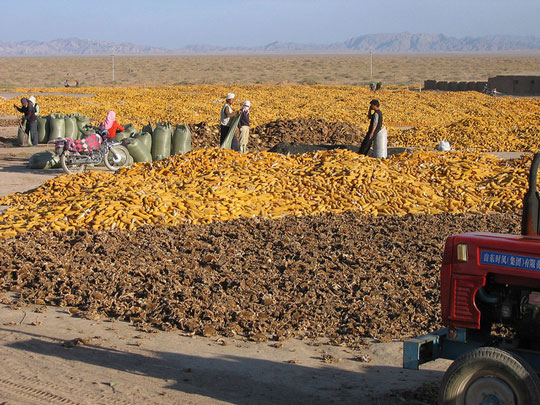
Maize harvest in China
Photo credit: Maize and sunflower harvest Chahaertan
by dfataustralianaid on Flickr (cc-by-2.0)

Biosafety certificates permitting Chinese researchers to grow genetically modified rice and corn expired last week, with little indication that the Ministry of Agriculture will renew them.

The certificates, issued in 2009, concerned two types of Bt rice, which express a gene of the bacillus thuringiensis bacterium, conferring pest resistance, and phytase maize, which when used as feed can increase the uptake of phosphorus in pigs and chickens, potentially leading to energy savings and more efficient land use. Though not the only homegrown transgenic crops, these projects had attracted particular attention, both for their potential to produce path-breaking examples of Chinese "indigenous innovation", and for the perceived risks of altering such culturally resonant staple crops.

Making sure people have enough food on the table is a political priority in most countries, but it is hard to overstate its importance in China, with one-fifth of the world's population and only 8% of its arable land, and where famine, scarcity and rationing are all-too-recent memories for the leadership. In 2014, for the 11th year in a row, China's first central policy document of the year concerned rural development. For many years, agricultural biotechnology has been a significant government priority: it is, for example, one of seven "Strategic Emerging Industries" in China's latest Five-Year Plan. Furthermore, China has in recent decades seen a massive increase in the production, sale and consumption of meat; phytase maize, in particular, represents an innovation geared towards increasing the efficiency and reducing the environmental costs of this expansion.

So, why were the certificates permitted to lapse before the crops could be commercialised? No clear answer has emerged, but media reports suggest four possible explanations. First, some point to the economics: in the case of Bt rice, Huang Jikun notes that China has nearly reached self-sufficiency in producing rice with conventional varieties, suggesting the ministry decided there was little need to commercialise GM rice in the near future. Second, others chalked it up to "social stability" concerns, with a Greenpeace official telling ScienceInsider that "public concern around safety issues" played an important role. This same campaigner suggested a third explanation, that problems with regulation — "loopholes in assessing and monitoring [GM] research" —underlay the decision, too. Finally, Cong Cao, an associate professor at University of Nottingham, suggested a fourth explanation: simply put, delusions of an ultranationalist variety. For Cao, the U-turn can be blamed on "outrageous" notions — apparently held by some military and other elite figures — that GM food is a "devious plot to annihilate the Chinese", disseminated by an "anti-GM movement whose power and influence are more than matched by its fervour and sheer, undiluted paranoia."

Of course, a fuller explanation might incorporate all four elements and others. In China today, scientific and environmental decision-making is fragmented and far less technocratic than is often assumed, and public and elite anxiety does seem to run high when it comes to genetic modification. But it would be careless to simply write off the situation as reflecting public, or even elite, ignorance and paranoia about food and agriculture.

First, China's anti-GM movement, such as it is, reflects the emergence of a larger public debate than in previous eras on many sides of this controversy. Scientists have also made impassioned public and private appeals to government: last year, a petition to the country's leaders, signed by 61 unnamed government-linked scientists, charged that "the promotion of industrialised cultivation of GM rice can wait no longer, otherwise we will harm the national interest." Recently, pro-transgenics advocates — spearheaded by the commentator Fang Zhouzi, who wrote about phytase maize in 2012 that it was evidence "the clever use of genetic modification will help protect the environment" — staged GM rice-tasting events in 22 Chinese cities.

Second, that public debate around GM food in China resonates with a number of deeper issues. Cao contrasts China and the United Kingdom, suggesting the UK will push ahead with the commercialisation of GM crops, despite it being "fanciful in the extreme" to suggest that China's "regulatory environment is conspicuously slacker" than that of the UK. Yet this seems to overlook quite legitimate public concerns around regulation, risk, trust and the litany of food safety problems China has encountered in recent years. News last month that a major supplier in China sold expired meat to western fast-food outlets followed widely reported cases of contamination by heavy metals, veterinary drugs and food additives, fears about "gutter oil", and most famously the scandal in 2008, when melamine-contaminated baby formula led to the deaths of six infants and sickened hundreds of thousands of children.

For many observers in China, the avoidance of food scarcity is a remarkable, laudable achievement of the Reform Era, but the dominant agricultural development paradigm has come at a cost. In this analysis, the "complex of interrelated problems" that resulted, sometimes known as the sannong problems (affecting nongmin, peasants, nongcun, the countryside, and nongye, agriculture), not only has had implications for food safety, but also has had other effects, such as the widespread overuse of chemical fertilisers and pesticides, soil erosion, the fragmentation of rural communities and rising social inequality. Furthermore, it would be wrong to suggest the UK boasts a pro-GM public consensus (few places do). In fact, opposition to GM foods in the UK stands as a good example of how high-profile failures around food safety, particularly in the management of the BSE crisis, can contribute to a breakdown of public trust in the regulatory system, as well as the difficulty of separating such issues from "political" concerns about ownership and the overall direction of agricultural development.

Finally, another narrative might point to a Chinese public grappling with a great many complex and uncertain problems around food, agriculture and the environment in an innovative and sophisticated fashion. Rather than ignoring or misunderstanding the challenge of producing safe food, citizens are establishing new networks, like Beijing Farmers Market, which connect farmers to consumers and benefit local producers while increasing trust and knowledge about sustainable agricultural practices; journalists have helped consumers to share information about food-safety risks; rural cooperatives have mushroomed across China, often practicing forms of ecological agriculture; innovative producers are laying bare their supply chains by applying social-media technologies; and participatory plant breeding projects have involved farmers and local organisations in improving crop varieties and rural livelihoods.

Certainly, some of the discourse around GM in China is paranoid and misguided, and much like its championing of clean energy, Chinese government support for innovation could perhaps be game changing for agricultural biotechnology. But focusing exclusively on one vision of high-tech innovation — or writing off its critics as purveyors of "anti-science" (when perhaps there are legitimate reasons for concern) — could not only obscure avenues for engagement on scientific and environmental decision-making, but also overlook other, emergent innovations addressing China's agricultural, food and environmental challenges. It's pertinent instead to ask how more open approaches to scientific governance could transform a debate, which – as demand for food and animal feed continues to rise – has surely only just begun.

This article first appeared on the University of Nottingham’s China Policy Institute blog, and is reposted with kind permission.

About the author: Dr Sam Geall is a Research Fellow at the Science Policy Research Unit (SPRU) and a member of the STEPS Centre. He is also Executive Editor of chinadialogue.net